
Reviewed · OAHU SHARK DIVING TOURS
Oahu Shark Dive Educational Tour (No cage)
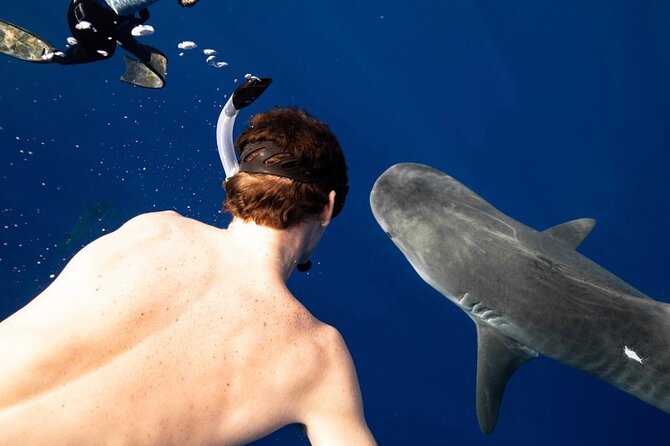
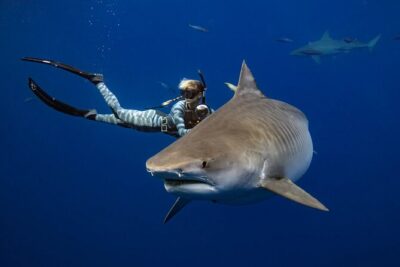
Swimming beside wild sharks in open water is the main event here, not a quick look through a metal cage. From Haleʻiwa Boat Harbor, you ride about three miles offshore into a clear, deep-water zone where Galapagos and sandbar sharks are common, with tiger sharks and other marine life possible. I like the small maximum group of six and the calm, safety-first approach from crew members such as Ricky, Rachel, Parker, and Nicole. You also get a short, focused outing that leaves most of your day open.
The tradeoff is simple: this is the ocean, not an aquarium. Shark numbers and water conditions can change, and one visit had rough wind and only a few sharks. You should be comfortable with moderate physical activity, open water, fins, and a boat ride that can feel rough when conditions turn.
Key things to know before you book
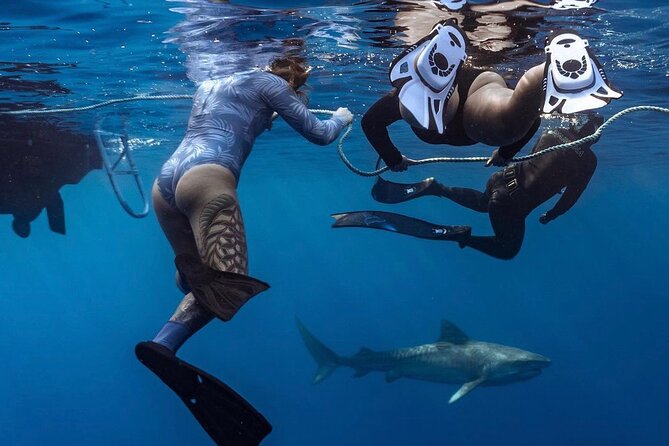
- Three miles offshore from Haleʻiwa: The boat reaches a pelagic zone, so you are swimming over deep ocean rather than near a shallow reef.
- No cage, with active safety support: A trained shark handler explains behavior and safety, while crew members remain attentive in the water.
- Small groups matter: The maximum is six people, giving you more room and more direct help than a large commercial outing.
- Shark sightings are never guaranteed: Galapagos and sandbar sharks are common, but tiger sharks, dolphins, whales, and fish may also appear.
- Equipment is supplied: Fins and snorkel equipment are included, and a wetsuit was also provided according to one experience account.
- The tour takes about two hours: You return to Haleʻiwa and still have the rest of the day for the North Shore.
What the open-water shark experience is really like
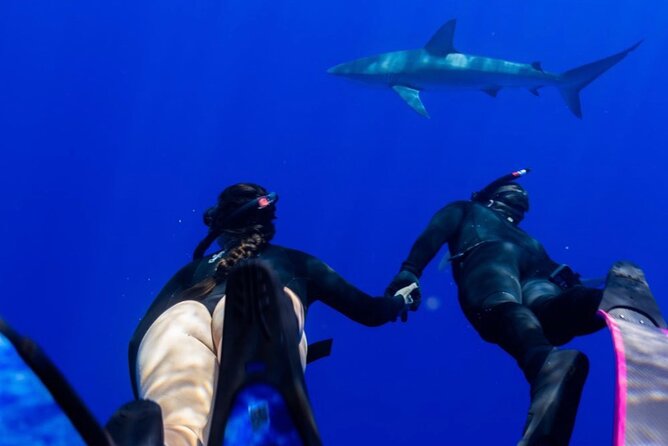
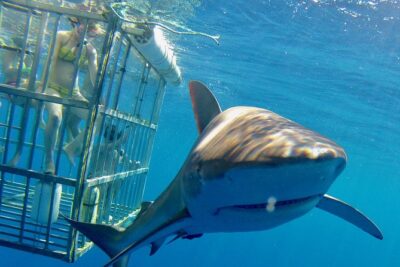
The strongest feature is the setting. You are not looking at a shark from behind glass or waiting for one to pass a fixed cage. You are floating in the open Pacific, surrounded by clear blue water, with the island behind you and a wide ocean below.
That difference matters. The experience feels less like a standard snorkeling stop and more like a carefully managed wildlife encounter. The crew does not promise a scripted show. Instead, they take you to a deep-water area where sharks are often found and explain how to behave around them.
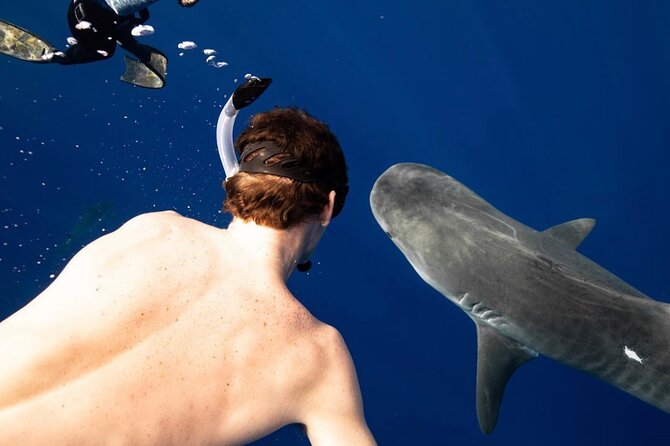
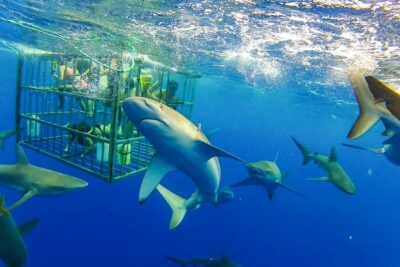
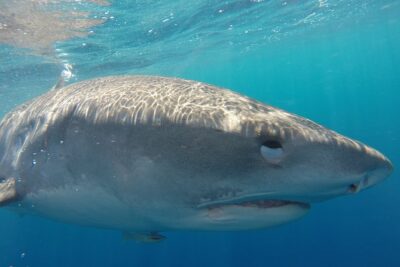
The most common sharks in this area include Galapagos and sandbar sharks. Tiger sharks are possible, and several outings have included them. Reports also describe groups of four, six, ten, or more sharks nearby, but conditions vary. On another outing, the sharks were shy until the crew stayed in the water longer.
I appreciate that uncertainty. It means the activity is based on wild animals rather than baited, guaranteed contact. You should book for the chance to see sharks in their natural setting, not for a promised number or species.
More shark dives in Oahu:
- Oahu Shark Dive
★ 5.0 · 2,903 reviews - Oahu: Shark Cage Dive on the North Shore
★ 4.8 · 1,485 reviews - Shark Cage Diving on Oahu’s North Shore
★ 5.0 · 1,391 reviews
Leaving Haleʻiwa Boat Harbor for the North Shore
The meeting point is Haleʻiwa Boat Harbor, Haleiwa, Hawaii, and the activity returns there at the end. The departure point is described as easy to find, with clear parking directions and a teal and white business sign to look for after parking.
That practical detail can save you a frantic start. Haleʻiwa is a popular North Shore base, so give yourself enough time to locate the harbor and get ready. The activity is offered in English, and confirmation arrives when you book.
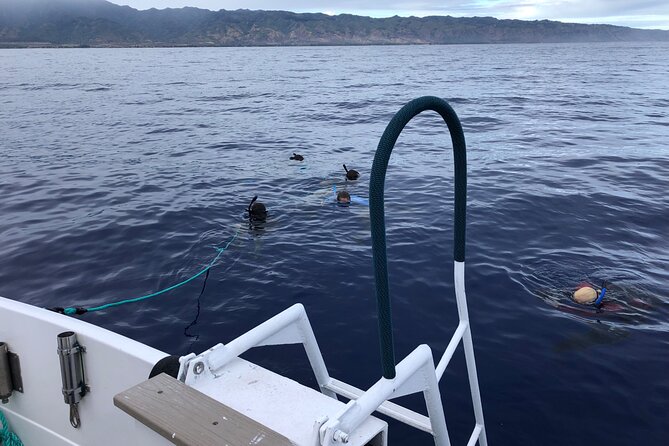
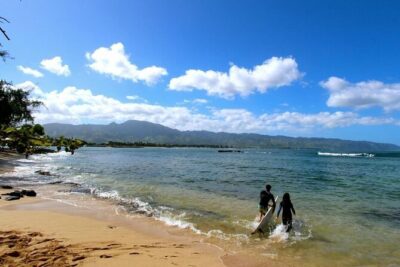
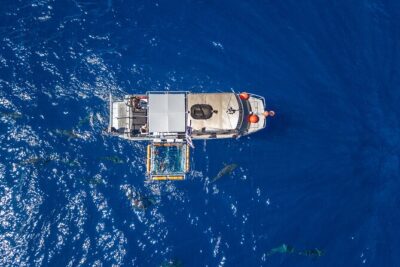
Once aboard, the trip heads about three miles offshore. The boat ride itself is part of the outing, with views across Waialua Bay and the North Shore. Conditions can be smooth, but one account describes a windy day with sizable waves and recommends bringing motion-sickness gum for the ride.
That is useful advice even if you usually handle boats well. Open-water conditions can change, and the tour requires a moderate level of physical fitness. You need to manage snorkeling equipment, enter the water, and remain comfortable in the ocean for the active portion of the trip.
Safety comes before the sharks
The crew gives an introduction to shark biology, behavior, and safety before you enter the water. The goal is not to make you fearless. It is to give you clear rules and steady support so you know what to do when a shark comes close.
The safety team is especially important because this is a cage-free experience. Accounts of the outing repeatedly point to crew members staying attentive in the water and moving between participants and sharks when the animals approached too closely. The staff also guided nervous swimmers patiently, including people who had never been in open water with fins.
Ricky is identified as a shark expert and handler, while Rachel has been praised for her calm guidance. Parker and Nicole have worked as underwater photographers and also helped direct people into good positions. Captain Mattie, Captain Justin, and Captain Chris are among the captains named in accounts of different outings.
Crew assignments can change, but the pattern is clear: instruction and supervision are central to the experience. That is a better sign than a tour that treats safety as a quick speech before sending everyone overboard.
Still, you remain responsible for knowing your limits. If you are uneasy in open water, tell the crew early. The small group size should make it easier to ask for help, slow down, or decide how much time you want to spend in the water.
Snorkel gear, fins, and the underwater photographer
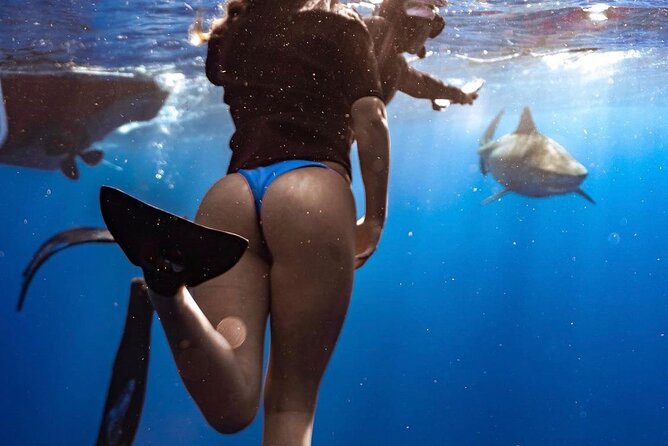
Fins and snorkel equipment are included. One account also notes wetsuits and anti-fog treatment, though you should confirm the exact equipment provided when booking if a wetsuit is important to you.
The gear makes the activity accessible to people with some snorkeling experience rather than only strong swimmers. Fins help you move efficiently, and a properly prepared mask lets you spend less time fighting fog and more time watching the water.
You do not need to bring a camera to remember the outing. An underwater photographer rides aboard and can take high-quality photos and video for an additional fee. The files are sent digitally a few days after the trip.
Parker and Nicole are both praised for giving clear directions and helping people position themselves for photos. That can be useful in open water, where it is hard to pose, watch a shark, control your breathing, and keep track of your fins at once.
The photo service is optional and costs extra, so include it in your budget only if you want professional images. If you prefer to keep your attention on the animals, you can skip it.
Same island, a completely different kind of day:
- Oahu Grand Circle Island and Haleiwa Tour: 9-Hr Deluxe Experience
★ 5.0 · 17,387 reviews - Oahu: Grand Tour Around Island 16 Locations plus Snorkeling
★ 5.0 · 8,669 reviews - Parasailing Experience in Waikiki, HI
★ 5.0 · 7,692 reviews - Salute to Pearl Harbor Including USS Arizona
★ 4.5 · 7,433 reviews
What you may see beyond the sharks
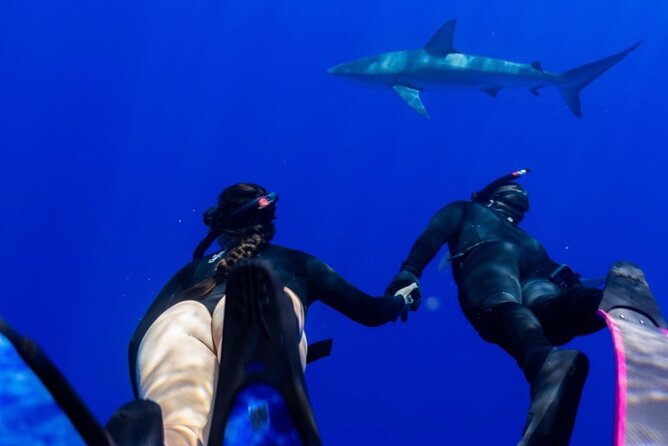
The tour takes place near Waialua Bay, an area associated with a broad mix of marine life. Dolphins, flying fish, many fish species, and humpback whales may appear, especially during the winter migration season.
That variety improves the outing when shark activity is quiet. One account describes seeing dolphins below the group, while another mentions several humpback whales nearby along with sharks and fish. These sightings are not guaranteed, but they show why the open-water setting can offer more than one main attraction.
You may see a small group of Galapagos sharks circling at a comfortable distance, or you may have a close approach from a larger animal. The crew’s role is to help you observe without chasing, touching, or crowding the sharks. Do not try to reach out, even if one comes close enough to appear within arm’s length.
The animals are the reason to book, but the real value comes from learning how to watch them. The biology and behavior talk gives context to what you see rather than leaving you with only a dramatic photograph.
How the two-hour schedule fits your Oahu day
The activity lasts about two hours, including the boat ride, safety information, and time in the water. That short length works well for an Oahu itinerary because you can schedule it in the morning and still have much of the day available.
An early departure also gives you time to continue along the North Shore afterward. You could visit Waimea Bay, spend time in Haleʻiwa, or stop at Puaʻena Point Beach Park, depending on your plans and the day’s conditions.
Waimea Bay has a very different character in summer and winter. Summer can bring calm turquoise water suitable for swimming, snorkeling, and cliff jumping. Winter brings large surf and a more powerful shoreline, so do not assume it will be a swimming stop year-round.
Puaʻena Point Beach Park, just east of Haleʻiwa, is more relaxed. Its mellow waves, shade, tide pools, and possible turtle sightings make it a useful follow-up stop, especially if you want a quieter beach after the boat outing.
The timing also helps if you have limited vacation days. You are not committing an entire day to transportation and waiting around. The activity begins and ends at the same harbor, with the rest of your schedule still flexible.
What you are paying for at $155
At $155 per person, this is not a budget snorkeling stop. You are paying for a small boat outing, professional handling, safety coverage, equipment, and access to an open-water location three miles offshore.
The group limit of six is the strongest value point. A larger boat might offer a lower price, but you would likely have less personal space and less direct contact with the crew. Here, the small format gives the safety team a better chance to watch everyone and assist with positioning.
The price also reflects the unusual setting. You are not simply snorkeling over a shallow reef near shore. The boat takes you into a pelagic zone where larger animals may pass through, and the crew provides specialized instruction for that setting.
The value is less certain if you need guaranteed shark numbers, a calm ride, or a long time in the water. Weather can affect departures, waves can make the ride uncomfortable, and wild sharks do not follow a schedule.
Photos and video are extra. Factor that in before you decide if the total cost fits your plans. If professional images matter to you, the photographer is a useful addition. If not, the base price already covers the core activity and equipment.
Who will enjoy this most
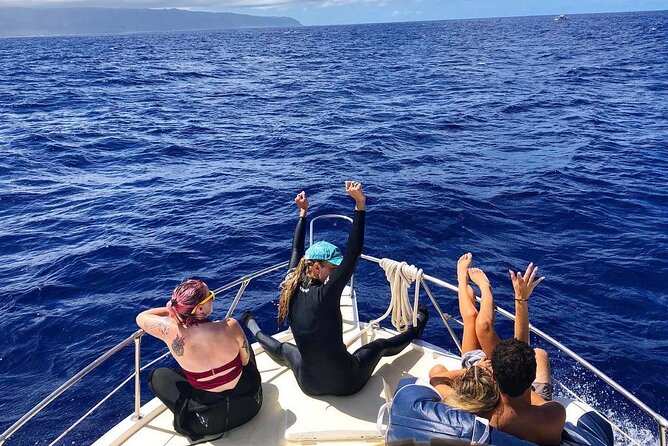
I would recommend this tour to you if swimming with wild sharks is a major goal and you want a small, personal operation. It suits people who value instruction, attentive supervision, and a short activity with strong wildlife potential.
It can also work for first-time open-water snorkelers who are reasonably fit and willing to listen carefully. Several people arrived nervous and became comfortable after the crew explained what to expect and stayed close in the water.
This is less suitable if you dislike boats, get motion sick, or want a relaxed shallow-water snorkeling session. The trip goes offshore, the water may be rough, and the main encounter happens in open ocean.
Families can book it, but every participant should be able to handle the physical demands and follow safety directions. Service animals are allowed, and the departure point is near public transportation. The available information does not provide a detailed age policy, so confirm that directly if you are booking for children.
Weather, cancellations, and planning details
Good weather is required. If conditions force a cancellation, you can choose another date or receive a full refund.
You can cancel for a full refund up to 24 hours before the start time. Cancellations or changes made within 24 hours are not refunded or accepted, so watch the local cut-off time closely.
The tour is often booked about 19 days ahead. That is a useful planning signal, especially if you are visiting during a busy season or have only one open morning on Oahu. Booking early protects your preferred date, but leave enough flexibility in your itinerary in case weather affects the ocean.
The experience ends back at Haleʻiwa Boat Harbor. That makes it easy to continue exploring the North Shore without arranging a separate return transfer.
Should you book this cage-free shark tour?
Book it if you want a close look at wild sharks with a small crew, active safety support, and useful information about shark behavior. The strongest reasons are the six-person limit, the open-water setting, the included gear, and the chance to see Galapagos, sandbar, or tiger sharks along with dolphins, whales, and fish.
Skip it if you need guaranteed sightings, dislike rough boat rides, or would rather stay in shallow water. The ocean can be unpredictable, and the best outing may not be the one with the most sharks.
For the right person, $155 is a fair price for a rare Oahu experience that takes only about two hours. I would book it early, choose a time that leaves room for North Shore exploring, and treat the sharks as wild animals rather than a scheduled attraction.
FAQ
Where does the shark tour start?
The tour starts at Haleʻiwa Boat Harbor in Haleiwa, Hawaii, and returns to the same meeting point.
How long does the experience last?
The activity lasts approximately two hours.
How far offshore does the boat travel?
The boat travels about three miles off Oahu’s North Shore into a pelagic, deep-water area.
Is a cage used during the shark encounter?
No. The experience is designed for swimming and snorkeling near sharks without a cage, with safety guidance from the trained crew.
What equipment is included?
Fins and snorkel equipment are provided. An experience account also notes wetsuits and anti-fog treatment, but you should confirm the exact equipment available when booking.
Which sharks might I see?
The most common resident species include Galapagos and sandbar sharks. Tiger sharks are also possible, along with other marine life.
What happens if bad weather cancels the tour?
You can choose a different date or receive a full refund if the activity is canceled because of poor weather.
Newest Oahu write-ups
- West Oahu: Eco-Friendly Whale Watching Cruise★ 4.5 · 40 reviews
- Oahu: Waikiki Eco-Friendly Morning Whale Watching Cruise★ 4.4 · 119 reviews
- Oahu: Circle Island Tour with Lunch & Waimea Waterfall★ 4.4 · 134 reviews
- West O’ahu: Dolphin Watching and Snorkeling Catamaran Cruise★ 4.5 · 31 reviews
- West O’ahu: Swim with Dolphins Catamaran Cruise★ 4.9 · 70 reviews
- Oahu: Waimea Falls & valley & North Shore day★ 5.0 · 4 reviews
- Honolulu, Oahu: Waikiki Turtle Snorkel Tour w/Shuttle Option★ 3.6 · 81 reviews
- Waikiki: Surf Lessons Easy 60 min classes no crowds!★ 4.9 · 21 reviews
Oahu Shark Diving Tours, compared.
Safe and Educational Shark Dive from Haleiwa: Sharks Guaranteed
Read our review →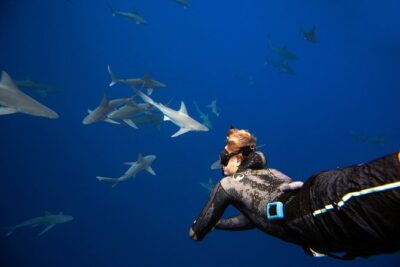
Dive with Sharks in Hawaii: Shark Tour from Haleiwa
Read our review →
Shark Cage Diving On “The World Famous North Shore of Oahu”, Hawaii
Read our review →Browse the lists this tour appears in