
Reviewed · OAHU SHARK DIVING TOURS
Oahu Shark Dive
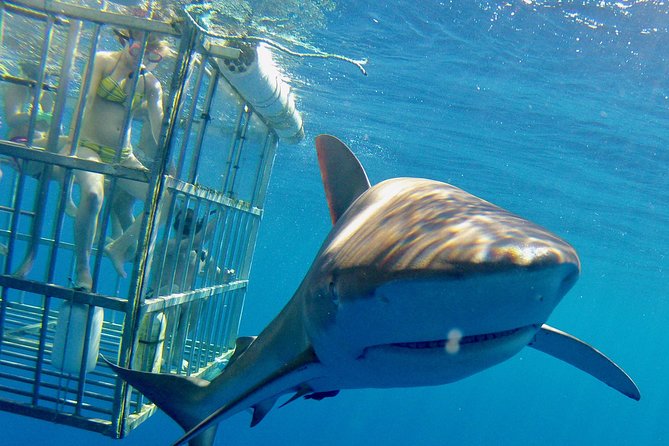
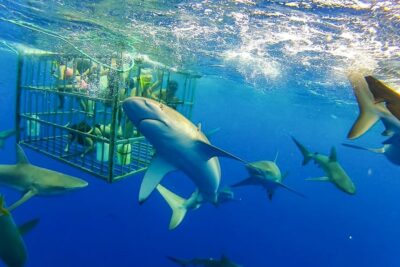
Wild sharks glide within inches of your face on this North Shore cage experience, where the open Pacific becomes your viewing window. You’ll ride from Haleiwa into clear offshore water, receive a safety briefing, then watch Galapagos, sandbar, or hammerhead sharks from a metal cage.
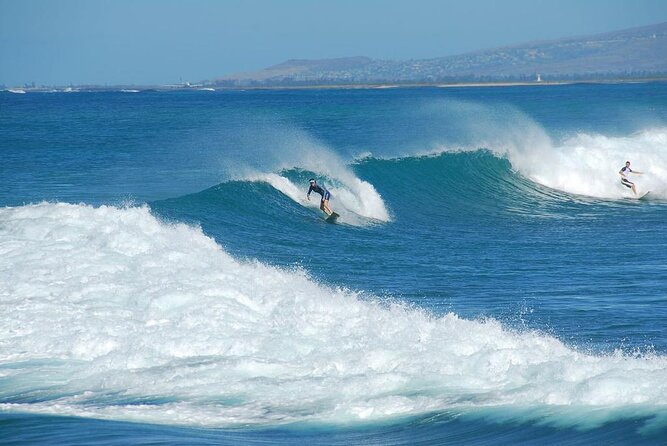
I like two things here: the small maximum group of 14 keeps the outing personal, and the boat makes the trip worthwhile even if you stay dry. You may see turtles, dolphins, surfers, or winter humpback whales along the way.
The main drawback is rough water. Several people have dealt with seasickness, and the cage can move sharply when the ocean gets choppy. Take that seriously if boats tend to upset your stomach.
Key points to know before booking
- Wild sharks in open Pacific water: Expect Galapagos and sandbar sharks, with hammerheads possible.
- About 20 minutes in the cage: The exact time depends on conditions and group movement, but this is enough time for repeated close views.
- Whales may appear in winter: Humpbacks have been seen beside the boat, especially on the ride back.
- No swimming skills required: You can enter the cage with snorkeling gear or watch from the deck.
- Seasickness is the biggest concern: Rough water can affect the boat ride and the cage itself.
- Budget $99.48, plus optional video: The high-definition underwater video upgrade costs an additional $75.
From Haleiwa Harbor to the shark grounds
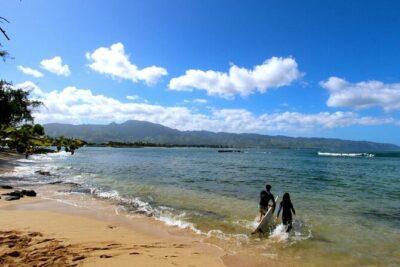
The outing begins at 66-101 Haleiwa Road, beside Haleiwa boat harbor on Oahu’s North Shore. You need to check in 30 minutes before departure, and the activity returns to this same meeting point after about an hour and a half.
That meeting point matters if you are staying in Waikiki. Hotel pickup is not included, and the drive across the island can take enough time that a late start will add needless stress. I would allow a generous buffer, especially if you are making this a morning activity during a busy holiday period.
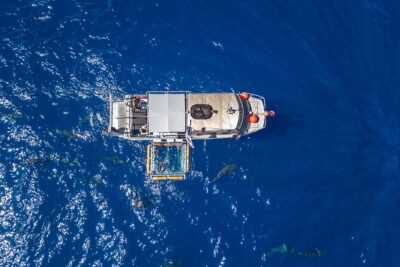
Once aboard, the boat heads away from shore toward open water. The view changes quickly. Haleiwa and the North Shore recede behind you, while the ocean becomes the main event. Depending on the season and conditions, you might spot dolphins, sea turtles, surfers, or humpback whales. Several outings have included whale sightings on the return ride, with the boat stopping briefly so people could take pictures.
The cruise itself is more than transportation. It gives you time to settle your nerves before the cage portion and offers a second way to enjoy the ocean if you decide not to enter the water.
More shark dives in Oahu:
- Oahu: Shark Cage Dive on the North Shore
★ 4.8 · 1,485 reviews - Shark Cage Diving on Oahu’s North Shore
★ 5.0 · 1,391 reviews - Cage-Free Shark Swim from Oahu
★ 5.0 · 1,064 reviews
The safety briefing sets the tone
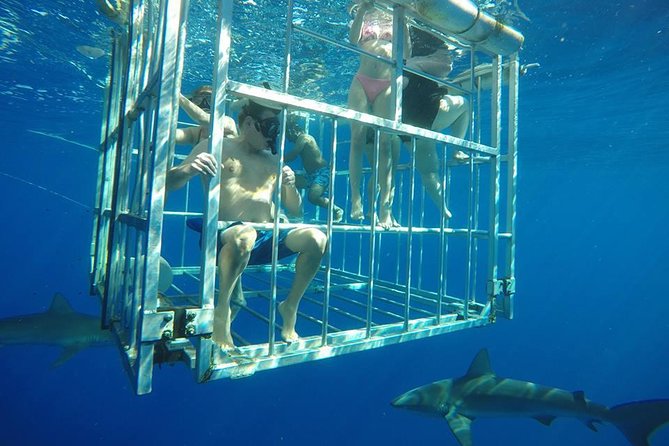
Before anyone enters the cage, the crew explains how to behave around the animals and how to hold on. This is not a free-swimming encounter. You remain inside a secured underwater cage while the crew manages the boat and watches the conditions.
The crew’s calm approach is important for first-timers. People who arrive nervous are given simple instructions, and the staff stays involved instead of treating the cage as a self-guided activity. Maddie and Emma have been singled out for friendly, straightforward help on one recent outing, though crew assignments can change.
You do not need swimming skills. You will use the provided snorkeling equipment, and the cage gives you a fixed place to hold on. Still, this is not effortless. You should be comfortable getting into the water, standing or holding position in moving water, and following directions from the deck crew.
The recommended minimum age is 5, subject to the captain’s judgment and the day’s conditions. The activity calls for moderate physical fitness. That does not mean you need to be athletic, but you should consider your balance, comfort with a boat ladder, and ability to manage a moving cage.
What the sharks look like underwater
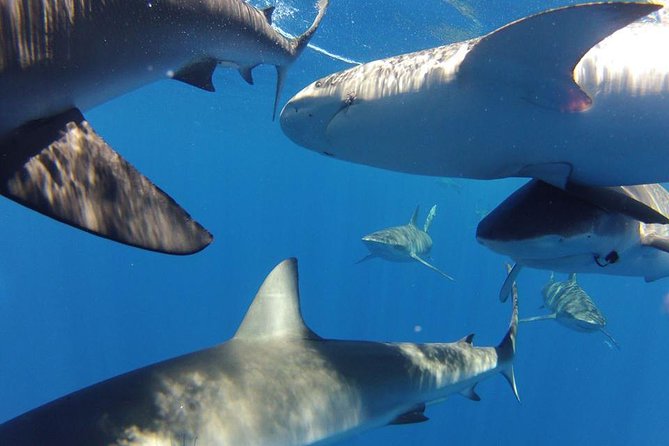
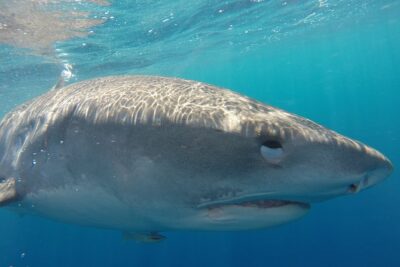
Off Oahu, common sightings include Galapagos sharks and sandbar sharks. Hammerheads are also possible. The sharks may range from roughly 5 to 15 feet, depending on their age, so the view can be far more imposing than a quick look at a small reef shark.
Visibility can reach about 200 feet, or 60 meters, in clear offshore water. That matters because you may see a shark approaching from a distance before it reaches the cage. The first sight is often the most startling: a large animal appears out of the blue, then turns and passes close by.
The encounter is not built around a feeding frenzy. The crew’s job is to observe the sharks and keep the experience controlled. You may see one or several sharks circling below, beside, or in front of the cage. Sightings vary. Some outings have produced around 10 to 12 sharks, while another saw only two or three large ones. The operator provides a money-back guarantee that you will see sharks, but the number and size are naturally outside anyone’s control.
That variation is worth understanding before you pay. You are buying a chance to watch wild animals in their natural setting, not a staged performance with a guaranteed count.
Inside the cage, the encounter feels close
The cage can hold two adult divers and up to eight people at a time, depending on the weather and movement of the water. With a maximum group of 14 on the boat, the crew may organize people into smaller groups so everyone gets a fair turn.
A cage session of roughly 20 minutes has been reported, which gives you enough time to adjust your mask, get past the first rush of nerves, and actually watch the sharks instead of simply reacting to them. The experience may feel shorter than expected because you are concentrating hard, but the time is generally long enough for several passes.
The cage is secure, but the ocean is still moving. In calm conditions, you can focus on the animals and take in their graceful motion. In choppy conditions, the cage can swing and bump enough to make you feel like you are inside a floating blender. Hold on as instructed, keep your attention on the crew, and do not assume a calm morning at the harbor guarantees calm water offshore.
Prescription goggles have been available on at least some outings, which may help if standard masks are a problem for you. Ask about this when you arrive rather than waiting until you are already in the water.
Same island, a completely different kind of day:
- Oahu Grand Circle Island and Haleiwa Tour: 9-Hr Deluxe Experience
★ 5.0 · 17,387 reviews - Oahu: Grand Tour Around Island 16 Locations plus Snorkeling
★ 5.0 · 8,669 reviews - Parasailing Experience in Waikiki, HI
★ 5.0 · 7,692 reviews - Salute to Pearl Harbor Including USS Arizona
★ 4.5 · 7,433 reviews
Staying on the boat is a good option
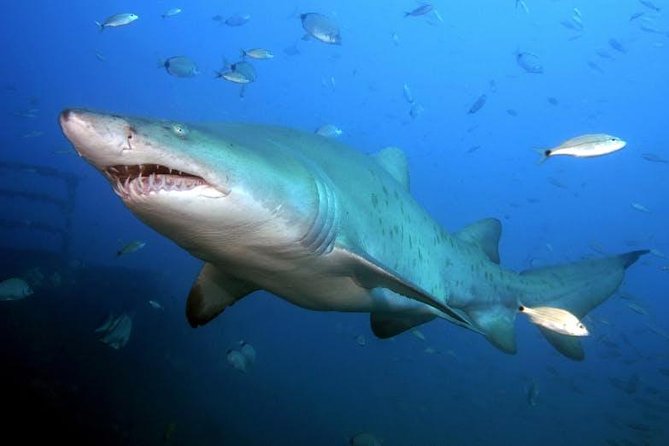
You do not have to enter the cage to take part. Observers and cage participants remain on the same boat when booked into the same time slot, so a family can split up without one person missing the entire activity.
This works especially well for a mixed group. One parent can enter the cage while another stays on deck with a child. A nervous family member can watch the sharks from above and still hear the crew explain what is happening. Sharks can be clearly visible from the boat when water and light cooperate.
The deck also gives you better freedom to take photos, watch for whales, and enjoy the coastline. Some people find that seeing the animals from above is thrilling enough. Others use the deck as a first step, then decide to enter the cage once they see how the setup works.
The activity includes snorkeling equipment, but it does not include towels, swimwear, sunscreen, food, or drinks. Bring what you need for the water and the boat. An underwater camera is allowed based on the practical conditions, but several people have found that rough water makes it difficult to hold a camera safely.
Should you pay $75 for the video?
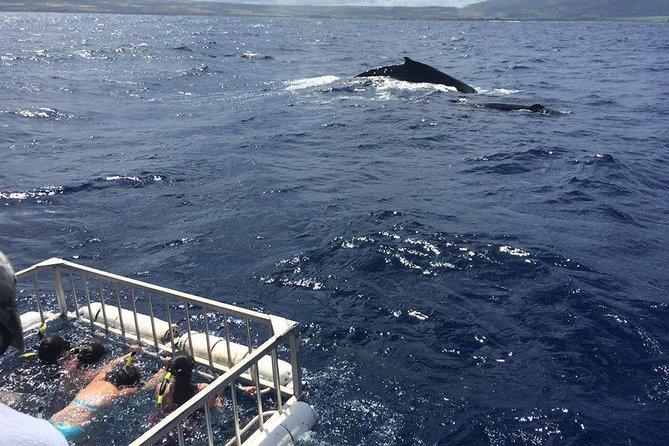
The optional high-definition underwater video costs $75. It can be useful if you want hands-free memories, especially because the water may be too active for you to manage a camera while holding the cage.
The footage is not essential to the experience. You can bring your own GoPro or underwater camera, but you should be realistic about handling it. Your attention will be divided between holding on, clearing your mask, and watching the sharks. I would choose the paid video if recording matters to you and you do not want to risk losing or dropping your own camera.
One person who purchased the video found it basic but still worthwhile. That is a fair way to view the upgrade. It is a keepsake, not a polished wildlife film.
Seasickness can change the whole outing
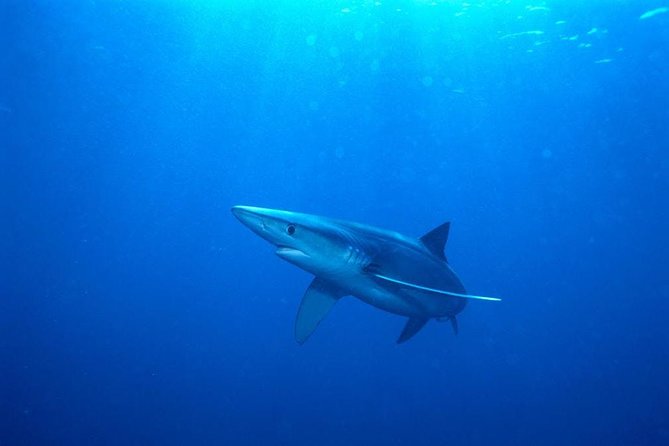
Rough water is the clearest weakness of this activity. The ride out may be smooth, then the ocean can become unsettled at the shark site. Moving from the cage back onto the boat can also trigger nausea because your body is adjusting from one motion to another.
Several people have reported seasickness, including cases where Dramamine did not fully help. If you are prone to motion sickness, speak with a medical professional about suitable medication before your trip, follow its instructions, and avoid arriving dehydrated or hungry. The crew can help, but they cannot calm the sea.
I would not choose this as a casual outing for someone who regularly gets sick on boats. For everyone else, the rough water is a risk to weigh against the chance of seeing wild sharks at close range. Weather cancellations are possible, and if conditions make the trip unsafe, you will be offered another date or a full refund.
How the $99.48 price holds up
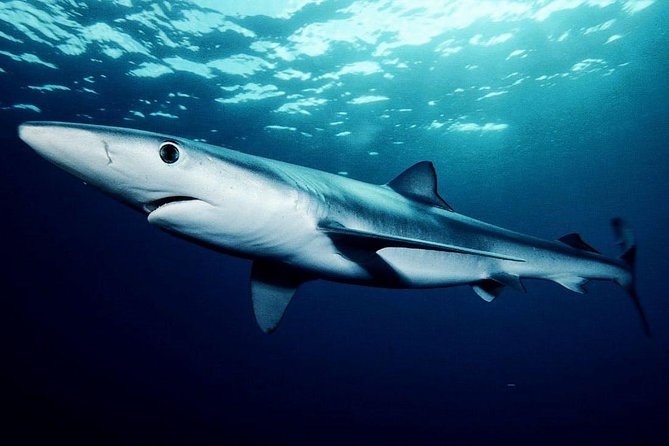
At $99.48 per person, this is a strong value if the main goal is a close shark encounter without paying for a private boat. The price includes the cage experience, snorkeling equipment, crew, and local taxes. It also covers the boat ride into the open Pacific, where whale or dolphin sightings can add real value.
The cost does not include transport from Waikiki, meals, drinks, towels, swimwear, sunscreen, or the optional $75 video. Those extras do not make the base price misleading, but they do affect your final budget.
The maximum of 14 people is another reason the price feels reasonable. This is not an enormous sightseeing boat where you might struggle to see the action. The crew can divide the group and manage cage access with some flexibility, depending on conditions.
You should still understand what you are paying for. This is a short, focused experience rather than an all-day ocean trip. You might spend much of the 90 minutes traveling to the site, receiving instructions, waiting for your turn, and returning to Haleiwa. The reward is the quality of the shark encounter, not a long list of included activities.
Who will get the most from this North Shore outing?
I would recommend it to adults, families with older children, solo visitors, and couples who want a memorable ocean activity with a clear sense of structure. It also works well for solo participants because the small boat and shared cage create a social setting without requiring you to arrange a private group.
Families should note that the captain has the final say on children entering the cage. The recommended age is 5 and older, but weather, water movement, and the child’s comfort all matter. A child who dislikes masks, boats, or changing water may be happier watching from the deck.
This suits you if you are curious about sharks but want a barrier between you and the animals. It is less suitable if you dislike open water, cannot tolerate boat motion, or expect a completely calm, pool-like setting.
The experience has also worked well for people who arrive anxious. The crew’s clear instructions and constant presence help, and the cage offers a defined place to hold on. Still, do not book it simply because someone else wants to check it off a list. You need to be willing to enter open ocean conditions.
A practical plan for the day
Wear a swimsuit or other clothing suitable for getting wet, and bring a towel even though one is not supplied. Pack sunscreen, water, and any needed food because refreshments are not included.
Arrive at least 30 minutes early. Use the restroom before boarding, listen closely to the briefing, and tell the crew if you are nervous or need special help with the mask. The boat carries both observers and cage participants, so you do not need to separate from your group.
Bring a waterproof camera only if you can manage it safely. Otherwise, focus on the animals. The best view may last only a few seconds at a time, and fumbling with a device can make you miss the shark passing directly in front of you.
For Waikiki visitors, plan the drive to Haleiwa carefully and leave extra time. The experience ends where it begins, so you can combine it with other North Shore plans, but do not schedule something immediately afterward if you are sensitive to motion or if traffic could delay your return.
Should you book the Oahu shark cage experience?
Book it if you want a close look at wild sharks, value experienced crew support, and can accept the possibility of rough water. The chance to see Galapagos or sandbar sharks in clear offshore water is the main reason to go, while whales, dolphins, turtles, and North Shore views make the boat ride more rewarding.
Skip it if you are highly prone to seasickness or want a quiet, dry boat tour. If you are undecided, book with a family member or friend who can enter the cage while you watch from the deck. At $99.48, the price is fair for a well-organized, limited-size ocean outing, and the money-back shark guarantee removes the biggest worry about wildlife sightings.
FAQ
Where does the Oahu shark cage experience begin?
It begins at 66-101 Haleiwa Road in Haleiwa, Hawaii, at the North Shore boat harbor. The activity ends back at the same meeting point.
How long does the activity last?
The total duration is approximately 1 hour and 30 minutes, including the boat ride to the offshore shark-viewing area, the cage experience, and the return to Haleiwa.
Do I need to know how to swim?
No swimming skills are required. You use snorkeling equipment and remain in the secure cage, while the crew explains how to act and where to hold on.
Can I stay on the boat instead of entering the cage?
Yes. Observers and cage participants stay on the same boat when booked for the same time slot, so you can watch from the deck if you prefer.
What sharks might I see?
Common sightings include Galapagos sharks and sandbar sharks. Hammerheads are also possible. The sharks may range from about 5 to 15 feet, depending on their age.
What is the cancellation policy?
You can cancel at least 24 hours before the start time for a full refund. Poor weather or failure to meet the minimum number of participants may lead to a rescheduled trip or full refund.
Newest Oahu write-ups
- Private Surf Lessons in Honolulu★ 5.0 · 76 reviews
- Private Round-Trip Transfer: Honolulu International Airport to Hotel or Cruise Terminal★ 4.0 · 34 reviews
- Private Pearl Harbor USS Arizona Memorial★ 4.5 · 3 reviews
- Private Pearl Harbor and Mini Circle Island Tour from Waikiki★ 5.0 · 8 reviews
- Passport to Pearl Harbor “Private”★ 5.0 · 4 reviews
- Pearl Harbor USS Arizona and USS Missouri “Private”★ 5.0 · 10 reviews
- Private Tour Oahu – up to 6 passengers – Customizable★ 5.0 · 3 reviews
- Private One-way Airport Transfer Honolulu Airport To Honolulu★ 4.0 · 24 reviews
Oahu Shark Diving Tours, compared.
Safe and Educational Shark Dive from Haleiwa: Sharks Guaranteed
Read our review →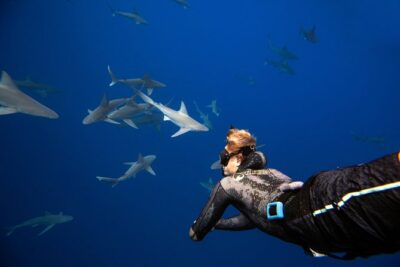
Dive with Sharks in Hawaii: Shark Tour from Haleiwa
Read our review →
Shark Cage Diving On “The World Famous North Shore of Oahu”, Hawaii
Read our review →
Browse the lists this tour appears in