
Reviewed · WAIKIKI TROLLEY TOURS
Waikiki Trolley Red Line Heroes & Legends Hop-on Hop-off Tour
The best thing about this Red Line trolley is its sweep. In roughly one circuit, you move from Waikiki beach culture to the Honolulu Museum of Art, the state government center, Punchbowl Crater, Chinatown, the harbor, and Kakaʻako. It gives you a useful first look at Honolulu before you decide where to spend more time.
I like the open-air views and the live stories about Hawaiian royalty, World War II, and local landmarks. I also like the freedom to hop off for photos or a quick visit, especially at the King Kamehameha Statue and Aloha Tower. The catch is timing: buses can be crowded, noisy, or about an hour apart, so this is not a precise taxi substitute.
Key points at a glance
- Fourteen stops connect Waikiki with central Honolulu, Punchbowl, Chinatown, and Kakaʻako.
- Live commentary gives context about Hawaii’s monarchy, culture, and wartime past.
- Aloha Tower includes a brief sightseeing break at Honolulu Harbor.
- The first half of the route is the strongest section for major sights outside Waikiki.
- Open-air seating brings better views but also wind, engine noise, and sun exposure.
- At $35, the ride works best as a city introduction, not simply as point-to-point transport.
What the Red Line does best: showing Honolulu in one sweep
This is a sightseeing route first and a transport service second. The trolley links Waikiki to Honolulu’s civic center, historic core, harbor, and Kakaʻako, letting you cover ground without figuring out city bus routes on your first day.
I would use it to get my bearings. You can note the places that deserve a return visit, hear the stories behind buildings you might otherwise pass without notice, and get a feel for how Waikiki connects with the rest of Oahu’s capital.
The listed ride takes about 1 hour and 20 minutes, but actual trips can run closer to two hours because of traffic, loading, brief stops, and road events. If you hop off, the next trolley may not arrive for around an hour. Plan this as a half-day outing if you want to explore along the way, not as a quick loop between hotel and lunch.
The live guide makes a real difference. Guides named Chico, Sam, Turk, Big Tony, Chuck, and Kie have been singled out for humor, clear explanations, and local detail, though your guide will vary. Some guides offer practical help with photos and timing, while others keep the ride lively with jokes and stories.
More Waikiki trolley passes:
- Waikiki Trolley Hop-On Hop-Off Tour of Honolulu
★ 4.5 · 4,783 reviews - Waikiki Trolley Blue Line Coastline & Local Grindz Hop-on Hop-off
★ 5.0 · 4,159 reviews - Oahu: Waikiki Trolley Hop-on Hop-off All-Line Pass
★ 4.4 · 810 reviews
From Waikiki Shopping Plaza to the Duke statue
The route begins at Waikiki Shopping Plaza, a useful central starting point near hotels, shops, and restaurants. This is also where you need to pay attention to pickup information. Stop markers are not always easy to spot, and several riders have had trouble finding the exact boarding point at larger destinations.
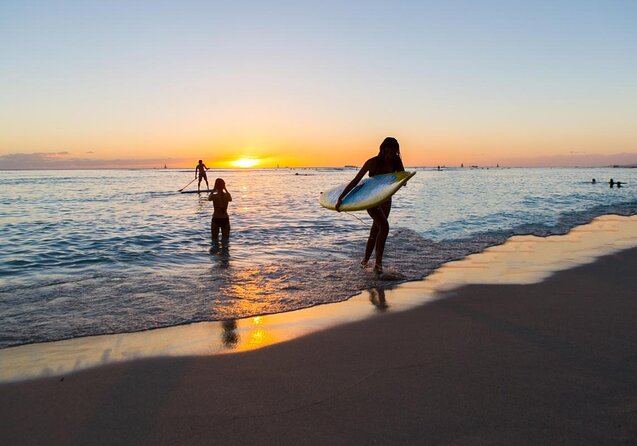
The Duke Paoa Kahanamoku Statue is an especially fitting early stop. Duke was an Olympic swimmer and one of Hawaii’s best-known ambassadors for surfing. The statue gives you a natural photo pause and a quick connection to Waikiki’s water-sports identity.
The Twin Fin Hotel follows, keeping you near the eastern end of Waikiki. You may simply stay aboard here, but this part of the route helps you understand the hotel strip before the trolley turns toward central Honolulu.
The open sides are a plus for photos, but the ride is exposed. Wind can make the commentary hard to hear, especially toward the back, and the wooden seats may feel firm during a longer circuit. Sit near the front if hearing the guide matters most.
Art, government, and the view at Punchbowl
The Honolulu Museum of Art is one of the route’s most useful cultural stops. It offers a change from Waikiki’s beaches and retail streets, with a chance to spend time indoors among art from Hawaii and beyond. Check the museum’s opening days before you plan a hop-off visit, since it is closed Mondays and Tuesdays.
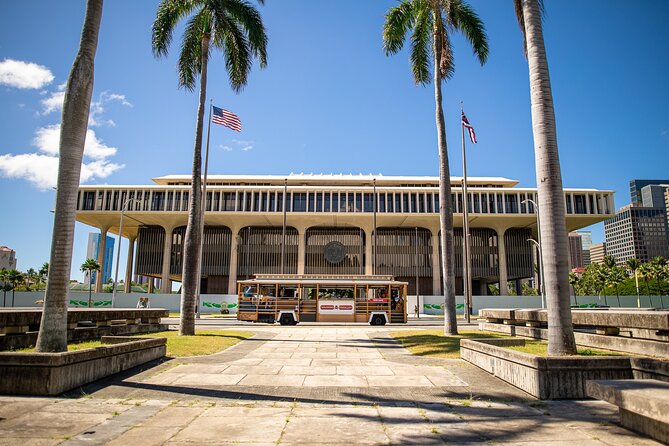
Next comes the Hawaii State Capitol. The building anchors Honolulu’s civic center and gives the guide a chance to explain modern Hawaii, state government, and the islands’ political story. This is a good stop for architecture and context rather than a long scenic break.
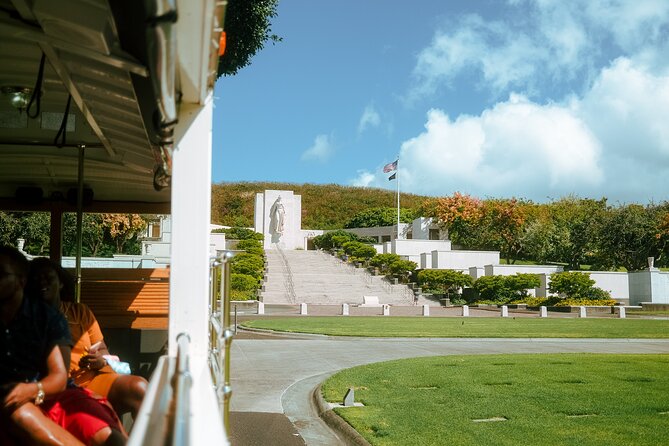
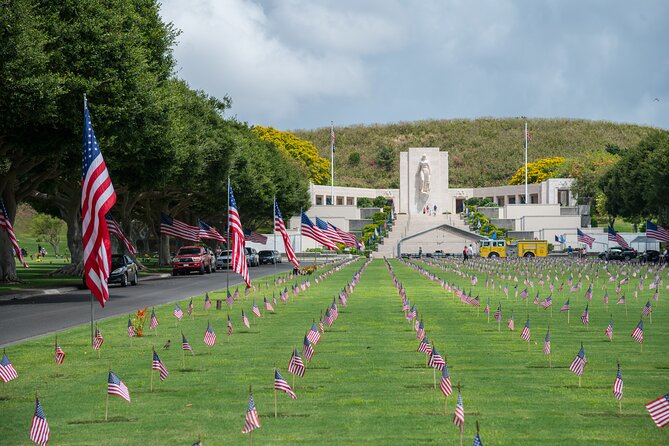
The National Memorial Cemetery of the Pacific sits inside Punchbowl Crater. For me, this is one of the most meaningful parts of the circuit. The setting is calm and formal, and the memorial offers a strong reminder of the Pacific’s wartime history. You can expect a more reflective stop here than at the shopping and harbor sections.
The road to Punchbowl also gives you a change in view over Honolulu. Follow the guide’s instructions carefully if you hop off, since the route may have a set return pattern and the next trolley may be well after your visit. If you are traveling with someone recovering from surgery or who cannot stand comfortably, confirm a seat before boarding. Overcrowding has been a real problem on some departures.
Botanical gardens, a Japanese mission, and Royal Kitchen
Foster Botanical Garden is a quieter stop in the middle of the city. It offers a break from traffic and buildings, with tropical plants and mature trees in a garden setting. The stop makes the route more than a drive-by history lesson, but you should allow enough time for the next trolley if you plan to walk around.
The Izumo Taishakyo Mission of Hawaii adds another layer to Honolulu’s cultural story. This Japanese Shinto mission is a distinctive sight among the city’s streets, and the guide can help place it within the many communities that shaped Honolulu.
Royal Kitchen is listed at this stop as well. The name points to the route’s interest in local food and royal-era connections, but the trolley itself is not presented as a food tour. Treat this as an orientation stop, not a guaranteed meal or tasting.
This section rewards curiosity. You may not spend long at every location, but the guide’s running commentary helps connect individual sites to the wider story of Honolulu. That is where the $35 fare begins to make more sense.
More Waikiki tours:
- Parasailing Experience in Waikiki, HI
★ 5.0 · 7,692 reviews - Waikiki, Hawaii: Turtle Canyon Snorkel Excursion
★ 5.0 · 4,656 reviews - Turtle Canyon Snorkel Adventure in Waikiki, Oahu
★ 5.0 · 3,197 reviews - Oahu: The Magical Mystery Show! at Hilton Waikiki Beach Hotel
★ 5.0 · 2,754 reviews
Chinatown, downtown, and the King Kamehameha Statue
Chinatown and downtown Honolulu offer some of the most useful stops for a return visit. Chinatown brings food, old commercial streets, and a different feel from Waikiki. It can also feel rougher and less polished than the resort district, so keep your expectations realistic and choose your walking route with care.
Hawaii Theatre is nearby, giving you a landmark tied to Honolulu’s entertainment and downtown life. The guide can point out buildings and details that are easy to miss from a car or city bus. If you hop off, allow time for walking and remember that the next trolley may not come quickly.
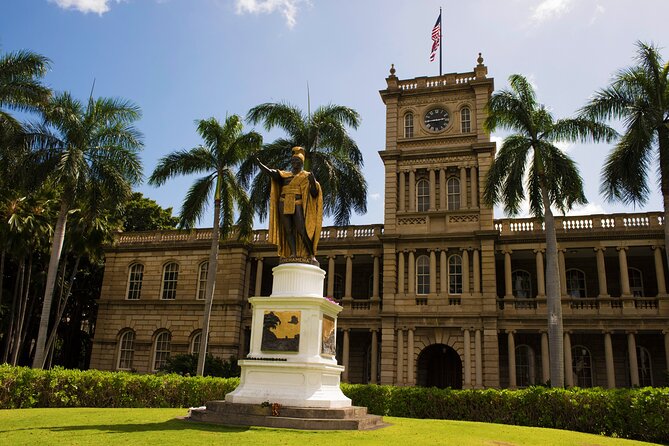
The King Kamehameha Statue is one of the route’s strongest photo stops. The larger-than-life figure honors the ruler who united the Hawaiian Islands, and the location near the civic center makes it easy to connect the statue with Hawaii’s monarchy and state history.
This is also where the commentary can be especially helpful. Guides such as Big Tony and Chico have been praised for explaining Hawaiian names, legends, and landmarks in an entertaining way. The quality of narration depends on the person driving, but live interpretation is the main reason to choose this tour over a basic city bus.
Aloha Tower, Kakaʻako, and the return toward Waikiki
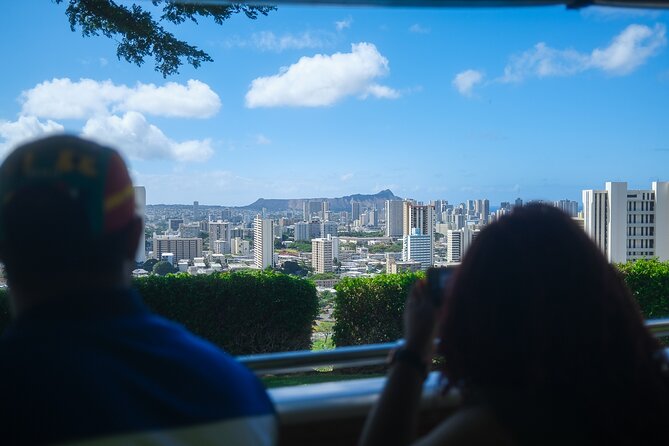
Aloha Tower Marketplace brings you to Honolulu Harbor, with a short sightseeing break. The tower has long been a recognizable welcome point for ships entering the harbor, and the stop gives you a different view of Honolulu’s working waterfront.
You will not get a full harbor excursion here. Think of it as a brief look and a chance to stretch your legs, take photos, or visit the marketplace. If you want a meal, shopping, or a longer waterfront visit, check the next departure before leaving the trolley.
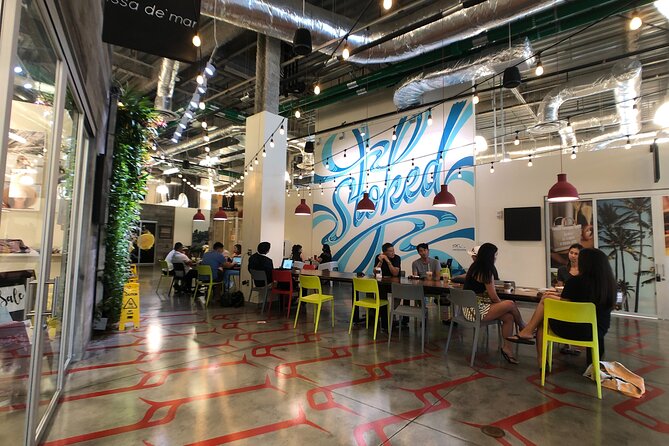
The route then moves through SALT at Our Kakaʻako, a modern food, retail, and arts area. Kakaʻako contrasts sharply with old downtown and Waikiki, making this one of the most useful parts of the ride for understanding Honolulu today.
Ward Centre continues the retail and urban side of the route. It can be practical for shopping or food, though it is less essential if your main goal is history. Ala Moana Regional Park brings the circuit back toward the resort area and offers a broader open setting near the water.
Ala Moana is also a point where pickup confusion can arise. The park and Ala Moana shopping area are not the same place, and the exact trolley position may not be obvious. Ask the staff member or driver where to wait before wandering off.
Why the commentary matters more than the vehicle
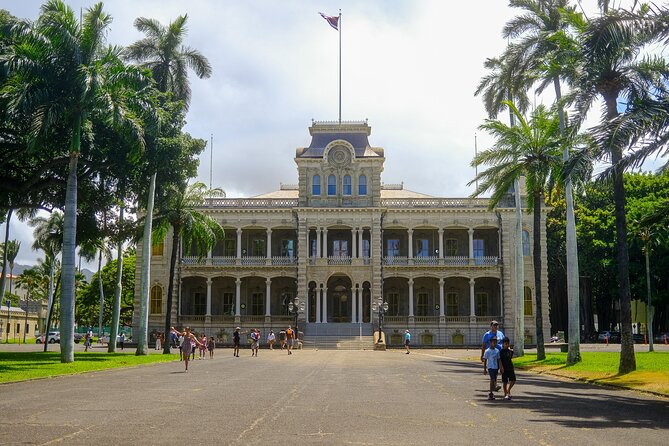
The trolley itself is simple. You get open-air seating, city views, and a raised position that often makes sightseeing easier than from a regular car. But it is not a luxury coach, and comfort can vary from one departure to another.
The most common trouble points are engine noise, wind, and crowded seating. Riders have sometimes had to stand, and one especially poor experience involved standing for more than an hour after an oversold departure. On another trip, a parade caused a major delay and forced passengers to leave far from their intended stop.
I would board early when possible and choose a front or middle seat. Keep a light layer, protect your phone from wind, and do not rely on hearing every word from the back. If the trolley is already full, ask about the next one instead of assuming the ride will be comfortable.
The guides are the main strength. Sam has been praised for making the ride educational and relaxing. Chuck has been noted for friendliness and humor, while Turk has been credited with turning the Chinatown section into an entertaining visit. Kie has been praised for practical timing advice on another Honolulu route, and Chico for clear narration and pronunciation of Hawaiian names.
Those individual names do not guarantee who will drive your trolley, but they show what the experience can be when the guide is engaged. You are paying for interpretation as much as transportation.
Is $35 good value?
At $35 per person, the Red Line costs more than a regular city bus, but comparison by fare alone misses the point. A public bus may take you farther for less money, yet it will not provide the same running explanation of Hawaiian history and Honolulu landmarks.
I see the value in three situations:
- You are visiting Honolulu for the first time and want a quick orientation.
- You have limited time and want to see several districts without planning separate rides.
- You prefer a guided overview before choosing which museums, memorials, gardens, or downtown areas deserve a longer visit.
The value drops if you need reliable point-to-point service or plan to hop off at many stops. Waiting close to an hour for another trolley can erase the convenience, especially if you have a dinner reservation or an airport connection.
The tour is also less useful if you already have a detailed Honolulu itinerary or a separate Pearl Harbor visit that covers much of the same wartime material. Even so, the Red Line adds downtown, Chinatown, Punchbowl, the harbor, and Kakaʻako, so the overlap may be limited.
Who should book the Red Line?
I would book this for a first full day in Honolulu, especially if I wanted an easy introduction before exploring on foot. It suits families, couples, and people who enjoy history but do not want a formal indoor tour all day.
It is a good choice for anyone who likes to listen while looking around. The ride is relaxing when it is running on time, and the open-air format gives you a pleasant break from Waikiki’s hotels and sidewalks.
I would be more cautious if you have limited mobility, need guaranteed seating, or cannot tolerate long waits. Service animals are allowed, and most people can participate, but crowding and standing have affected some departures. Ask about the boarding point and seating before committing to a hop-off plan.
The tour is non-refundable and cannot be changed after booking, so check your schedule carefully. The operating window is listed as 8:00 a.m. to 4:00 p.m., Monday through Sunday, from January 1, 2024 through December 10, 2026.
Should you book it?
Book the Waikiki Trolley Red Line if you want history, orientation, and a broad city loop more than perfect transport timing. Its best moments come from the guide’s stories, the Punchbowl stop, the King Kamehameha Statue, Aloha Tower, and the contrast between Waikiki, Chinatown, downtown, and Kakaʻako.
Skip it if you need a punctual shuttle, guaranteed seating, or a tightly timed sightseeing plan. For everyone else, $35 is reasonable when you use the ride as your Honolulu introduction, stay flexible, and accept that the next trolley may not be right behind you.
FAQ
How much does the Waikiki Trolley Red Line cost?
The price is $35 per person.
How long does the Red Line tour take?
The listed duration is approximately 1 hour and 20 minutes. Actual rides can take closer to two hours because of traffic, stops, and other delays.
Can I hop on and off the trolley?
Yes. The tour is designed for you to get on and off at the listed stops, but the next trolley may be about an hour away.
What language is the tour offered in?
The experience is offered in English.
Where does the tour begin?
The listed first stop is Waikiki Shopping Plaza.
What major sights are included?
Stops include the Duke Paoa Kahanamoku Statue, Honolulu Museum of Art, Hawaii State Capitol, National Memorial Cemetery of the Pacific at Punchbowl Crater, Chinatown, King Kamehameha Statue, Aloha Tower Marketplace, SALT at Our Kakaʻako, and Ala Moana Regional Park.
Is the tour available every day?
The listed operating hours are Monday through Sunday, from 8:00 a.m. to 4:00 p.m.
Are service animals allowed?
Yes, service animals are allowed.
Can I cancel or change the booking?
No. The experience is non-refundable and cannot be changed for any reason after booking.
Newest Oahu write-ups
- Private Surf Lessons in Honolulu★ 5.0 · 76 reviews
- Private Round-Trip Transfer: Honolulu International Airport to Hotel or Cruise Terminal★ 4.0 · 34 reviews
- Private Pearl Harbor USS Arizona Memorial★ 4.5 · 3 reviews
- Private Pearl Harbor and Mini Circle Island Tour from Waikiki★ 5.0 · 8 reviews
- Passport to Pearl Harbor “Private”★ 5.0 · 4 reviews
- Pearl Harbor USS Arizona and USS Missouri “Private”★ 5.0 · 10 reviews
- Private Tour Oahu – up to 6 passengers – Customizable★ 5.0 · 3 reviews
- Private One-way Airport Transfer Honolulu Airport To Honolulu★ 4.0 · 24 reviews
Waikiki Trolley Tours, compared.
Waikiki Trolley Hop-On Hop-Off Tour of Honolulu
Read our review →
Waikiki Trolley Blue Line Coastline & Local Grindz Hop-on Hop-off
Read our review →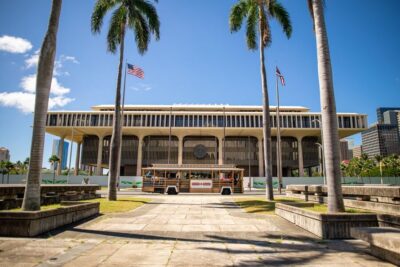
Waikiki Trolley Green Line Diamond Head Shuttle
Read our review →Browse the lists this tour appears in