Reviewed · WAIKIKI TOURS
Surfing Waikiki with local Firefighters
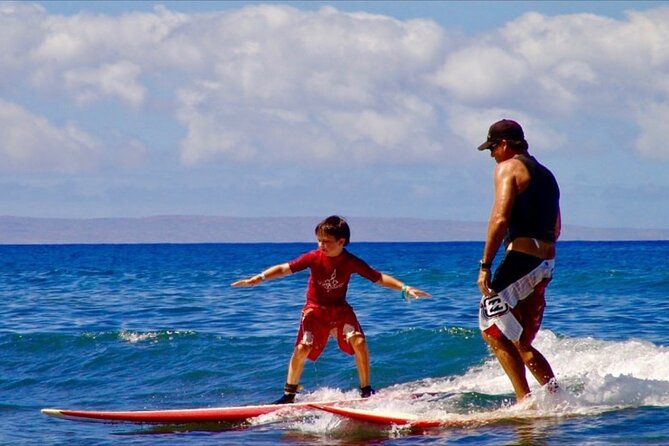
The unusual appeal here is simple: you learn to surf with local firefighters who surf on their days off. That brings a useful mix of ocean experience, first-aid training, and calm coaching to a sport that can feel awkward at first. I like the private format, and I like that the lesson begins on land, where you can practice the pop-up before facing a real wave.
The main thing to consider is stamina. Surfing looks easy from the beach, but repeated paddling and standing can wear you out quickly. The advertised session lasts about 1 hour 15 minutes, although some descriptions and past experiences refer to closer to two hours, so confirm the timing when you book. Return transport may also not be provided after the lesson.
Key points before you book
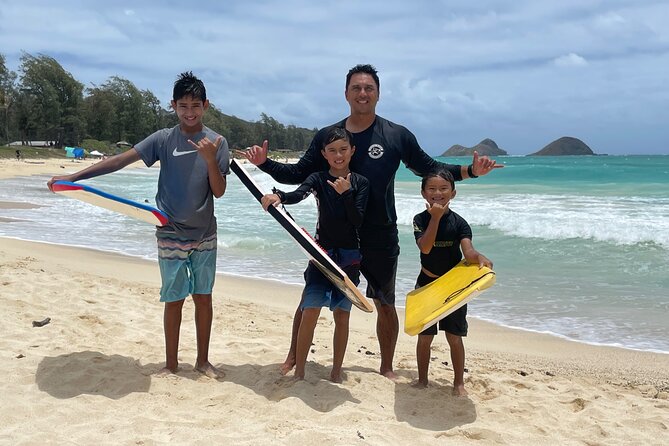
- Firefighter instructors: Jake, Casey, and Elsy are among the instructors named in past experiences, with a focus on safety, patience, and clear coaching.
- Private instruction: Only your group participates, so the pace can suit complete beginners, children, or mixed-ability families.
- Practice before paddling: You learn balance, paddling, and the pop-up on Waikiki’s sand before heading into the water.
- Boards included: You do not need to arrange a separate surfboard rental for the lesson.
- Diamond Head views: The setting gives you a classic Waikiki view while you work on your first rides.
- Book early: The experience is often reserved about 27 days ahead, especially useful advice for a trip with fixed dates.
Why learning with Waikiki firefighters feels different
A first surf lesson can be a little intimidating. You are balancing on a long board, watching waves approach, and trying to remember several instructions at once. An instructor with firefighting and advanced first-aid or life-support training adds a reassuring layer, particularly for parents bringing children or anyone nervous about the ocean.
The teaching style appears practical rather than showy. Jake is praised for getting beginners moving quickly, while Casey has worked patiently with young girls and helped them ride a wave by the end. Elsy has also led lessons, and the instruction can include family members ranging from children to older adults.
That does not mean every person will become a surfer in one session. One partner in a couple’s lesson stood up quickly while the other enjoyed the experience without mastering the technique. That is a fair picture of beginner surfing. Your success depends on balance, timing, fitness, and the day’s waves, not just on the instructor.
What you can count on is a clear introduction to the basics. You will learn how to lie on the board, paddle, keep your balance, and perform the pop-up motion. You will also receive safety guidance and advice about sharing the water with other surfers.
More Waikiki tours:
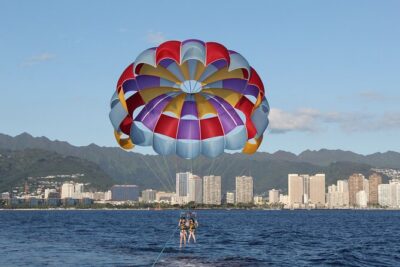
- Parasailing Experience in Waikiki, HI
★ 5.0 · 7,692 reviews - Waikiki Trolley Hop-On Hop-Off Tour of Honolulu
★ 4.5 · 4,783 reviews - Waikiki, Hawaii: Turtle Canyon Snorkel Excursion
★ 5.0 · 4,656 reviews
Starting at the Duke Kahanamoku Statue
The meeting point is the Duke Paoa Kahanamoku Statue on Kalākaua Avenue, beside Waikiki Beach. This is a practical place to begin because it is near public transportation and easy to identify along the main beachfront road.
If pickup is arranged, look for a gray Tacoma with surfboards on top. The experience lists pickup as an available feature, but the details provided do not promise return transportation after the lesson. That matters if you have another appointment, dinner booking, or airport transfer soon afterward.
Give yourself enough time to locate the meeting point. Waikiki can be busy, and you may need a few minutes to move from your hotel or bus stop to the statue. You will want to arrive ready to begin rather than spending the opening minutes sorting out directions.
The lesson is offered in English. Since this is a private activity, you are not joining a large class with strangers. Your group has the instructor’s attention, which is particularly useful if one person needs extra help or if children are learning at different speeds.
Practicing the pop-up on Waikiki sand
The first part takes place on the beach. This is more important than it sounds. Trying to learn the pop-up for the first time while a wave is carrying you toward shore is a poor way to build confidence.
On the sand, you can work through the sequence slowly. You learn where to place your hands, how to bring your feet underneath you, and how to rise without losing the board. The instructor also demonstrates how to paddle and how to position your body.
This land practice helps you spot the small problems that often cause a beginner to fall. You may be standing too early, placing your feet unevenly, or looking down instead of ahead. A private instructor can correct those details before they become habits.
You will also cover ocean safety and basic surf etiquette. That includes understanding how to share waves and how to behave around other people in the water. These lessons are useful beyond this one session, especially if you plan to rent a board and practice later in your Waikiki stay.
One family used the lesson as a starting point, then rented boards for the rest of the trip. That is one of the best ways to get value from a beginner class. You do not need to become an expert in one morning. You need enough confidence and basic technique to keep practicing safely.
Paddling into Waikiki’s gentle waves
Once the group is comfortable on land, you carry the included surfboard into the water. Waikiki is known here for warm, clear water and gentle, rolling waves, conditions that suit a first lesson better than a powerful break.
The instructor may help guide the board and give advice as a wave approaches. Real-time coaching is the heart of the lesson. You will hear when to paddle, when to shift your weight, and when to attempt the pop-up.
This is where the private format earns its keep. If one person catches on quickly, the instructor can give that person more challenging guidance while spending extra time with someone still finding balance. Families have also received individual help in the water, including support for a child with autism.
Do not judge the session only by the number of waves you ride. The first successful stand may last only a few seconds, but it teaches you how the board responds. After several attempts, you begin to recognize the feeling of a wave lifting the board. That small change is often the moment surfing starts to make sense.
You will spend time lying or sitting on the board between attempts. This is not wasted time. It gives you a chance to catch your breath, watch the water, and enjoy the view toward Diamond Head and the Waikiki shoreline.
Same island, a completely different kind of day:
- Oahu Grand Circle Island and Haleiwa Tour: 9-Hr Deluxe Experience
★ 5.0 · 17,387 reviews - Oahu: Grand Tour Around Island 16 Locations plus Snorkeling
★ 5.0 · 8,669 reviews - Salute to Pearl Harbor Including USS Arizona
★ 4.5 · 7,433 reviews - Majestic Circle Island Tour with Lunch
★ 5.0 · 7,014 reviews
What the firefighter background adds
The firefighter theme is more than a clever title. The instructors are presented as local firefighters who surf in their free time, and past instruction has included advanced first-aid and life-support training. That background is especially meaningful for families, older beginners, and anyone who wants safety explained clearly.
The experience is not described as a rescue course, and you should not treat the instructor’s credentials as a substitute for following beach and ocean safety rules. Still, an instructor accustomed to assessing risk can help create a more controlled first lesson.
The coaching also seems to be gentle in pace. Jake recognized when a family had become worn out and did not push them to continue simply because the scheduled time remained. That is a valuable quality in a water activity. Surfing requires energy, and tired beginners lose form quickly.
The best lessons balance encouragement with restraint. You want someone who will urge you to try again after a fall, but who will also notice when you need a rest. This team’s strongest quality appears to be that kind of steady support.
Diamond Head views and the feel of the water
The setting supplies much of the pleasure. From the water, you can see Diamond Head, the curve of Waikiki, and the shoreline while you wait for the next wave. The lesson gives you a more active connection to the beach than simply sitting under an umbrella.
Waikiki’s warm water also makes the first attempt less daunting. You are not facing a cold-water shock before you even learn to stand. The clear conditions can make it easier to watch the board and understand what is happening around you, though the experience does not promise any particular visibility or marine life.
Between rides, you can float on the board and find the ocean’s rhythm. That relaxed time is part of the appeal for couples and families who want more than a technical class. You are learning a skill, but you are also spending time in one of Oahu’s most recognizable settings.
At the end, a group photo may be taken to mark the achievement. It is a small touch, but useful when the lesson becomes one of the trip’s shared memories.
Price, timing, and what you receive
The cost is $90 per person. For a private lesson with an instructor, surfboard, transportation details, and beach-based teaching, that can be reasonable, especially if you would otherwise pay separately for board rental and a group class.
The value improves when several people in your group participate. A private lesson lets parents and children learn together without being placed in a larger class with a fixed pace. Group discounts may be available, so it is worth checking the current price if you are booking for a family or several friends.
The advertised length is about 1 hour 15 minutes. Some past descriptions refer to a longer session, including one account that describes two hours of instruction. Because the exact time matters when planning your day, confirm the duration at booking rather than building a tight schedule around an assumed finish.
The experience operates daily from 8:00 AM to 4:00 PM during the stated operating period. Morning sessions can be a smart choice if you want more energy for paddling, though the supplied details do not promise that one time of day has better waves.
The activity is often booked about 27 days ahead. That is a useful planning clue, not a rule. If surfing is important to your Oahu plans, reserve early enough to leave room for a weather change.
Who will get the most from this lesson
This is best for complete beginners, families, couples, and small private groups who want personal coaching rather than a large beach class. It also suits mixed-ability groups because the instructor can adjust attention from person to person.
Children can take part, and one 12-year-old received patient, supportive instruction. A seventh grader enjoyed the lesson as well. The activity also accommodated a child with autism through one-on-one help in the water.
That said, most people need a reasonable level of physical ability for paddling and standing on a board. The supplied information says most participants can take part, but it does not provide specific age, weight, swimming, or medical requirements. If anyone in your group has concerns, ask the operator before booking.
This may be less suitable if you want advanced surfing instruction, long independent rides, or a full-day water program. It is an introduction, not a serious performance clinic. The main goal is to understand the basics and, with some luck and persistence, stand up on a wave.
Practical details that can affect your day
Confirmation is provided when you book, and mobile tickets are accepted. The activity ends back at the meeting point, but return transportation may not be available because the vehicle can move on to continuous bookings.
Free cancellation is available if you cancel at least 24 hours before the start time. Changes or cancellations inside that window are not accepted for a refund. Poor weather can lead to a new date or a full refund, and a minimum group requirement may also affect operation.
Those rules make it wise to avoid booking the lesson on the final morning of your Oahu stay. Leave some flexibility in case the weather changes or the operator needs to move the session. If the provider cancels, ask about alternative dates or experiences as well as the refund option.
Bring a simple plan for after the lesson. You may be tired, wet, and ready for food rather than another demanding activity. The exact equipment beyond the surfboard is not specified, so confirm what you should bring and wear before arriving.
Should you book Surfing Waikiki with local Firefighters?
I would choose this lesson if you want a friendly first step into surfing and value safety-minded, one-on-one instruction. The included board, private format, Waikiki setting, and patient work with children make the $90 price easier to justify.
Book it early in your trip if you hope to rent a board afterward and practice. That way, the lesson becomes a starting point rather than a one-time novelty.
I would think twice if you need a guaranteed longer session, guaranteed return transportation, or advanced surfing instruction. Confirm the duration, pickup arrangements, and cancellation terms before paying.
For most beginners, this looks like a well-focused way to get past the hardest part: learning how to try without feeling foolish. You may ride several waves, or you may spend the hour learning why the board keeps sliding away. Either way, you leave with a clearer sense of how surfing works and a memorable view of Waikiki from the water.
FAQ
Where does the surf lesson begin?
It begins at the Duke Paoa Kahanamoku Statue on Kalākaua Avenue in Honolulu.
Does the price include a surfboard?
Yes. Surfboards are included, so you do not need to arrange a separate board rental for the lesson.
Is this a private activity?
Yes. Only your group participates in the private tour or activity.
Is transportation included?
Private transportation is included, and pickup is offered. Pickup details identify a gray Tacoma with surfboards on top. Return transportation may not be provided because of continuous bookings.
What language is the lesson offered in?
The experience is offered in English.
How long does the experience last?
The stated duration is about 1 hour 15 minutes. Some descriptions refer to longer sessions, so confirm the exact timing when booking.
Can I cancel for a full refund?
Yes, if you cancel at least 24 hours before the local start time. Cancellations or changes within 24 hours are not refunded. If poor weather or an unmet minimum causes the operator to cancel, you will be offered another date, another experience, or a full refund.
Newest Oahu write-ups
- Oahu: Waikiki Eco-Friendly Morning Whale Watching Cruise★ 4.4 · 119 reviews
- West Oahu: Eco-Friendly Whale Watching Cruise★ 4.5 · 40 reviews
- Oahu: Circle Island Tour with Lunch & Waimea Waterfall★ 4.4 · 134 reviews
- West O’ahu: Dolphin Watching and Snorkeling Catamaran Cruise★ 4.5 · 31 reviews
- West O’ahu: Swim with Dolphins Catamaran Cruise★ 4.9 · 70 reviews
- Oahu: Waimea Falls & valley & North Shore day★ 5.0 · 4 reviews
- Honolulu, Oahu: Waikiki Turtle Snorkel Tour w/Shuttle Option★ 3.6 · 81 reviews
- Waikiki: Surf Lessons Easy 60 min classes no crowds!★ 4.9 · 21 reviews
Waikiki Tours, compared.
Waikiki Trolley Hop-On Hop-Off Tour of Honolulu
Read our review →
Waikiki Trolley Blue Line Coastline & Local Grindz Hop-on Hop-off
Read our review →
Turtle Canyon Snorkel Adventure in Waikiki, Oahu
Read our review →
The Magical Mystery Show! at Hilton Waikiki Beach Hotel
Read our review →
Oahu Grand Circle Island Experience from Waikiki
Read our review →