
Reviewed · OAHU SURF LESSONS
Surf Lesson Without the Crowds Including GoPRO Videos
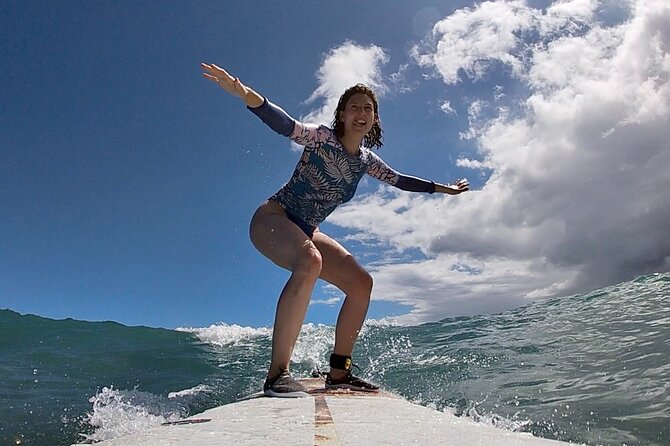
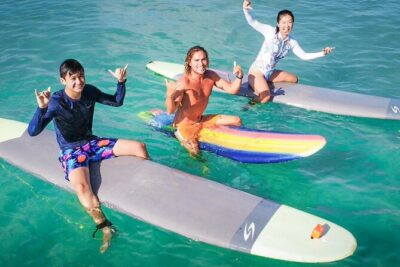
The best part of this 90-minute Ala Moana surf lesson is the small group size. With no more than five people, and often only two or three, you get far more coaching than at a mass Waikiki lesson. Instructors such as Michael, Mike, Rio, and John focus on getting you safely onto real waves, not just explaining the basics from shore.
I like two things here: the calm, encouraging teaching and the included GoPro footage. You practice the pop-up before entering the water, then get help reading waves and timing your stand. The main consideration is that the reef can be rocky and sharp, and you must be able to swim and have moderate fitness.
Key points to know before booking
- Small groups make a real difference: The maximum is five people, with many sessions running more like a semi-private lesson.
- Ala Moana is less hectic than Waikiki: The setting can feel calmer, with room to practice and waves spaced apart.
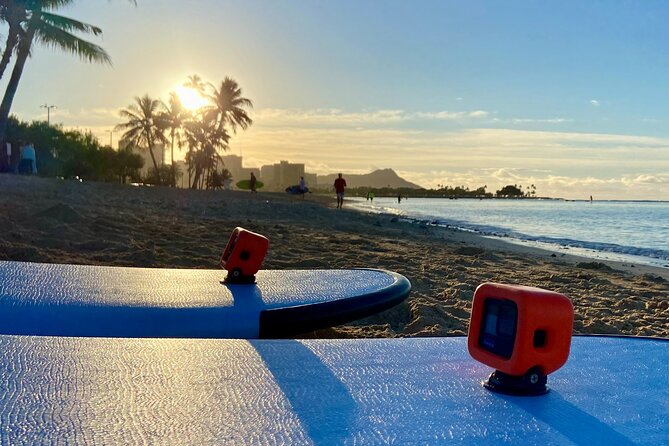
- GoPro footage is included: Edited photos and videos are sent to your email after the lesson.
- Beginners are the main audience: The lesson covers surf basics, wave behavior, safety, and etiquette before you paddle out.
- You need to swim: This is an active water lesson, not a shore-based demonstration.
- Early times may be worthwhile: A 7:00 a.m. session has been praised for lighter beach crowds and good early waves.
Why this Ala Moana lesson feels more personal
Surf lessons can vary wildly. In a large group, you may spend much of your paid time waiting for a board, waiting for an instructor, or watching other people try to stand. This lesson keeps the group to five at most, and the strongest part of the format is the personal coaching.
That small number matters most once you are in the water. A beginner needs quick advice after each attempt: move your feet, keep your chest up, wait longer, or stand sooner. Instructors can give those cues when they are close enough to watch your ride. Several sessions are described as one-on-one or two-person lessons, while another had three students who still felt they received individual help.
The named instructors include Michael, Mike, Rio, and John. The teaching style is consistent in the details that matter: clear instructions, patience, safety reminders, and plenty of encouragement. Michael is especially praised for breaking the process into steps, while Rio and John are noted for staying attentive and helping first-timers catch waves.
I would not treat the small-group promise as a guaranteed private lesson. The maximum is five, and the exact number depends on the date you choose. Still, even five people is a much more workable class than a packed beginner group.
More surf lessons in Oahu:
- Open Group Surfing Lesson in Waikiki, Hawaii
★ 4.5 · 582 reviews - Oahu: Beginner-Friendly Waikiki Beach Surfing Lesson
★ 4.9 · 425 reviews - Surfing Lessons On Waikiki Beach
★ 4.5 · 317 reviews
Meeting at Ala Moana Park Drive
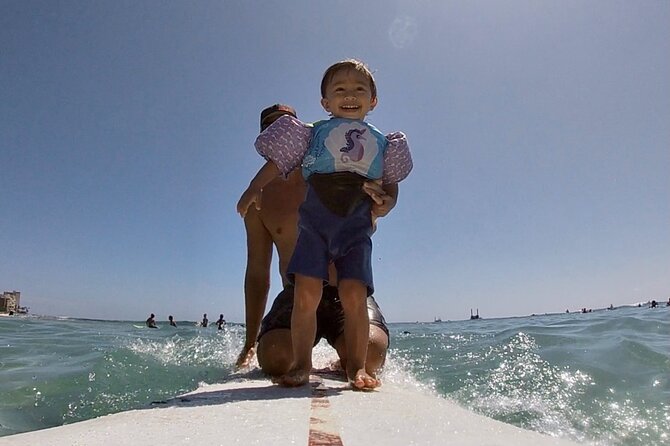
You meet at 75 Ala Moana Park Drive, Honolulu, and return to the same spot when the activity ends. The location is near public transportation, which helps if you are staying in Honolulu without a car.
Ala Moana is a useful choice for a first lesson because it can feel less crowded than the main Waikiki beach areas. One session at 7:00 a.m. was particularly appealing because the beach had fewer people and the early waves were stronger. Conditions change from day to day, so do not assume every morning will be identical, but an early start makes practical sense if you want more space.
Give yourself enough time to find the meeting point. One person had initial confusion about where to meet, though it was cleared up quickly. The activity begins at the listed park address, so check your confirmation carefully rather than wandering toward the busiest part of Waikiki.
The setting is not a polished resort attraction. That is part of its appeal. You are meeting at a public beach, learning in the ocean, and working with the natural conditions available that morning. Waves, wind, water temperature, and the number of people in the area can all affect the session.
The first beach lesson: safety before surfing
The instruction starts on the beach with the basic pieces you need before touching a wave. You learn how a wave works, what to look for, how to position yourself, and how to follow surf etiquette.
That beach briefing is more useful than it may sound. First-time surfers often focus only on standing up, but knowing where to sit, when to move, and how to avoid another board is part of becoming a safe beginner. The instructors also explain the mechanics of getting from lying on the board to standing.
You will practice the pop-up on land before trying it in the water. This gives you a chance to understand the foot placement and body movement without the added problem of a moving board. The teaching is broken into simple steps, which is helpful if you have never surfed or are nervous about falling.
Safety receives steady attention throughout the session. The water in the teaching area has been described as shallow, around five feet in one account, which can make the first falls less intimidating. That does not remove the need to swim, and it does not make the ocean risk-free. You should be comfortable in the water and ready for an active lesson.
Getting into the water and catching your first waves
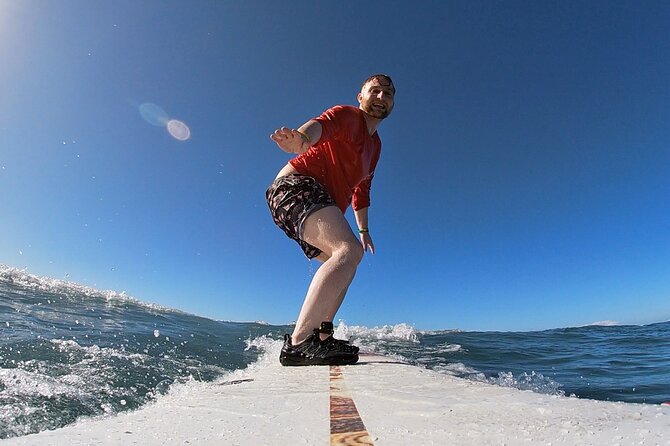
Once the beach instruction is complete, you take the boards into the water and start working on the real skill: timing. The instructor helps position you for waves, tells you when to go, and offers tips after each ride.
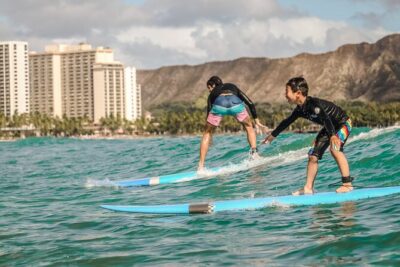
This is where the small group becomes especially valuable. Instead of waiting through a long line, you can get repeated attempts. The goal is to catch as many waves as possible during the available time, giving you a better chance to understand what works.
The lesson is designed for success, but success can mean different things. Some beginners stand on their first attempt. Others need repeated tries before they find their balance. The strongest teaching reports involve instructors continuing to work with people who struggled at first, rather than moving on to the students who learned quickly.
You may hear short cues while preparing for a wave. The instructor can tell you when to paddle, when to stand, and what to change on the next attempt. That immediate feedback is far more useful than a long lecture after the session has ended.
The waves in one session were described as spaced apart, with rides lasting about 20 to 30 seconds. Treat that as a sample of conditions, not a guarantee. Surfing depends on the ocean, and the same beach can offer a different lesson from one morning to the next.
Same island, a completely different kind of day:
- Oahu Grand Circle Island and Haleiwa Tour: 9-Hr Deluxe Experience
★ 5.0 · 17,387 reviews - Oahu: Grand Tour Around Island 16 Locations plus Snorkeling
★ 5.0 · 8,669 reviews - Parasailing Experience in Waikiki, HI
★ 5.0 · 7,692 reviews - Salute to Pearl Harbor Including USS Arizona
★ 4.5 · 7,433 reviews
What the boards, clothing, and reef mean for you
The equipment listed in the experience includes a surfboard, a rash guard or neoprene top, and a GoPro camera. One account also notes that water shoes were provided, while another advises bringing your own water shoes because the reef can be rocky and sharp.
That mixed detail is worth handling carefully. Ask about footwear when you book or confirm the meeting instructions. If you own water shoes, bringing them may be a sensible precaution. Bare feet on a rough reef can be uncomfortable, particularly when you are still learning how to move around the board.
The water may feel chilly, especially if you are used to warm pools or tropical beaches. A rash guard or neoprene top can help, but you should still bring the usual beach basics and a change of dry clothes. The lesson is physical. Your shoulders and arms may feel tired by the end, particularly if you paddle hard or spend much of the class climbing back onto the board.
You should also have a moderate fitness level. This is not a passive sightseeing trip. You will paddle, balance, push up, fall, climb onto the board, and try again. The reward is that even a short session can give you a real introduction to surfing rather than a quick photo opportunity.
GoPro footage adds real value to the $125 price
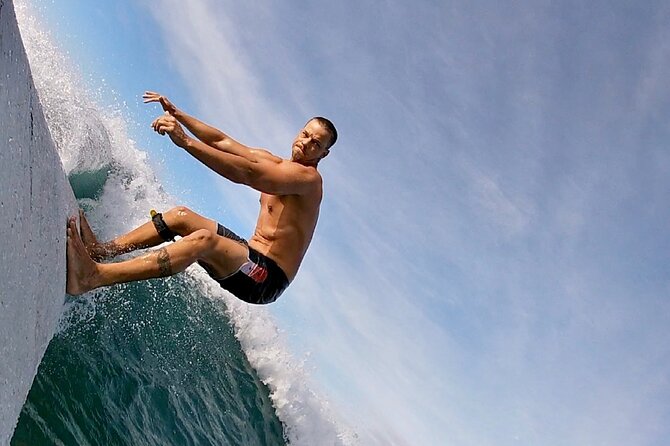
The $125 cost is not just paying for board time. It includes instruction in a small group and edited GoPro photos and video sent to you by email after the activity.
That footage is a strong reason to compare this lesson with cheaper surf classes. You get a record of the moments that are hard to see from your own perspective: the wave building behind you, the instant you stand, and the inevitable falls that make the final video more fun. You also get a useful way to see your stance and balance if you decide to surf again.
The footage is edited before delivery. One account reports receiving it within 48 hours, though the stated arrangement is simply that the files are sent by email after editing. Check that you provide an email address you can access after the lesson.
For a first-time surfer, $125 is fair if you value both the close instruction and the media. It may feel less attractive if you only want to try standing once and do not care about photos or video. The included GoPro service is not a minor extra. It is one of the main features that helps justify the price.
How well it works for children and mixed abilities
The lesson suits families, couples, and friends with different skill levels. Children as young as nine have taken part, and instructors have helped groups that included children aged nine, twelve, and sixteen.
The key point is not simply that children can join. It is that the instruction can be adjusted to different abilities. One couple had noticeably different skill levels, yet the instructor was able to help each person. That is useful if one member of your group has board-sport experience and another is a complete beginner.
Prior experience with skiing, kayaking, or stand-up paddleboarding may help with balance, but it is not required. Several first-timers were able to stand during the lesson, while others needed more support. You should book this expecting a coached introduction, not a promise that everyone will ride like a local by the end.
For children, an adult should think about swimming ability, attention span, and comfort with falling into the water. The teaching is patient and positive, but the activity remains physical. Younger participants need to be ready to listen and follow safety instructions.
Timing, weather, and the practical details
The activity lasts about 1 hour and 30 minutes. That is enough time for a shore briefing and repeated practice, while still being short enough that beginners are unlikely to become completely worn out. One account noted tired shoulders at the end, which is a fair warning for anyone unused to paddling.
Early morning may be the best choice if you want a quieter beach and a better chance of catching fresh waves before conditions change. The 7:00 a.m. start was described as especially pleasant, with good waves at the beginning and shorter waves later in the session. Again, ocean conditions are never fixed, but an early slot can help with both crowds and energy.
The activity requires good weather. If poor weather forces a cancellation, you can choose another date or receive a full refund. You can cancel for a full refund if you do so at least 24 hours before the start time. Cancellations or changes within 24 hours are not accepted for a refund.
Confirmation is provided when you book. The ticket is mobile, and the activity is offered in English. Public transportation is nearby, and the outing ends where it began.
Who should book this surf lesson
I would choose this lesson if you are a first-time surfer who wants more than a crowded group introduction. The combination of limited class size, patient coaching, beginner-friendly instruction, and GoPro footage gives you several ways to measure the value.
It also fits a family with older children, a couple with different confidence levels, or friends who want a shared activity and a keepsake afterward. If you are nervous about surfing, the shallow teaching area and steady safety guidance may help you relax.
I would be more cautious if you cannot swim, have limited fitness, or dislike rocky reef areas. You should also consider the cost if you are traveling on a tight budget and do not care about the included video.
Should you book it?
Book this lesson if your goal is to catch several beginner waves with close help and leave with edited GoPro footage. The small class size is the biggest practical advantage, and the instructors appear especially good at keeping nervous beginners involved until they find their balance.
Choose an early time if possible, bring water shoes if you have them, and arrive ready for active work. At $125, the lesson is not the cheapest way to touch a surfboard, but it offers a stronger package than a large class: personal coaching, repeated attempts, a less hectic Ala Moana setting, and a record of your first rides.
FAQ
Where does the surf lesson meet?
It meets at 75 Ala Moana Park Drive, Honolulu, Hawaii 96815. The activity ends back at the same meeting point.
How long does the activity last?
The surf lesson lasts approximately 1 hour and 30 minutes.
How many people can join the lesson?
The maximum group size is five people. Some sessions may be smaller, including two-person or three-person lessons.
Do I need previous surfing experience?
No. The lesson covers surfing basics, how waves work, surf etiquette, safety, and how to ride a wave. It is designed to introduce beginners to surfing.
Do I need to know how to swim?
Yes. Participants must be able to swim and should have a moderate level of physical fitness.
Are GoPro photos and videos included?
Yes. The surfing is captured with a GoPro, and edited photos and videos are sent to you by email after the lesson.
What happens if the weather is poor or I need to cancel?
If poor weather causes the activity to be canceled, you can choose another date or receive a full refund. You can cancel for a full refund up to 24 hours before the start time. Cancellations within 24 hours are not refunded.
Newest Oahu write-ups
- Private Surf Lessons in Honolulu★ 5.0 · 76 reviews
- Private Round-Trip Transfer: Honolulu International Airport to Hotel or Cruise Terminal★ 4.0 · 34 reviews
- Private Pearl Harbor USS Arizona Memorial★ 4.5 · 3 reviews
- Private Pearl Harbor and Mini Circle Island Tour from Waikiki★ 5.0 · 8 reviews
- Passport to Pearl Harbor “Private”★ 5.0 · 4 reviews
- Pearl Harbor USS Arizona and USS Missouri “Private”★ 5.0 · 10 reviews
- Private Tour Oahu – up to 6 passengers – Customizable★ 5.0 · 3 reviews
- Private One-way Airport Transfer Honolulu Airport To Honolulu★ 4.0 · 24 reviews
Oahu Surf Lessons, compared.
Beginner-Friendly Waikiki Beach Surfing Lesson
Read our review →
Family, Private & Group Surfing Lessons, Waikiki Courtesy Shuttle
Read our review →
Browse the lists this tour appears in