
Reviewed · OAHU SURF LESSONS
Group Surf Lesson: Two Hours Of Beginners Instruction
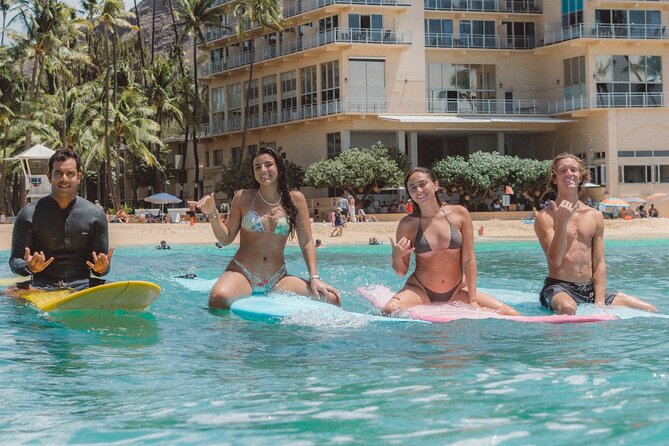
This two-hour lesson gets you past the hardest part of surfing: knowing what to do before the first wave arrives. You’ll practice on land, then head into the water with an instructor who helps you position the board, catch waves, and rise to your feet.
I like the small maximum group of six and the choice of morning or afternoon sessions. I also like that safety is part of the teaching, not an afterthought, with American Red Cross CPR and lifeguard-certified instructors.
The main consideration is instructor attention. A full group of six may feel crowded for some beginners, especially if you want to paddle into every wave without a push. The lesson is built to help you succeed quickly, but it may give you less independent practice than a private class.
Key Points Before You Book
- Beginner-friendly format: You start with a land lesson covering stance, paddling, balance, turning, and safe falls.
- Quiet Waikiki setting: The lesson meets near Kaimana Beach, away from the busiest central Waikiki areas.
- Two hours in the water and on land: That is enough time to learn the basics and make several attempts at catching waves.
- Family-friendly age limit: Children must be at least 11 years old, and families with children aged 11, 15, and 16 have taken part.
- Small but not private: The maximum group is six, with some sessions working best when fewer people attend.
- Safety-first instruction: All instructors hold CPR and lifeguard certification from the American Red Cross.
Starting at Kaimana Beach Hotel
Your meeting point is the Kaimana Beach Hotel at 2863 Kalākaua Avenue, on the eastern end of Waikiki. This location matters. You are not starting in the thick of central Waikiki, where beach traffic and crowds can make a first lesson feel hectic.
The setting is described as a secluded Waikiki spot, which gives the session a more relaxed feel than a lesson in front of a packed beach. You still get the classic Hawaiian experience, but with a little more room to focus on the board, the waves, and your instructor.
Plan your arrival carefully. Parking nearby can be difficult. One past participant noted valet parking outside the shop at $10 for three hours, while another advised bringing coins for a parking meter. These details may change, so treat them as useful planning clues rather than guaranteed current prices.
The meeting point is near public transportation, which can make the lesson easier to reach if you do not have a rental car. Your mobile ticket and booking confirmation should be ready when you arrive. Confirmation is provided at booking.
More surf lessons in Oahu:
- Open Group Surfing Lesson in Waikiki, Hawaii
★ 4.5 · 582 reviews - Oahu: Beginner-Friendly Waikiki Beach Surfing Lesson
★ 4.9 · 425 reviews - Surfing Lessons On Waikiki Beach
★ 4.5 · 317 reviews
The First 20 Minutes: Learning on Land
The lesson begins with a quick introduction to surfing on land. This is more valuable than it sounds. Beginners often lose time in the water because they are trying to remember where to place their hands, how far back to lie on the board, or which foot should lead.
You’ll work through the basic position on the surfboard, paddling technique, and the movement needed to get to your feet. The instructor also covers your proper surf stance and simple balance techniques. The goal is to make the first water attempt feel familiar instead of chaotic.
Safety is included in this opening lesson. You’ll learn the rules for handling the board and what to do when a wave does not go as planned. Safe falling is especially important for first-time surfers, and one family specifically appreciated learning how to fall safely before practicing in the ocean.
You’ll also discuss how to maneuver over waves, turn the surfboard, and read your position in relation to the incoming water. These are basic skills, but they give you a working framework for the rest of the class.
The land portion is not a long lecture. It is designed to get you moving. Pay close attention here, because the instructor’s advice about hand placement and timing will matter more once the board starts moving.
Moving Into the Water
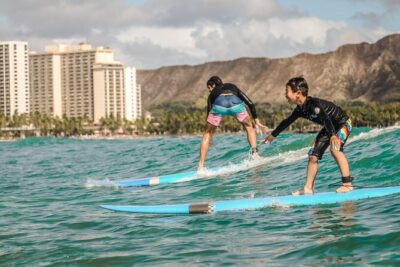
After the land lesson, you head into the water with the instructor. The class focuses on getting you into a useful position, helping you catch a wave, and giving you a chance to stand.
For a first session, the instructor may help by setting up the board and giving you a push when the timing is right. This is why many beginners are able to get up on their first day. Noah, Janelle, Max, Kai, Josh, Jake, and Sean are among the instructors associated with highly praised sessions, with families especially pointing to their patience, encouragement, and clear coaching.
The teaching style appears practical rather than showy. You get a short explanation, an attempt, and then a correction. The instructor may tell you to paddle harder, shift your weight, place your feet differently, or keep your balance longer. That immediate feedback is useful because surfing is difficult to understand from a beach demonstration alone.
Several family groups were able to catch waves during their first lesson. One group reported that each person caught roughly six waves, while another family said both children, ages 11 and 16, got up quickly. Those results depend on the day’s waves, your fitness, and your willingness to try again, but they show what the lesson is designed to achieve.
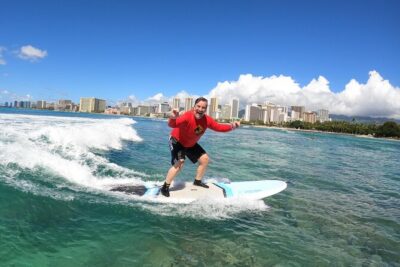
You should not expect to surf like an expert after two hours. You can reasonably expect to understand the basic sequence: lie down, paddle, feel the board move, push up, place your feet, and hold your balance. That first successful ride is the real prize.
What the Instructor Actually Teaches
The lesson covers more than simply standing on a board. Its topics include:
- Positioning yourself on the board
- Paddling with better timing and form
- Moving over waves
- Turning the board
- Getting from your stomach to your feet
- Finding a proper surf stance
- Improving balance
- Following ocean safety rules
This list makes the lesson useful for someone who has tried surfing once or twice but still feels awkward. You do not need to be completely new to the sport. The class is also aimed at people who have stood up before but cannot repeat the result reliably.
I especially like the focus on paddling and positioning. New surfers often think standing is the whole skill, but poor placement on the board can prevent you from catching a wave at all. Learning where to lie and when to paddle gives you a better chance of making progress after the lesson ends.
Turning is another useful topic. You may not master it in one class, but knowing that the board responds to weight shifts helps you begin thinking beyond a straight ride toward the beach.
Same island, a completely different kind of day:
- Oahu Grand Circle Island and Haleiwa Tour: 9-Hr Deluxe Experience
★ 5.0 · 17,387 reviews - Oahu: Grand Tour Around Island 16 Locations plus Snorkeling
★ 5.0 · 8,669 reviews - Parasailing Experience in Waikiki, HI
★ 5.0 · 7,692 reviews - Salute to Pearl Harbor Including USS Arizona
★ 4.5 · 7,433 reviews
How Much Help You Get
The instructor’s support is one reason this lesson works well for families and nervous beginners. The class is structured to set you up for success, and the instructor may push the board into a wave to help you catch it. That can be the difference between an exciting first ride and a long morning of repeatedly missing waves.
There is a tradeoff. One participant felt the lesson offered too much instructor assistance and not enough time catching waves independently. That person described the experience as closer to a highly supported boogie-board session than a fully self-directed surf lesson.
I would treat that as a question of expectations, not a flaw for everyone. If your main goal is to stand up and feel a wave, hands-on help is a real advantage. If your main goal is to learn how to select and paddle into your own waves without assistance, ask about the teaching approach before booking or consider a smaller private class if one is available.
The group size also affects this balance. Six people is still a small class compared with a large beach lesson, but one instructor cannot give every person constant attention. One participant felt that six people was too many for one instructor and that three per instructor would have been ideal.
Family Suitability and Age Rules
The minimum age is 11. That makes this a strong option for families with older children and teenagers. Families with children aged 11, 15, and 16 have taken the class, and instructors such as Janelle, Max, Kai, and Noah were praised for keeping children engaged and comfortable.
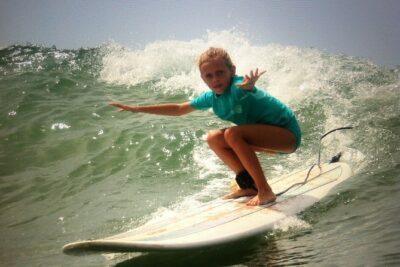
An 11-year-old who is nervous in the ocean may need more encouragement than a confident teenager. Kai was specifically praised for calming a nervous younger child and helping her begin surfing. That is an important detail if your child is excited about the idea but uncertain once the waves arrive.
You should also consider the physical demands. Even a beginner lesson involves paddling, balancing, repeated attempts to stand, and getting back on the board after falling. The activity information says most people can participate, but it does not provide a detailed fitness or medical screening. If you have concerns, contact the provider before booking.
The lesson is offered in English. Children must be 11 or older, and the maximum group size is six.
Morning or Afternoon: Choosing Your Time
You can choose a morning or afternoon lesson. That flexibility helps you fit surfing around other Oahu plans, especially if you are arranging a full day near Waikiki.
A morning session lets you get the physical activity done early and leaves the rest of the day open. An afternoon session may work better if you want a slower start or have another morning commitment. The supplied details do not promise a particular wave condition or instructor for either time, so choose based on your schedule rather than assuming one period will always be better.
Two hours is a sensible length for a first lesson. A shorter class might feel rushed once you account for the land introduction and getting into position. A much longer session could become tiring for a beginner who is paddling and repeatedly climbing back onto the board.
The lesson ends back at the meeting point, giving you a clear start and finish without requiring a separate return trip.
Safety Without Taking the Fun Away
Surfing carries obvious ocean risks, so instructor certification matters. All instructors are certified in CPR and as lifeguards by the American Red Cross. That does not remove every risk, but it indicates that safety and emergency response are built into the operating standards.
The lesson includes rules for dealing with waves and handling the board. You’ll also learn how to fall safely, an often overlooked skill that can make a beginner more confident.
The instructors are described as relaxed and professional. That combination is helpful. You want someone who takes ocean safety seriously without making the class feel like a drill. Families praised instructors for being patient, accommodating, and good at explaining the basics in simple terms.
You should still listen closely and follow directions. A certified instructor can guide you, but you remain responsible for telling the instructor if you feel uncomfortable, tired, or out of control.
Value for a Two-Hour Experience
No price is provided here, so I cannot judge the exact cost against other Oahu lessons. I can judge what the session includes. You receive a two-hour class, a land introduction, water instruction, safety coaching, local taxes, and a maximum group size of six.
That is a reasonable package if you want a first taste of surfing rather than a multi-day course. The strongest value comes when your goal is a memorable Hawaiian activity and a real chance to stand on a board during your first attempt.
The value is weaker if you want extensive solo practice or a detailed progression plan. The instructor may push you into waves, and a full group may reduce the number of independent attempts. Souvenir photos are not included, though they are available to purchase.
Taxes, fees, handling charges, and local taxes are included. You should confirm equipment details and any current parking costs before arriving, since those items are not fully described here.
Who Should Book This Lesson
I would recommend this for:
- First-time surfers who want clear guidance
- Families with children aged 11 and older
- Couples looking for a shared Hawaiian activity
- Friends who want a low-pressure introduction to surfing
- People who have tried surfing before but still struggle to stand
- Anyone who values safety instruction and a small class
I would be more cautious if you already surf independently and want advanced coaching. The lesson is built for beginners, not experienced board riders.
It is also worth thinking about your preferred learning style. If you want encouragement and hands-on help, this format should suit you. If you prefer to figure out wave timing alone, the group setting and instructor-assisted pushes may feel limiting.
Booking, Cancellation, and Practical Details
You must be at least 11 years old to join. The activity is offered in English, accepts mobile tickets, and is near public transportation. The meeting and return point is the Kaimana Beach Hotel.
Free cancellation is available when you cancel at least 24 hours before the local start time. Cancellations made less than 24 hours before the start time are not refunded, and changes inside that window are not accepted.
Arrive with enough time to deal with parking or transportation. A late arrival may cut into your land lesson and water time, even though one past group that was only a few minutes late had no trouble after calling ahead.
Should You Book It?
Book this lesson if you want a friendly, practical first step into surfing and like the idea of a quieter Waikiki meeting point. The combination of land practice, water coaching, certified instructors, and a maximum of six people gives beginners a good chance to catch a wave.
Families are likely to get the most from it, especially with children aged 11 to 16. The lesson has repeatedly helped first-timers stand up, and instructors such as Noah, Janelle, Max, Kai, Josh, Jake, and Sean have been praised for patience and clear teaching.
Think twice if you want mostly independent surfing. A full group may mean less one-on-one time, and the instructor may push you into waves rather than letting you paddle into every one alone. For a first Hawaiian surf experience, though, the support is more likely to make the day fun than frustrating.
FAQ
How long is the surfing lesson?
The lesson lasts approximately two hours.
Where does the activity start?
It starts at the Kaimana Beach Hotel, 2863 Kalākaua Avenue, Honolulu, Hawaii 96815.
Where does the activity end?
The activity ends back at the same meeting point.
What age must participants be?
Participants must be at least 11 years old.
How many people can join the group?
The maximum group size is six people.
Are the instructors certified?
Yes. All instructors are certified in CPR and as lifeguards by the American Red Cross.
Can I cancel for a full refund?
Yes, if you cancel at least 24 hours before the experience start time. Cancellations made less than 24 hours before the start time are not refunded.
More two-hour outings in Oahu
- 2-Hour Oahu Whale Watch from Ala Wai Harbor, Waikiki
★ 4.5 · 1,929 reviews - Waikiki, Oahu 2-Hour Whale Watching: Guaranteed Sightings
★ 4.5 · 1,064 reviews - Kailua 2-Hour Guided Kayaking Excursion, Oahu
★ 5.0 · 442 reviews - Oahu: Waikiki 2-Hour Beginner Group Surf Lesson
★ 4.9 · 191 reviews
Newest Oahu write-ups
- Oahu: Waikiki Eco-Friendly Morning Whale Watching Cruise★ 4.4 · 119 reviews
- West Oahu: Eco-Friendly Whale Watching Cruise★ 4.5 · 40 reviews
- Oahu: Circle Island Tour with Lunch & Waimea Waterfall★ 4.4 · 134 reviews
- West O’ahu: Dolphin Watching and Snorkeling Catamaran Cruise★ 4.5 · 31 reviews
- West O’ahu: Swim with Dolphins Catamaran Cruise★ 4.9 · 70 reviews
- Oahu: Waimea Falls & valley & North Shore day★ 5.0 · 4 reviews
- Honolulu, Oahu: Waikiki Turtle Snorkel Tour w/Shuttle Option★ 3.6 · 81 reviews
- Waikiki: Surf Lessons Easy 60 min classes no crowds!★ 4.9 · 21 reviews
Oahu Surf Lessons, compared.
Beginner-Friendly Waikiki Beach Surfing Lesson
Read our review →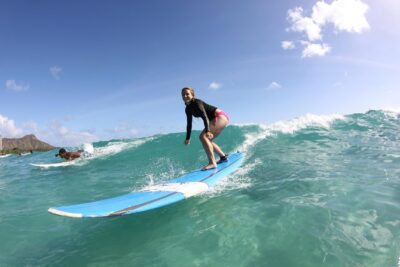
Family, Private & Group Surfing Lessons, Waikiki Courtesy Shuttle
Read our review →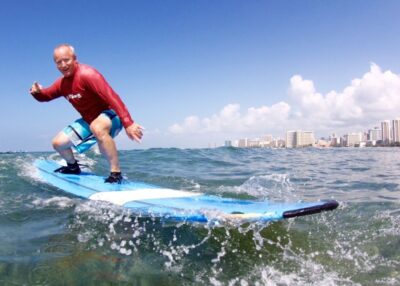
Browse the lists this tour appears in