
Reviewed · OAHU STAND-UP PADDLEBOARDING
Stand-Up Paddle Yoga
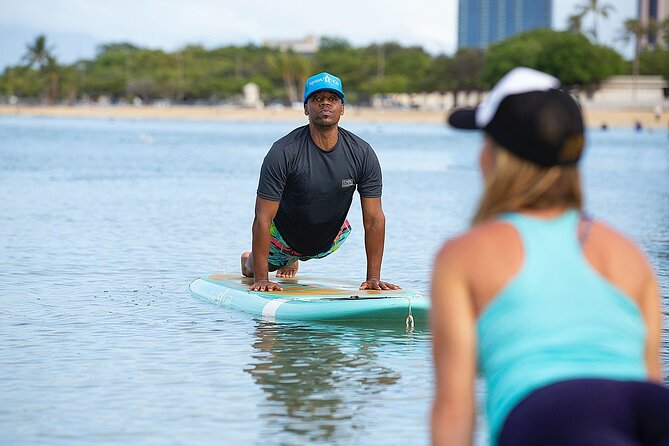
Oahu’s Stand-Up Paddle Yoga turns the ocean into your yoga studio. You walk from the beach with your board and anchor, wade into the water, secure your floating mat, and practice while the island’s natural setting replaces a regular studio wall.
I like the slow opening, which gives you time to settle on the board, and the fact that the teacher offers posture variations for different experience levels. I also like the compact 75-minute format and choice of two start times.
The serious drawback is provider reliability. Multiple booking accounts describe arriving at the stated place and finding no operating class, with one person unable to reach the listed phone number and another reporting no-show trouble and no refund. Confirm that Yoga Kai is currently operating before you commit money or arrange your morning around it.
Key points to know before booking
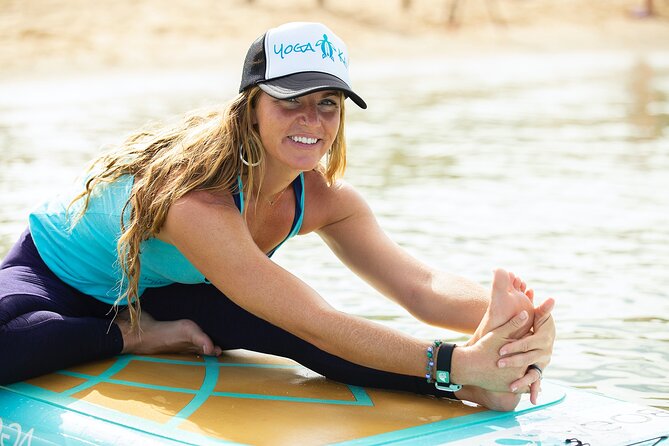
- The class begins on the beach: You receive an introduction, collect your SUP board and anchor, and walk into the water as a group.
- The yoga has three clear stages: Breath-led warm-up, standing postures with variations, and slower restorative poses ending in Savasana.
- Your group has the activity to itself: This is sold as a private tour, not a large public class.
- Equipment and instruction are included: You do not need to bring a paddleboard or anchor.
- The meeting point is simply listed as an unnamed road in Honolulu: Check the exact directions and operating status before departure.
- The cancellation terms are weather-sensitive: Cancel at least 24 hours ahead for a full refund, but changes inside 24 hours are not accepted.
The appeal of practicing yoga on open water
A floating yoga class changes the basic challenge of yoga. On land, you can often move through a pose without thinking about the floor beneath you. On a paddleboard, even a simple standing position asks you to pay attention to balance, breath, and small shifts in your body.
That makes this more than yoga with a pleasant view. The board becomes part of the lesson. You begin by getting used to its movement, then gradually work toward standing poses. If you are new to paddleboard yoga, the first minutes may feel less like peaceful stretching and more like learning not to overcorrect. That is normal, and the planned slow start should help.
The setting is the main reason to choose this activity instead of a standard studio class. You practice surrounded by Hawaii’s nature, with the water acting as both floor and backdrop. The information provided does not promise a particular beach view, wildlife sighting, water temperature, or weather pattern, so I would not book it for a specific postcard scene. Book it for the unusual physical setting and the chance to make yoga part of your Oahu day.
More stand-up paddleboarding sessions in Oahu:
- Haleiwa River Paddle Board Rental with Blue Planet Adventure Co.
★ 5.0 · 215 reviews - Family, Private & Group Standup Paddle Lessons in Waikiki
★ 5.0 · 143 reviews - Lunar Legends Night Stand up Paddle Kayak Water Experience
★ 5.0 · 141 reviews
Walking from the beach to the floating studio
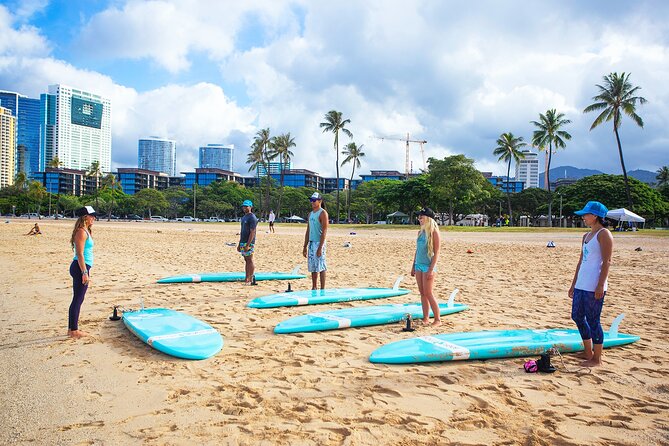
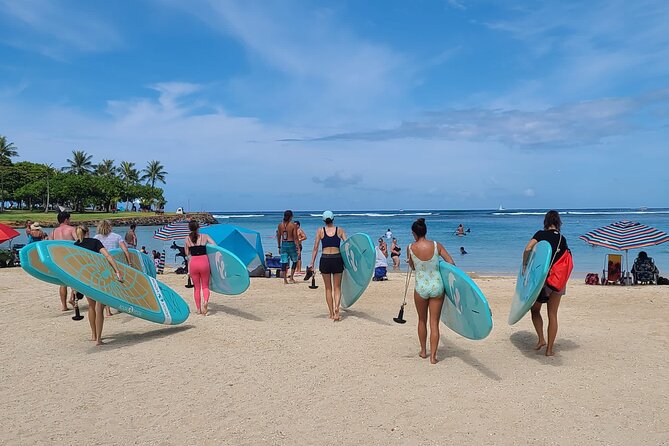
The meeting point is given as an unnamed road in Honolulu, Hawaii, with the activity ending at that same place. The class starts on land with an introduction to the floating yoga setup. You then carry your SUP board and anchor and wade into the water to the spot where the class will be secured.
That short walk matters. You are not simply arriving at a room, putting down a mat, and beginning. You need to handle the equipment and enter the water before the yoga starts. If you have limited comfort carrying gear or wading, keep that in mind when deciding if this is right for you.
The exact meeting instructions deserve extra attention. The address supplied is not a clearly named beach or hotel entrance. Since the activity is private and the location is described only as an unnamed road, check your confirmation carefully and verify the meeting point with the operator before the day of the class.
The activity is near public transportation, which may help if you are staying in Honolulu and do not want to drive. Still, the information does not state which bus route stops nearby, how far the stop is from the beach, or whether parking is available. Treat transportation as something to confirm, not as a fully worked-out part of the booking.
The first minutes: breath, balance, and a gentle start
Once the boards are anchored, the instructor begins slowly. The opening practice focuses on breathing and on letting you become comfortable with the floating surface.
This is a smart order for the class. You need time to notice how the board moves before attempting standing poses. A slow beginning also gives the teacher a chance to see how your group handles the water and adjust the session to your experience.
The class is described as suitable for most participants, and the teacher tailors instruction to your level. That does not mean the board will feel stable in the same way as a floor. You should still be prepared for an active balance exercise, even if the yoga itself begins gently.
I would arrive ready to listen closely during this part. Small movements probably matter more than force. If you rush to copy a pose before you understand the board, you may spend the session correcting your balance instead of enjoying the practice.
Standing poses with options for different levels
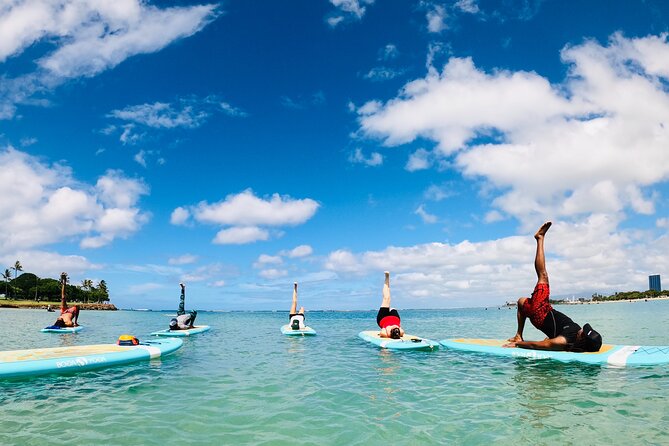
After the breathing work, the class moves into a more active series of standing postures. The teacher provides different variations, which is useful for a private group with mixed experience.
This format gives you room to choose an appropriate challenge. A regular yoga student may want to work on a fuller version of a pose, while a beginner may need a simpler stance with a wider base. Since only your group takes part, the teacher can direct attention to the people who need more help rather than teaching to a large crowd.
The activity details do not name the individual poses, and I would not expect a fixed list to be the main point. The practical goal is to explore familiar yoga movements on an unstable surface. You may find that poses you know well feel new once the board shifts beneath you.
There is also a useful mental change here. On land, you might focus on how a pose looks. On the water, you need to focus on how it feels. That can make the practice more present and physical, but it can also be tiring. If you want a completely restful yoga class, this may not be the best match during the middle section.
More kayak trips in Oahu:
- Kailua Bay, Oahu: Epic Kayak and Snorkel to Islands
★ 5.0 · 1,311 reviews - Kailua 2-Hour Guided Kayaking Excursion, Oahu
★ 5.0 · 442 reviews - Kailua Twin Islands Guided Kayak Tour, Oahu
★ 5.0 · 379 reviews - Self-Guided Kayaking Discovery in Kailua, Oahu
★ 5.0 · 249 reviews
Restorative poses and the final Savasana
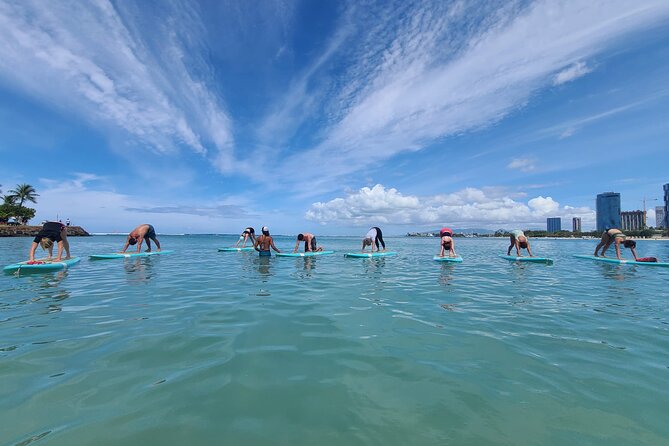
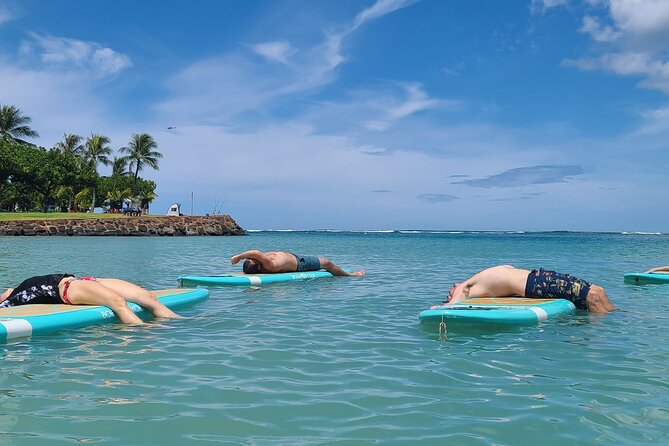
The class slows down after the standing work. Restorative postures lead into Savasana, the final resting pose.
This closing section is likely to be the calmest part of the experience. After concentrating on balance, you can let the board carry more of your attention while the pace eases. The contrast between active standing poses and a quiet finish gives the 75-minute class a satisfying shape.
The description presents Savasana as a particularly peaceful end to the session, but your experience will depend on weather, water movement, and how comfortable you feel on the board. The activity requires good weather, and that is more than a scheduling concern. Wind, rain, or choppy water could change how relaxing the final rest feels.
Because the class ends back at the meeting point, you do not need to arrange a separate pickup at another location. The return is part of the same outing, though the supplied details do not state how long it takes to get back from the anchored practice area.
What the private format means for you
This is a private tour, so only your group participates. That is a strong feature if you want a more personal lesson or if the people in your party have different levels of yoga experience.
A private class can also feel less exposed than joining a public group on a floating board. You can ask the instructor to repeat directions, request an easier variation, or explain a pose without worrying about holding up a large class.
The tradeoff is value. A private activity can be worth more if you care about personal instruction, but the price is not provided here, so I cannot judge the exact cost. I would compare the total price with the number of people in your group. For two or three participants who want focused teaching, the private format may make sense. For one person seeking a low-cost yoga class, it may be harder to justify unless the rate is modest.
The language offered is English. If that works for your group, instruction should be straightforward. If someone in your party needs another language, this activity may not be a good fit because no additional language options are stated.
Equipment, fitness, and comfort on the water
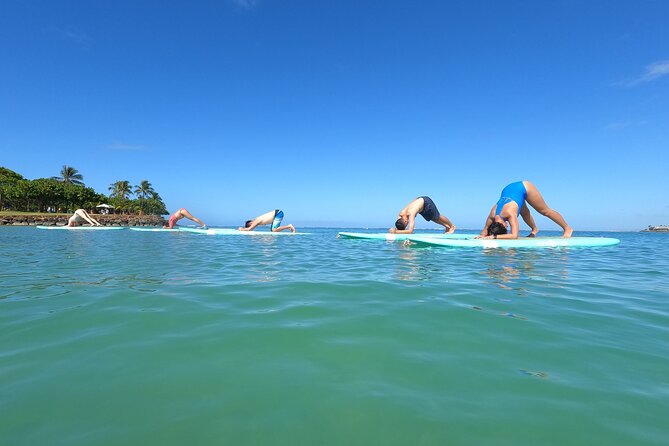
All necessary equipment and instruction are provided. That includes the SUP boards and anchors used to reach and secure the floating practice area. This makes the activity easier to arrange than an independent paddleboard outing because you do not need to rent gear separately or plan how to anchor yourself.
The supplied information says most people can participate, but it does not give a detailed list of physical requirements, age limits, swimming expectations, or restrictions. You should use your own judgment about balance, standing, wading, and comfort in the water. If someone in your group has a health concern or mobility limitation, ask the provider for a clear answer before booking.
You should also remember that yoga on a board is not identical to a gentle beach stretch. The class includes standing poses, and the floating surface adds a balance demand. The teacher offers variations, which helps, but it does not remove the physical challenge.
Wear something that allows movement and is suitable for getting wet. The activity description does not specify clothing, towels, changing areas, or dry storage, so ask about those points if they affect your plans. Do not assume that anything left at the beach will be secured.
Timing and how to fit it into an Oahu day
The session lasts about one hour and 15 minutes. That is long enough for a complete practice without taking over an entire sightseeing day.
Two tour times are offered, giving you some control over your schedule. The exact times are not provided, so check the available options during booking. A morning class could fit before other plans, while a later start may work better if you prefer a slower beginning to the day.
Build in extra time for reaching the meeting point, finding the precise beach access, and preparing to enter the water. The stated duration covers the activity itself, but the total time from hotel departure to return will be longer.
Because weather affects the class, avoid putting an important timed reservation immediately afterward. If conditions force a cancellation, you may be offered another date or a full refund. That protection helps, but it does not replace the need for a flexible schedule.
The most important issue: confirm Yoga Kai is operating
The concept is appealing, but the operating details raise a serious red flag. One booking account describes arriving an hour early and being told that Yoga Kai no longer operated at the stated location. The person then spent an hour trying to reach the company, without success, and says the booking platform also could not make contact.
Another account describes waiting an hour for an instructor who never appeared. It also reports that the listed phone number was incorrect and that the booking platform did not provide a refund.
Those are not small inconveniences. They affect the basic question of whether the class will happen. The overall rating is 3 out of 5 from six ratings, but the two detailed accounts available describe major operational failures rather than problems with the yoga itself. There is not enough positive detail to balance those warnings.
If you are still interested, contact Yoga Kai directly before booking and ask three simple questions:
- Is the class currently operating?
- Is the listed Honolulu meeting point correct?
- Is the phone number and instructor contact information current?
Keep the reply and confirm again close to the activity date. If you cannot get a clear answer, I would choose another yoga class or water activity. A scenic idea is not enough if the operator cannot confirm that someone will meet you.
Cancellation, weather, and refund rules
You can cancel for a full refund if you do so at least 24 hours before the local start time. Inside that 24-hour window, cancellations and changes are not accepted, and the amount paid is not refunded.
The class requires good weather. If the operator cancels because conditions are poor, you should be offered another date or a full refund. The same applies if the minimum number of participants is not met, with the option of another date or experience, or a full refund.
These rules are reasonable for an outdoor water class, but they make early confirmation even more important. Do not wait until the cancellation deadline to discover that the provider cannot be reached. If the business appears inactive, contact the booking company promptly and keep records of your messages.
Who should book this class?
I would consider it for a private group that already likes yoga and wants a new setting, especially if the participants are comfortable with water, balance work, and standing poses. It also suits an Oahu itinerary that leaves room for weather changes and does not depend on this one activity happening at a precise time.
It may work well for mixed-level friends or family members because the instructor can offer different posture variations. The shorter duration also makes it easier to pair with other Honolulu plans than a half-day paddle outing.
I would hesitate to book it for someone wanting a guaranteed, deeply restful class, someone uncomfortable wading into the water, or anyone with a tight schedule and no backup plan. Most of all, I would not book until the operator confirms that the class is active and that the meeting point is accurate.
Should you book Stand-Up Paddle Yoga?
The class itself has a strong shape: a slow breathing start, balance-focused standing poses, restorative work, and Savasana on a floating board. Equipment is included, the teaching is tailored to your group, and the 75-minute length is practical.
But the provider warning is too serious to ignore. Since the available booking accounts describe an apparently inactive location, an incorrect phone number, and an instructor no-show, I would treat this as a conditional booking rather than a dependable reservation.
Book only after direct confirmation from Yoga Kai, with the meeting point and contact details checked close to your class. If you receive no clear response, skip it. Oahu offers plenty of ways to practice yoga and enjoy the water, and no class is worth losing a morning and possibly the booking fee.
FAQ
Where does Stand-Up Paddle Yoga meet?
The meeting point is listed as an unnamed road in Honolulu, Hawaii, with the postal code 96815. Check your booking confirmation for the exact directions and verify the location with Yoga Kai before the activity.
Where does the activity end?
The class ends back at the meeting point.
How long does the experience last?
The activity lasts approximately one hour and 15 minutes.
Is the activity private?
Yes. Only your group participates in the activity.
Is equipment provided?
Yes. Necessary equipment and instruction are provided, including the SUP boards and anchors used during the class.
What language is offered?
The experience is offered in English.
Can I cancel for a full refund?
Yes, if you cancel at least 24 hours before the local start time. Cancellations made less than 24 hours before the start are not refunded.
What happens if the weather is poor or the minimum number is not met?
If poor weather or an insufficient number of participants causes cancellation, you will be offered another date or experience, or a full refund.
Newest Oahu write-ups
- Oahu: Waikiki Eco-Friendly Morning Whale Watching Cruise★ 4.4 · 119 reviews
- West Oahu: Eco-Friendly Whale Watching Cruise★ 4.5 · 40 reviews
- Oahu: Circle Island Tour with Lunch & Waimea Waterfall★ 4.4 · 134 reviews
- West O’ahu: Dolphin Watching and Snorkeling Catamaran Cruise★ 4.5 · 31 reviews
- West O’ahu: Swim with Dolphins Catamaran Cruise★ 4.9 · 70 reviews
- Oahu: Waimea Falls & valley & North Shore day★ 5.0 · 4 reviews
- Honolulu, Oahu: Waikiki Turtle Snorkel Tour w/Shuttle Option★ 3.6 · 81 reviews
- Waikiki: Surf Lessons Easy 60 min classes no crowds!★ 4.9 · 21 reviews
Oahu Stand-Up Paddleboarding, compared.
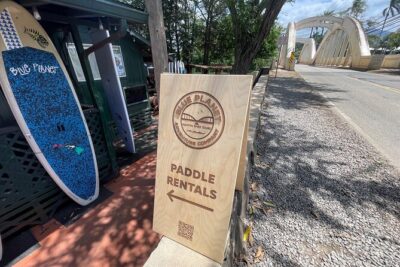
Haleiwa River Paddle Board Rental with Blue Planet Adventure Co.
Read our review →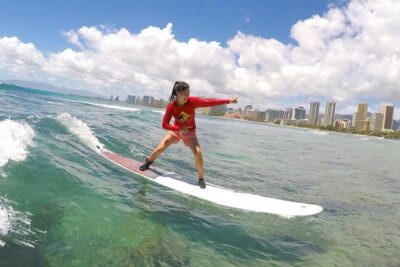
Family, Private & Group Standup Paddle Lessons in Waikiki
Read our review →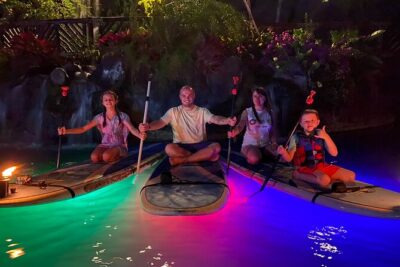
Lunar Legends Night Stand up Paddle Kayak Water Experience
Read our review →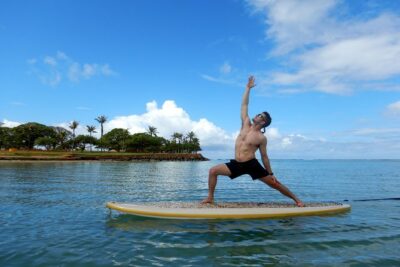
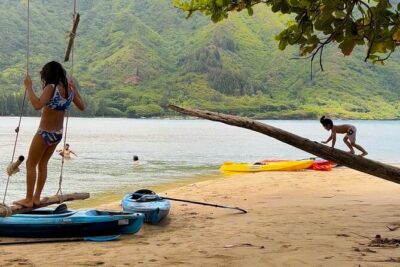
Kahana Bay River to Ocean: Kayak and Stand Up Paddle Board Rental
Read our review →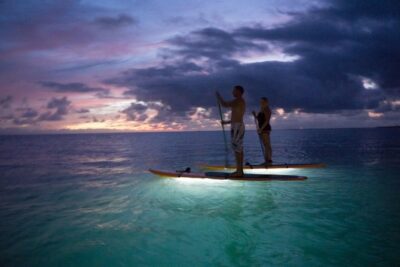
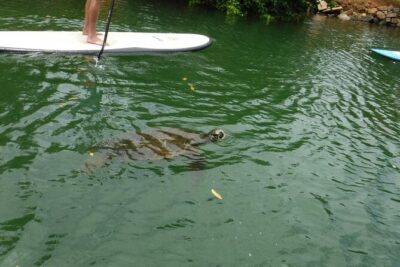
Stand Up Paddle Nature and Turtle tour-Guaranteed to see turtles
Read our review →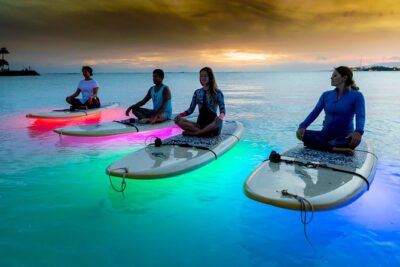
Browse the lists this tour appears in