
Reviewed · GUIDED
Private Guided Surf Boarding Lesson in Honolulu
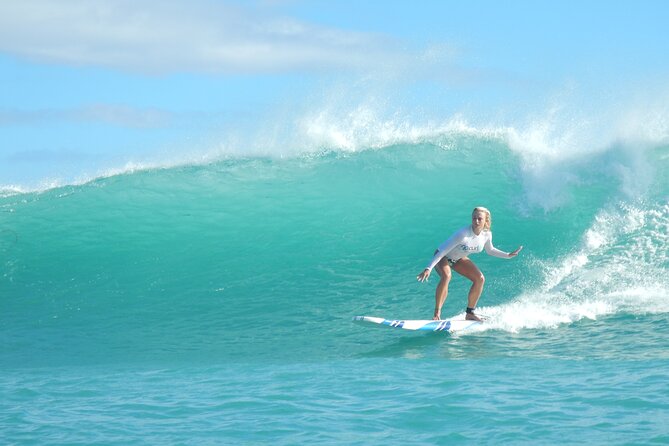
A good surf lesson should do more than push you toward the water. This private Honolulu session starts with safety and technique, then adjusts to your level. Beginners work on paddling, wave situations, and standing up. More experienced surfers get a plan aimed at their own weak spots.
I like the one-to-one attention and the chance to work with Ivan, who has helped students at very different levels. I also like the practical setup: the lesson begins at 2131 Kālia Rd, stays with your private group, and lasts about two and a half hours. The main drawback is simple: you need to be comfortable with an ocean activity, and the information does not promise that every participant will stand up or catch a wave.
Key points to know before booking
- Private instruction: Only your group takes part, so the teaching can follow your pace rather than a large class schedule.
- Ivan’s coaching: Instruction is built around your level, from first-time board handling to more advanced surfing goals.
- A full 2.5-hour session: You have time for a land briefing, water practice, corrections, and repeated attempts.
- Good for mixed abilities: Beginners learn the basics, while experienced surfers can target specific problems.
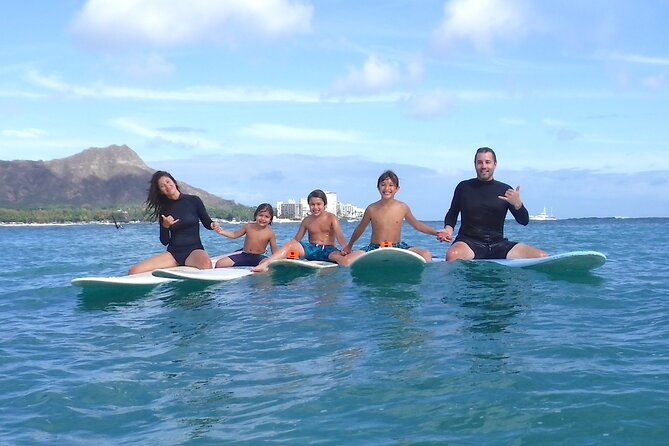
- Family flexibility: A six-person lesson included children ages 6 and 9, with a larger teaching team helping the youngest child feel at ease.
- Easy cancellation window: You can receive a full refund if you cancel at least 24 hours before the local start time.
Starting at 2131 Kālia Road
Your lesson begins at 2131 Kālia Rd, Honolulu, a Waikiki-area meeting point that is near public transportation. That matters in Honolulu, where a simple meeting place can save you the trouble of arranging a separate ride to a distant beach.
The activity ends back at the same meeting point. You should allow enough time to arrive without rushing, since the first part of the lesson is not an afterthought. It is where you review how to handle the board, what to expect in the water, and how to respond to common situations.
The meeting point is also useful for anyone in your group who is not surfing. One family planned to watch from shore and was advised to bring binoculars. That is a small but practical tip: surfers can move farther from the beach than you expect, and it may be hard to follow every attempt with the naked eye.
More Honolulu tours:
- Pearl Harbor, USS Arizona Memorial & Honolulu City Tour
★ 5.0 · 4,866 reviews - Waikiki Trolley Hop-On Hop-Off Tour of Honolulu
★ 4.5 · 4,783 reviews - First-Time Scuba Diving in Honolulu + Free Videos
★ 5.0 · 3,123 reviews
The first lesson is about staying calm
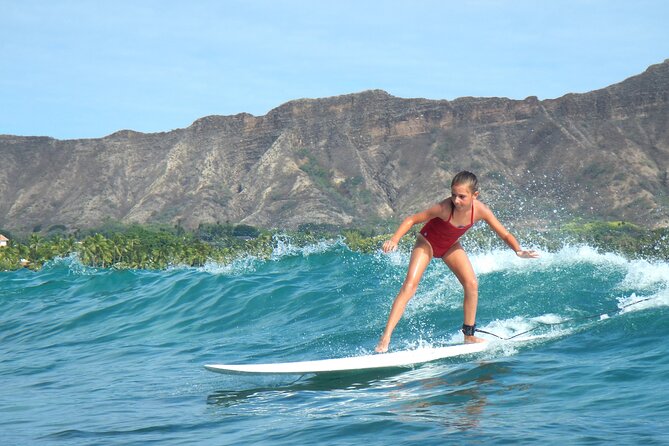
For a first-time surfer, the ocean can feel like several new problems at once. You need to manage the board, judge the timing of a wave, paddle with enough strength, and decide when to stand. A good instructor breaks those jobs into smaller steps.
Ivan begins by reviewing safety and the situations you may encounter in the water. This is valuable even if you are eager to get moving. You want to know how to behave around the board, how to prepare for a wave, and what to do when an attempt does not go as planned.
The lesson also covers paddling technique. That may sound basic, but weak paddling makes the rest of surfing harder. If you cannot move the board into position, you will have fewer chances to practice standing. The instruction is designed to give you a working foundation before you begin repeating the movement in the water.
Then comes the stand-up technique. The goal is not only to get your feet under you once. You are learning a sequence that can be repeated: position yourself, paddle, respond to the wave, and rise at the right moment. The private format gives Ivan room to watch your movement and correct the part that is causing trouble.
What beginners can expect in the water
This is a lesson for people who have never surfed, not just for those who have tried it once. One 18-year-old participant reportedly stood on the third wave, which shows what focused coaching can make possible. It should not be treated as a guarantee, but it does suggest that the instruction is built around giving a beginner early, useful attempts.
Your first successes may be small. You might learn to lie correctly on the board, paddle with better control, or rise halfway before losing balance. Those steps matter. Surfing often improves through several short corrections rather than one grand breakthrough.
The teaching style also seems suited to people who feel nervous. In one family group, a six-year-old was unsure about entering the water. Ivan’s team helped the child gain enough confidence to join the lesson and enjoy it with the rest of the group. That is important for families: a young child may need encouragement and patience before technique even becomes the main issue.
Still, you should be honest about your expectations. A two-and-a-half-hour lesson can give you a strong start, but it cannot replace repeated practice. Your conditions, comfort level, and timing all affect how many waves you catch.
Coaching for surfers who already know the basics
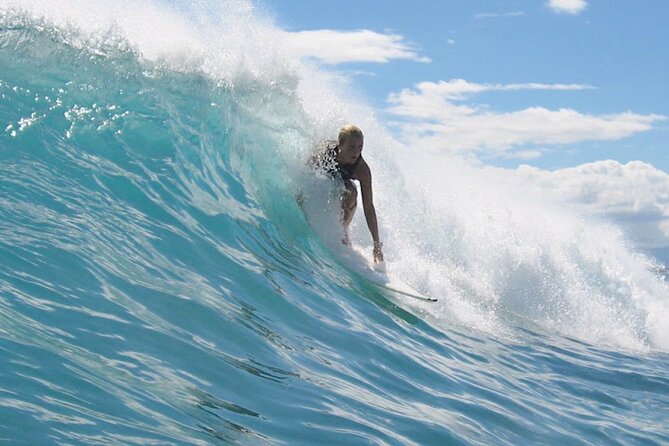
This experience is not limited to first-timers. If you already surf, the lesson begins from a different place. Ivan assesses the weaknesses in your surfing and asks what you want to improve. The session then focuses on a strategy for reaching that next level.
That is a better use of private time than repeating a general beginner talk. You might need help with paddling, wave timing, standing position, or another part of your surfing. The supplied information does not identify a fixed list of advanced drills, so you should discuss your specific goal when booking or at the start of the session.
This format is especially useful if you can describe the problem clearly. I would arrive ready to explain what happens when you surf: perhaps you catch waves but lose balance quickly, or you stand up but cannot stay on the board. The more specific your aim, the easier it is for the instructor to shape the lesson around it.
Ivan’s approach also accounts for ability, not just age. The lesson is promoted for any level, and the feedback from repeated students suggests that some people return to keep improving. If you are already comfortable on a board, a private session may offer more value than paying for a large class that spends most of its time covering basics you already know.
More surf lessons in Oahu:
- Open Group Surfing Lesson in Waikiki, Hawaii
★ 4.5 · 582 reviews - Oahu: Beginner-Friendly Waikiki Beach Surfing Lesson
★ 4.9 · 425 reviews - Surfing Lessons On Waikiki Beach
★ 4.5 · 317 reviews - Waikiki Private Group Surf Lesson
★ 5.0 · 298 reviews
Why the private format changes the experience
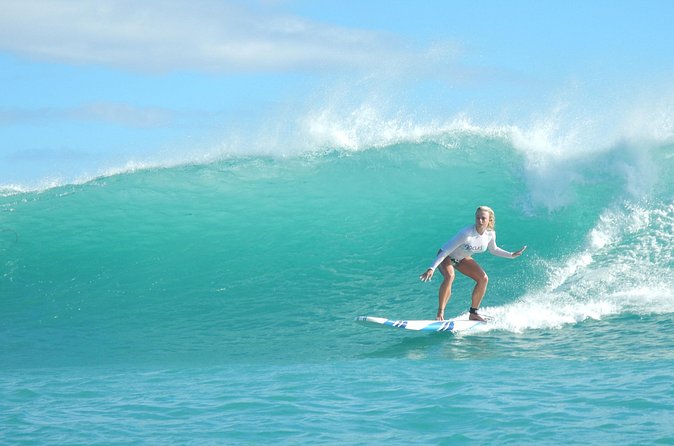
A group lesson can be cheaper, but it often spreads the instructor’s attention across many people. Here, only your group participates. That gives you more room to ask questions, make mistakes, and receive corrections aimed at your own movement.
The format is also useful for a mixed group. A family of six took part in a first lesson together, including children ages 6 and 9. Ivan brought a team of four to help the group. That larger support setup helped the younger child take part without leaving the rest of the family waiting for every basic step.
You should not assume every booking will include the same number of assistants. The group-of-six example shows that extra support may be arranged for a larger family lesson, but the supplied details do not promise a particular staffing level for every reservation. If your group includes young children, ask how instruction will be handled before you book.
A private activity also means your schedule is centered on your party. The information does not provide a detailed minute-by-minute timetable, so do not expect a published sequence of fixed stops or a sightseeing tour. The value is the coaching itself, not extra attractions between lessons.
A realistic look at the two-and-a-half-hour timing
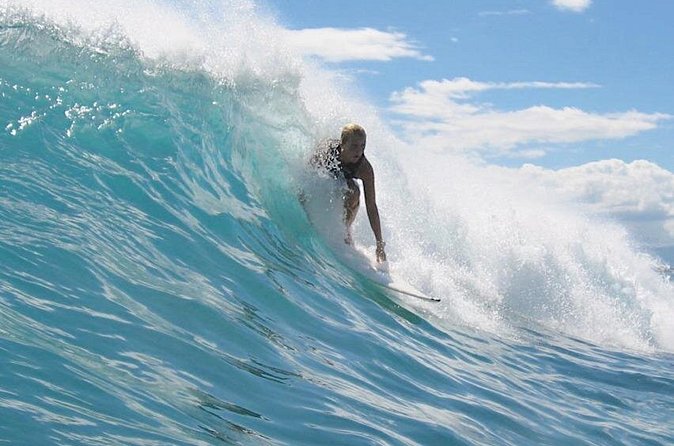
The stated duration is about 2 hours and 30 minutes. That is long enough to cover an explanation on land, enter the water, practice several times, and receive repeated guidance. It should feel more substantial than a quick introductory session.
The opening briefing has a clear purpose. Ivan reviews technique before water entry, including safety, paddling, wave scenarios, and standing. That early explanation can save time later because you are not trying to learn every rule while also handling the board.
The water portion is where the lesson earns its value. You get chances to apply the movement, receive corrections, and try again. The exact number of waves will vary, and no result is promised. Still, private coaching gives you a better chance to spend the available time practicing instead of waiting for an instructor to reach you.
For families, the full length can cut both ways. It provides more practice, but younger children may tire or lose focus. The example of a six-year-old gaining confidence is encouraging, yet you should still consider your child’s comfort with water and sustained activity. The information says most people can participate, but it does not provide a separate child-age rule.
The guide makes the difference
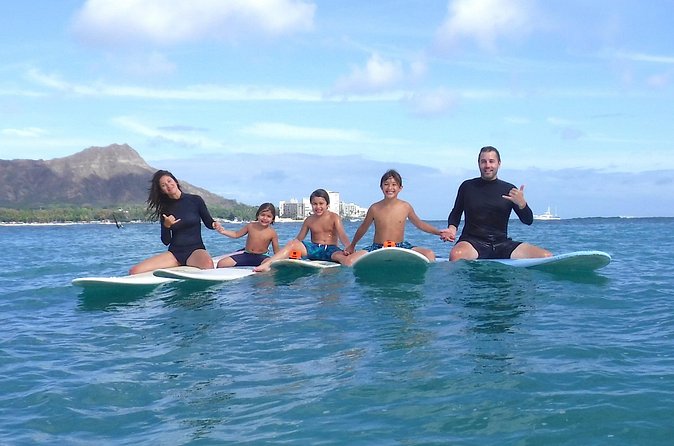
Ivan is the named instructor associated with the experience. The strongest feature of his teaching is its flexibility. He works with a beginner who needs simple, calm instructions and with a more experienced surfer who wants targeted corrections.
The lesson also includes a review of technique before entering the water. That detail matters because it shows the instruction is not simply a handoff of equipment followed by trial and error. You begin with a shared understanding of what you are trying to do.
For young or nervous students, patience is just as important as surf skill. The family lesson included a child who initially did not want to participate, then joined the group after support from Ivan’s team. If you are booking for a family, this is one of the most useful signs that the lesson can be adapted to confidence as well as ability.
At the same time, you should not read one strong result as a promise that every student will become an expert in a single session. One young surfer was described as going from never having been on a board to looking highly skilled in two hours, but that is an enthusiastic individual result, not a standard outcome. Book this for good instruction and a real introduction to surfing, not a guaranteed transformation.
Is the cost worth it?
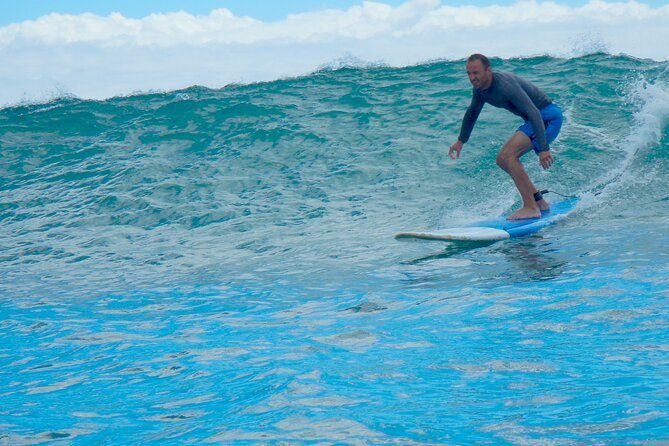
No price is provided in the information available here, so I cannot judge the exact dollar value. You can judge the structure, though. A private lesson usually makes the most sense when the price is being shared by a couple, a family, or a small group that values personal attention.
For a solo beginner, compare the private rate with a larger class before booking. The private option costs more in many cases, but the benefit is direct feedback and less waiting. If you are nervous, have a specific goal, or are traveling with people at different skill levels, that extra cost may be easier to justify.
For six people, the calculation can look better because the group shares the experience while still receiving private instruction. The family example also shows that larger groups may receive help from several instructors, though you should confirm what staffing is included for your own booking.
The strongest value comes from the coaching, not from the length alone. A two-and-a-half-hour session with useful corrections can be worth more than a longer class where you spend much of the time waiting. But if your only goal is to try surfing once at the lowest possible price, a group lesson may suit you better.
Practical details before you commit
The activity is offered in English and uses a mobile ticket. Confirmation arrives when you book, which gives you a clear record of the meeting details.
It is near public transportation, and the activity returns to the meeting point at the end. The experience is private, meaning only your group participates. Most people can take part, though the information does not list specific medical, fitness, swimming, or age requirements.
The cancellation policy is friendly but firm. You receive a full refund if you cancel at least 24 hours before the local start time. Cancellations or changes made inside that 24-hour window are not accepted for a refund.
I would also keep the rest of your day flexible. Surf conditions and your own energy can affect how the lesson feels, even though the listed duration is about two and a half hours. If family members are watching instead of surfing, remind them that binoculars may help them follow the action from shore.
Who should book this Honolulu surf lesson?
I would recommend it most strongly to:
- A first-time surfer who wants private guidance instead of a large class.
- A couple or family willing to share the cost of a private activity.
- A mixed-ability group with beginners and more experienced surfers.
- A returning surfer who can name a weakness or goal.
- Families with children who may need patient encouragement before entering the water.
I would be more cautious if you want a guaranteed number of waves, a particular beach itinerary, or a clearly stated outcome. The available details focus on coaching, not sightseeing or promises of performance.
Should you book it?
Book this private Honolulu lesson if personal instruction matters more than the lowest price. Ivan’s flexible approach, the safety briefing, and the option to work on specific surfing problems give the session a clear purpose. The family example also suggests that patient support can make a real difference for young or nervous beginners.
Think twice if you are only looking for a cheap, one-time thrill or if you need a guaranteed stand-up success. Surfing still depends on your comfort, timing, and practice. For a serious first try, a family activity, or a focused session with an experienced instructor, this is a strong choice.
FAQ
Where does the surf lesson begin?
It begins at 2131 Kālia Rd, Honolulu, HI 96815, USA.
Where does the activity end?
The activity ends back at the meeting point.
How long does the lesson last?
The lesson lasts approximately 2 hours and 30 minutes.
Is the lesson private?
Yes. Only your group participates in the activity.
Is the lesson suitable for beginners?
Yes. Beginners learn safety, paddling technique, water scenarios, and how to stand up on the board.
Can experienced surfers take this lesson?
Yes. The instructor assesses your weaknesses and goals, then develops a strategy to help you improve.
Newest Oahu write-ups
- Oahu: Waikiki Eco-Friendly Morning Whale Watching Cruise★ 4.4 · 119 reviews
- West Oahu: Eco-Friendly Whale Watching Cruise★ 4.5 · 40 reviews
- Oahu: Circle Island Tour with Lunch & Waimea Waterfall★ 4.4 · 134 reviews
- West O’ahu: Dolphin Watching and Snorkeling Catamaran Cruise★ 4.5 · 31 reviews
- West O’ahu: Swim with Dolphins Catamaran Cruise★ 4.9 · 70 reviews
- Oahu: Waimea Falls & valley & North Shore day★ 5.0 · 4 reviews
- Honolulu, Oahu: Waikiki Turtle Snorkel Tour w/Shuttle Option★ 3.6 · 81 reviews
- Waikiki: Surf Lessons Easy 60 min classes no crowds!★ 4.9 · 21 reviews
Guided, compared.

Moana’s Waikīkī Grand Guided Turtle Snorkel & Sailing Adventure
Read our review →
Oahu Island Full-Day Guided Tour by Bus with Lunch
Read our review →

Chief’s Official Pearl Harbor Self-Guided Multimedia Tour
Read our review →


Self guided Hike Trail to Nature Walk & Waterfall
Read our review →
Browse the lists this tour appears in