
Reviewed · OAHU SURF LESSONS
Oahu Semi Private Surfing Lesson
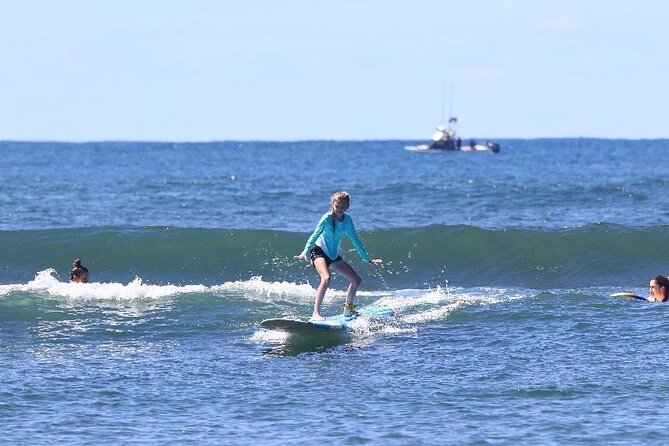
The best part of this lesson is that it takes you to the North Shore, but not to the big, intimidating surf that made the area famous. You learn in a protected cove, where the focus is on catching manageable waves, finding your balance, and building confidence.
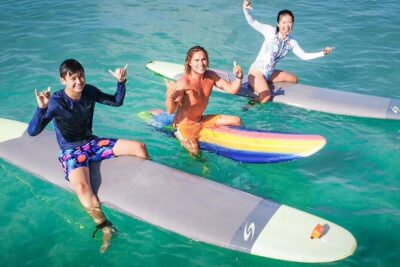
I like the close, small-group format and the fact that your instructor stays with you in the water, offering feedback after each wave. I also like the practical setup: a board and rash guard are supplied, and several start times make it easier to fit the lesson into an Oahu day.
The main caution is price. At $166.77 per person for about two hours, this is not the cheapest way to try surfing. You are paying for personal coaching and a private activity for your own group, not a large beach class.
Key points to know before you book
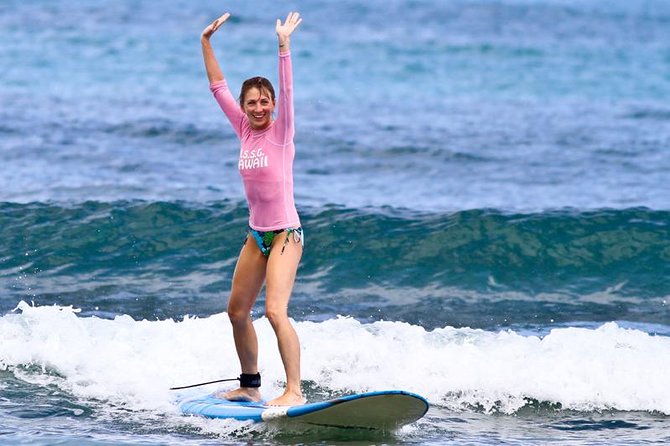
- Protected North Shore cove: You learn away from the larger waves the area is known for, which makes the setting less intimidating for beginners.
- About two hours in the water and on the beach: The lesson covers surf conditions, etiquette, wave timing, paddling, and the move to standing.
- Personal coaching after each wave: Your instructor helps you catch waves, paddle back, stay safe, and adjust your technique.
- Boards and rash guards are supplied: You can travel light, though transportation and souvenir photos cost extra.
- Private activity for your group: This is suited to couples, friends, or a small family group that wants focused instruction.
- Marjorie is one named instructor: Her teaching style is described as patient, clear, encouraging, and good for first-time surfers.
Why this North Shore lesson works for beginners
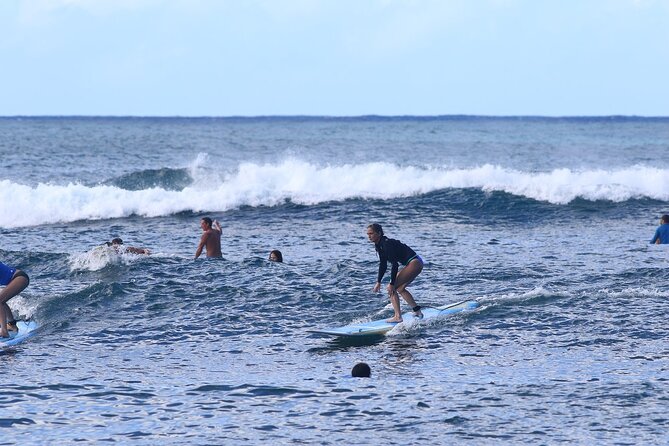
Surfing looks simple from the beach. Lie on the board, paddle, stand up, and ride. In practice, the timing is tricky, and a first attempt can feel like a jumble of waves, arms, feet, and instructions.
This lesson breaks the process into useful steps. You first learn how to read the surf zone and understand the playing field. Then you work on etiquette, wave timing, paddling, and the transition from lying down to standing.
That order matters. You are not simply handed a board and sent into the water. You get a basic sense of where to sit, how to look for a wave, and when to paddle. Those are the skills that make a first lesson feel controlled rather than chaotic.
The protected cove is another major advantage. Oahu’s North Shore is famous for powerful surf, but that fame does not mean every beach is right for a beginner. This lesson takes place away from the larger waves, giving you a calmer place to learn the basics.
Of course, a protected cove does not guarantee that you will stand up on every try. Surfing depends on timing, balance, and conditions. But the setting gives you a better chance to focus on technique instead of worrying about the scale of the waves.
More surf lessons in Oahu:
- Open Group Surfing Lesson in Waikiki, Hawaii
★ 4.5 · 582 reviews - Oahu: Beginner-Friendly Waikiki Beach Surfing Lesson
★ 4.9 · 425 reviews - Surfing Lessons On Waikiki Beach
★ 4.5 · 317 reviews
Meeting at Kahalewai Place in Haleiwa
The lesson begins at Kahalewai Place, Haleiwa, Hawaii 96712. You are responsible for getting to the meeting point, since transportation to and from attractions is not included.
That detail matters when planning your day. If you are staying in Waikiki or another part of Oahu, allow time to reach Haleiwa and arrive ready for the start of your lesson. The activity ends back at the same meeting point, so you can plan the rest of your day from there.
Several start times are available. This is useful if you want to combine surfing with other North Shore plans, though you should choose a time that leaves enough room for your own transportation arrangements.
On arrival, you are fitted with a surf shirt and a board. The supplied rash guard gives you one less item to pack, and the board is already part of the lesson price. From there, you head to the sandy beach for the land portion of the class.
The beach briefing: reading waves before riding them
The beach portion gives you a chance to learn the basics before you are managing a board in the water. You receive an explanation of the playing field, which means learning how the surf area works and where you should position yourself.
You also cover surf etiquette. This is not just a nice extra. Surfing has its own rules about sharing waves and avoiding collisions, and a short explanation helps you understand how to behave around other people in the water.
Wave reading and timing are central parts of the lesson. You need to recognize which waves are worth attempting, when to begin paddling, and how to match your movement with the wave. Those skills can take time, but a clear introduction gives you something useful to practice.
The final beach lesson focuses on the transition from paddling to standing. Your instructor can explain the movement while you are still on dry sand, where you can think about foot placement without a wave pushing your board around.
For a first-time surfer, this section may feel slow compared with getting straight into the water. I consider it time well spent. A few clear instructions on the beach can save confusion once you are paddling.
In the cove, your instructor stays close
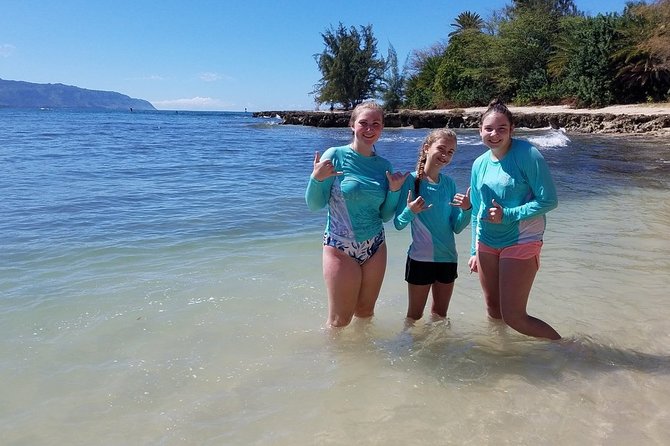
Once you enter the water, the lesson becomes hands-on. Your instructor is there to help you catch waves, assist with paddling back, and give feedback after each attempt.
That immediate feedback is one of the strongest reasons to consider this experience. If your board turns sideways, your timing is off, or your feet land in the wrong position, you can get a correction while the attempt is still fresh in your mind.
You should also expect encouragement and safety guidance, not just technical instructions. The goal is to help you try again without feeling rushed or left on your own.
One named instructor, Marjorie, is described as clear, patient, and encouraging with first-time surfers. Her approach includes concise pointers and a light sense of humor, which can make a difference when you are trying to stand up in front of someone for the first time.
The lesson also includes time for questions. That gives you room to ask about paddling, positioning, wave choice, or anything that feels unclear. A good beginner class should leave you with more than one successful ride. It should help you understand why that ride worked.
Same island, a completely different kind of day:
- Oahu Grand Circle Island and Haleiwa Tour: 9-Hr Deluxe Experience
★ 5.0 · 17,387 reviews - Oahu: Grand Tour Around Island 16 Locations plus Snorkeling
★ 5.0 · 8,669 reviews - Parasailing Experience in Waikiki, HI
★ 5.0 · 7,692 reviews - Salute to Pearl Harbor Including USS Arizona
★ 4.5 · 7,433 reviews
What you are likely to learn in two hours
Two hours is enough time for an introduction, but it is not a full surfing course. Think of this as a focused first lesson that gives you a base for future practice.
The class covers:
- How to read the surf zone
- Basic surf etiquette
- Wave timing
- Catching a wave
- Paddling
- Moving from paddling to standing
- Staying safe in the water
- Making adjustments after each attempt
The lesson moves between explanation and practice. You learn a concept, try it on a wave, then receive feedback before trying again. That rhythm is more useful than a long lecture, since surfing is a physical skill.
You may catch and ride several waves, as one account of the lesson describes. That can give you enough confidence to consider practicing on your own later. Still, you should keep your expectations sensible. No instructor can promise a perfect ride, and two hours will not turn a first-timer into an independent surfer.
Why the private format affects the value
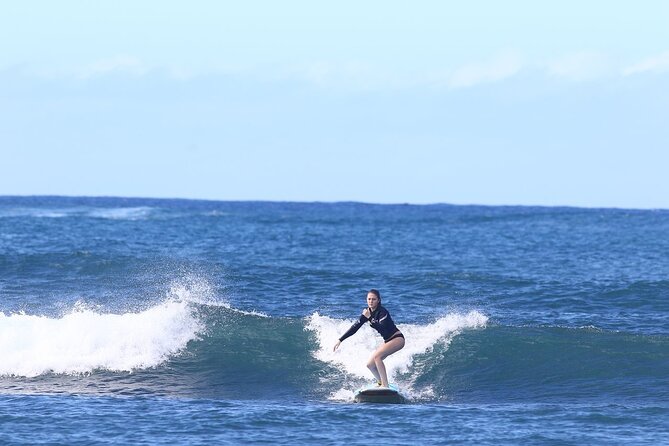
This is a private activity, meaning only your group participates. The format is especially useful for couples or friends who want to learn together without being placed in a large class.
A private lesson can also help if people in your group have different levels of confidence. One person may be ready to paddle farther, while another needs more help with balance or wave timing. A close instructor-to-student setup makes it easier to adjust the pace.
The tradeoff is cost. At $166.77 per person, the lesson is a significant activity expense. I would compare it with the cost of a large group class, but price alone does not tell the whole story. Here, you are paying for a private setting, instruction in a protected cove, equipment use, and active help in the water.
For a couple who sees surfing as one of the main experiences of an Oahu visit, that price may feel reasonable. For someone who simply wants to touch a surfboard once, it may be harder to justify.
The lesson is recommended by 99 percent of people who rated it, with a five-star rating based on 73 reviews. That strong record supports the idea that the combination of patient teaching, a calm setting, and close coaching works well. It does not remove the normal risks of weather, surf conditions, or individual balance, so treat the rating as a helpful signal rather than a promise.
Equipment, photos, and what is not included
A surfboard and rash guard are provided. That is convenient, especially if you are packing for a wider Oahu itinerary and do not want to carry beach equipment from place to place.
Local taxes are included in the listed price. Transportation to and from attractions is not included, so you need to make your own way to Kahalewai Place in Haleiwa and back.
Souvenir photos are available for purchase, but they are not part of the price. If photographs matter to you, ask about them during the activity and budget for that extra cost. If you prefer to keep the price down, the lesson itself does not require you to buy photos.
The available information does not specify changing facilities, storage, or clothing recommendations. You should confirm those points with the provider before setting out, rather than assuming the meeting point offers everything you need.
Who will enjoy this most
I would recommend this lesson first to:
- First-time surfers who want direct instruction
- Couples looking for a shared North Shore activity
- Friends who prefer a private group
- People who want a calmer introduction than the famous big-wave beaches suggest
- Visitors who value feedback after each attempt
- Anyone who wants to learn basic technique before trying to surf independently
It can also suit people who have tried surfing once and want a more organized introduction to timing and positioning. The lesson is not described as an advanced course, though one participant planned to return for more advanced instruction after gaining confidence.
This may be less suitable if you want a full-day surf program, transportation from your hotel, or an activity built around watching professionals ride large waves. It is a beginner lesson, not a North Shore sightseeing tour and not a big-wave experience.
The activity information says most people can participate. If you have a particular health concern or mobility question, confirm suitability before booking, since the published details do not give a more specific accessibility breakdown.
Planning the lesson around your Oahu day
Because the class takes about two hours and finishes where it begins, it can fit neatly into a day in Haleiwa. The multiple start times give you some control over your schedule.
I would avoid stacking it too tightly against another prepaid activity. You need time to reach the meeting point, complete the lesson, and return to your next stop. Since you arrange your own transportation, delays on the road are your responsibility.
The North Shore location also makes this feel different from a Waikiki beach lesson. You are getting out to Haleiwa and learning in a setting associated with surfing, while still using a protected cove suited to beginners.
Keep the focus on the lesson itself. The special value here is not a long list of stops or a packed sightseeing route. It is the chance to spend two focused hours learning a real skill with an instructor nearby.
Free cancellation is available if you cancel at least 24 hours before the start time. Cancellations made within 24 hours are not refunded, and changes during that period are not accepted. That policy is worth noting when you choose your start time.
My verdict on the $166.77 price
I see this as a worthwhile splurge for the right person. The price covers a private group lesson, board and rash guard use, local taxes, and close instruction in the water. You are not paying only for beach access. You are paying for help with the parts of surfing that beginners usually find hardest: timing, wave selection, paddling, and standing.
The value is strongest if you want to remember your first surf lesson as a relaxed, well-supported experience. It is also stronger for couples or friends who want to share the same activity without joining a large class.
The value is weaker if you mainly want a cheap way to rent a board or spend time at the beach. Equipment rental alone is not what this experience offers. Its purpose is instruction.
Should you book North Shore Surf Girls?
Book it if you want a private, beginner-friendly introduction to surfing and like the idea of learning in a protected North Shore cove. The patient coaching, practical beach briefing, and feedback after each wave are the key reasons to choose it.
I would especially consider it for a first Hawaii visit, a couple’s activity, or a small group that wants to get away from Waikiki for a focused lesson. If the $166.77 price fits your budget, this is a sensible way to try surfing without facing the larger North Shore waves right away.
Skip it if you need hotel transportation, want advanced surf instruction from the start, or are looking for the lowest-cost beach activity. For everyone else, the private format and close water coaching make the price easier to understand.
FAQ
Where does the surfing lesson begin?
The lesson begins at Kahalewai Place, Kahalewai Place, Haleiwa, HI 96712, USA.
Where does the activity end?
The activity ends back at the meeting point in Haleiwa.
How long does the lesson last?
The lesson lasts approximately two hours.
What does the lesson teach?
The instruction covers the surf zone, wave reading, surfing etiquette, wave timing, catching waves, paddling, and moving from paddling to standing.
Are a surfboard and rash guard provided?
Yes. A surfboard and surf shirt, or rash guard, are provided for the lesson.
Is transportation included?
No. Transportation to and from attractions is not included, so you need to arrange your own transport to and from Kahalewai Place.
Can I cancel for a full refund?
Yes, if you cancel at least 24 hours before the experience start time. Cancellations or changes made within 24 hours are not refunded or accepted.
Newest Oahu write-ups
- West Oahu: Eco-Friendly Whale Watching Cruise★ 4.5 · 40 reviews
- Oahu: Waikiki Eco-Friendly Morning Whale Watching Cruise★ 4.4 · 119 reviews
- Oahu: Circle Island Tour with Lunch & Waimea Waterfall★ 4.4 · 134 reviews
- West O’ahu: Dolphin Watching and Snorkeling Catamaran Cruise★ 4.5 · 31 reviews
- West O’ahu: Swim with Dolphins Catamaran Cruise★ 4.9 · 70 reviews
- Oahu: Waimea Falls & valley & North Shore day★ 5.0 · 4 reviews
- Honolulu, Oahu: Waikiki Turtle Snorkel Tour w/Shuttle Option★ 3.6 · 81 reviews
- Waikiki: Surf Lessons Easy 60 min classes no crowds!★ 4.9 · 21 reviews
Oahu Surf Lessons, compared.
Beginner-Friendly Waikiki Beach Surfing Lesson
Read our review →
Family, Private & Group Surfing Lessons, Waikiki Courtesy Shuttle
Read our review →
Browse the lists this tour appears in