
Reviewed · WALKING TOURS
The East Waikiki Walking Tour
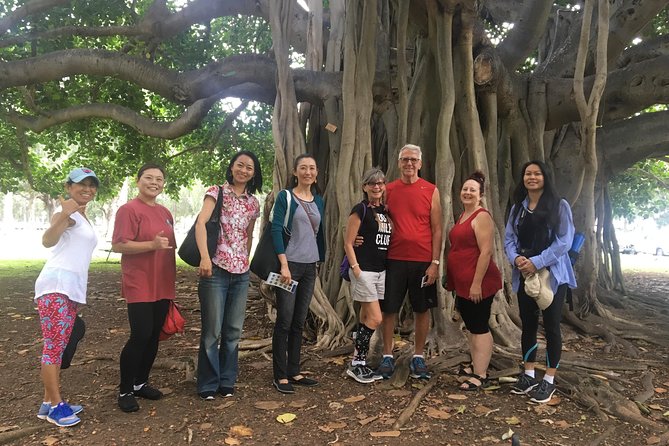
East Waikiki is more than hotel towers and beach chairs. This two-hour walk connects an abandoned oceanfront swimming pool, the birth of modern Hawaiian surfing, Kapiolani Park, Honolulu Zoo, and the volcanic slopes of Diamond Head. For $14, you get a compact lesson in how Waikiki became what it is today.
I like the focus on local history and sustainability, not just postcard views. I also like the tiny group, capped at four people, and the practical touch of free local mochi ice cream during the park stop. The main drawback is reliability: one posted account says the guide never arrived, so confirm your booking details before setting out.
Key points
- A small-group walk for only four people makes it easier to ask questions and hear the guide.
- The War Memorial Natatorium offers an unusual look at Hawai‘i’s role in the world wars.
- Kaimana Beach brings surfing history to the place where early surf schools took shape.
- Kapiolani Park includes free local mochi ice cream, a welcome break about 45 minutes into the walk.
- Diamond Head provides a geology lesson without requiring a climb into the state park.
- Cold water is available from sterilized Hydro Flask bottles, but bottled water is not supplied.
East Waikiki tells a bigger story than Waikiki Beach
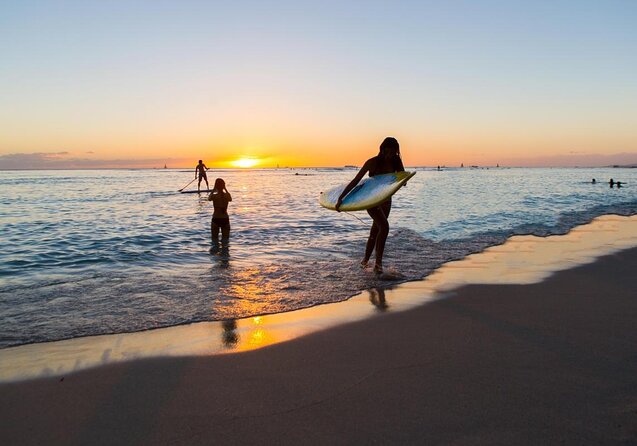
This tour works because it moves away from the familiar center of Waikiki. You still get ocean views and the easy energy of the resort district, but the subject quickly shifts to war, surfing, native wildlife, city planning, geology, and the costs of tourism.
Hawai‘i Walks is built around guides with advanced degrees and a focus on Hawaiian plants, animals, and history. The approach also reaches beyond Oahu. You can expect discussion of geological and human history across the Pacific, along with current social issues and the effects of tourism and industry in Waikiki.
That makes this a good choice if you want context rather than a simple stroll. The guide is not there only to point out Diamond Head or tell you where to take a photograph. You’ll hear why places matter, how they became part of Waikiki’s public image, and how your own choices as a visitor affect the islands.
The start is at the public art piece Surfer on a Wave, near Kalakaua Avenue and Monsarrat Avenue. The tour begins at 9 a.m. and returns to the same meeting point. A morning start is useful in Honolulu, since the walk takes place outdoors and includes several stops where shade may be limited.
More Waikiki tours:
- Parasailing Experience in Waikiki, HI
★ 5.0 · 7,692 reviews - Waikiki Trolley Hop-On Hop-Off Tour of Honolulu
★ 4.5 · 4,783 reviews - Waikiki, Hawaii: Turtle Canyon Snorkel Excursion
★ 5.0 · 4,656 reviews
The War Memorial Natatorium: an unusual first stop
The Waikiki War Memorial Natatorium is not a polished attraction. That is exactly why it makes a strong opening stop.
You’ll see an abandoned memorial built around an Olympic-sized swimming pool that extends into the ocean. The guide explains Hawai‘i’s connection to the world wars, giving the structure a human and political setting rather than treating it as a curious ruin.
The site asks you to look past the beach resort image of Waikiki. Memorials are often easy to miss when you are focused on sand, surf, and Diamond Head. Here, the physical setting makes the subject hard to ignore. An empty pool beside the sea carries a different mood from the rest of the neighborhood.
The stop lasts about 15 minutes and admission is free. That timing is enough for an introduction and photographs without letting the tour get bogged down at one location. If you are hoping to enter the building or spend a long time exploring it, keep your expectations modest. The experience is a guided look and discussion, not a full museum visit.
Kaimana Beach and the early culture of surfing
At Kaimana Beach, the tour turns to surfing. This is one of the most appealing parts for anyone who wants to understand surfing as a Hawaiian cultural practice rather than only a modern sport.
The beach is tied to the first surf schools, and the guide covers the conflict between the Outrigger and Hui Nalu surf clubs. That story helps explain how surfing was organized, promoted, and presented to the world. It also shows that the public image of surfing and Hawai‘i did not appear by accident.
The stop lasts around 10 minutes. That is brief, but the subject is focused. You’ll get a clear introduction to the clubs and their effect on surfing’s image abroad, then continue along the route.
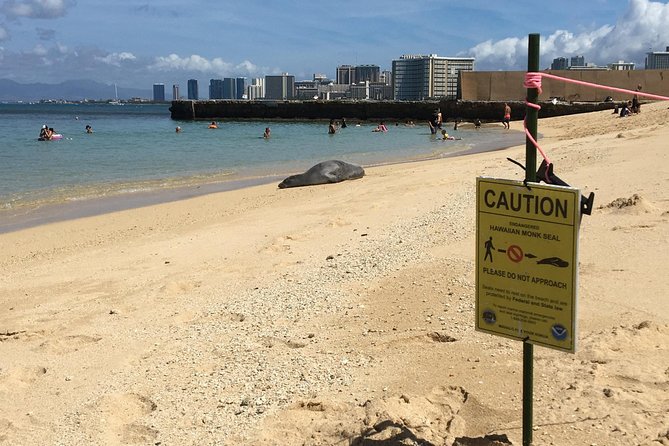
Kaimana is also a possible place to see a Hawaiian monk seal hauled out on the sand. There is no guarantee, and the tour wisely treats it as luck rather than a promise. The beach is known as one of the seals’ preferred haul-out spots, so keep your eyes open and give any animal plenty of room if one is present.
This is a good example of the tour’s wider method. Human history and wildlife are treated as connected. The same coastline can be a surf school, a public beach, and a resting place for a protected native animal.
Kapiolani Park adds space, photos, and mochi ice cream
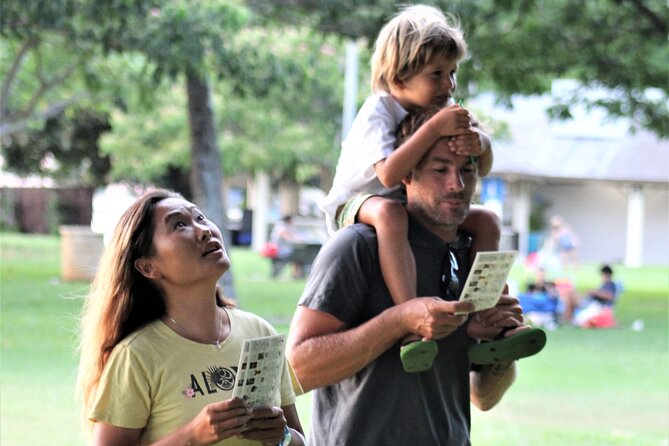
After the beach, the walk pauses in Kapiolani Park. You’ll have time for photographs and a small serving of locally made mochi ice cream. The break comes roughly 45 minutes into the tour, which is well timed for a two-hour morning walk.
I like this pause because it gives the route a natural rhythm. The first section deals with war and surfing. The park offers a chance to sit, look around, and reset before the tour moves toward the zoo and Diamond Head.
The snack is included in the $14 price, making it more than a symbolic extra. It is also a taste of local food culture without turning the tour into a food outing. If you have dietary restrictions, the supplied information does not specify flavors or ingredients, so ask the guide when you meet.
Kapiolani Park is also useful for orientation. You can see how open public space fits into a district better known for hotels and commercial streets. The tour does not simply rush from one landmark to another. It gives you a moment to notice how the neighborhood is laid out.
More walking tours in Oahu:
- Self guided Hike Trail to Nature Walk & Waterfall
★ 4.5 · 283 reviews - Honolulu Haunts: Ghosts and Spirits Walking Tour
★ 4.2 · 169 reviews - Honolulu Downtown Walking Tour
★ 5.0 · 149 reviews - Kualoa Ranch – Horseback Walking Tour
★ 4.0 · 145 reviews
Around Honolulu Zoo, animals become part of the story
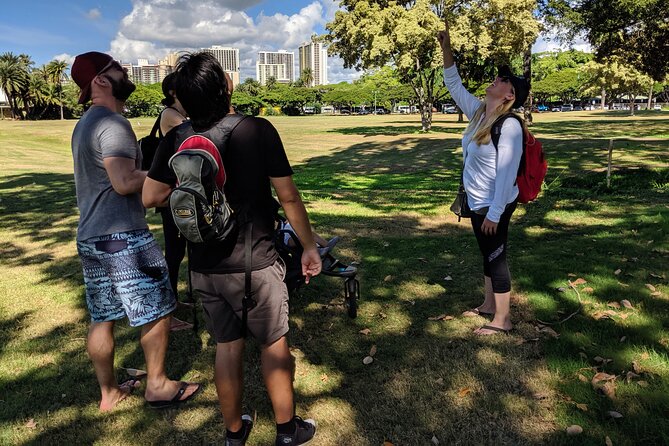
The route circles the zoo rather than describing a zoo admission or an inside visit. Along the edge, the guide shares compelling stories about animals that have called the zoo home over the years.
Because no specific animals or stories are listed in advance, you should think of this as a guided storytelling stop rather than a guaranteed animal sighting. The value lies in hearing how the zoo fits into Honolulu’s history and in considering the relationship between public attractions, animals, and the city.
This part may appeal most to people interested in conservation and the human side of natural history. It also keeps the tour connected to the company’s stated interest in Hawaiian flora and fauna.
The route around the zoo is another reason to wear comfortable shoes. The tour lasts about two hours and requires a moderate level of physical fitness. The description does not give a precise distance, number of stairs, or amount of elevation, so anyone with mobility concerns should ask for current route details before booking.
Diamond Head explains how Oahu was made
The final major subject is Diamond Head, known in Hawaiian as Le‘ahi. You’ll walk along the base of Diamond Head State Park and learn how the island formed, including the geological story behind this famous volcanic cone.
This is not a Diamond Head summit hike. The tour stays along the base, so you get the geological setting without committing to the climb. That makes the walk a useful option if you want to understand the volcano but do not want a strenuous excursion.
A good geology lesson changes the way you see the view. Diamond Head stops being just a dramatic backdrop for Waikiki photographs. It becomes evidence of the volcanic forces that shaped Oahu and the Pacific region.
The route also gives the tour a satisfying progression. You begin with a modern memorial, move through the cultural history of surfing, pause in a city park, consider animals and public attractions, then finish with the island itself. The subjects widen as the walk goes on.
What the sustainability focus adds
Many Waikiki tours explain what you are looking at. This one also asks what tourism does to the place you are looking at.
The guide discusses industry in Waikiki and the pressures created by tourism. You’ll receive practical information intended to help you make better choices while visiting the islands. The exact recommendations may depend on the guide and the current issues being discussed, but the aim is clear: connect sightseeing with responsibility.
I find that useful because sustainability advice works best when it is tied to real places. Discussing tourism beside beaches, public parks, wildlife habitat, and major attractions makes the subject concrete. You are not hearing a general lecture detached from the neighborhood.
This focus may not suit someone who wants only light entertainment. The tour includes social issues and difficult questions about the way Waikiki has developed. If you prefer a quick list of landmarks, the conversation may feel more serious than expected. If you want a fuller understanding of Hawai‘i, it is one of the strongest reasons to choose this walk.
Is $14 good value?
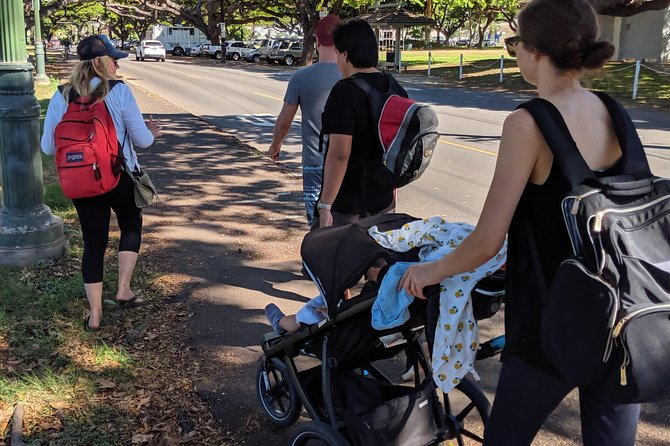
At $14, the tour is inexpensive for a two-hour guided experience in Waikiki. You receive an expert-led route, a small group, a local mochi ice cream snack, and cold drinking water if you forget your own bottle.
The best value is the range of subjects covered. A single walk takes in military history, surfing, wildlife, public space, zoo history, geology, and sustainability. You are not paying for entrance fees, since the stops are viewed from public areas, but you are paying for interpretation and structure.
The group limit matters. With a maximum of four people, the guide can respond to questions and adjust the conversation more easily than on a large coach tour. It also makes the experience feel closer to a private walk without the cost of a private tour.
Bring your own water bottle if possible. Bottled water is not included, though sterilized Hydro Flask bottles filled with cold water are available for use if you forget. Wear shoes suitable for a moderate walk, and prepare for outdoor conditions.
The one reliability concern to take seriously
The overall score is 4.2 from five ratings, but one posted account describes arriving before the start time and finding that the guide never appeared. That is a serious problem for any paid tour, even at a low price.
There is no additional information explaining what happened, so I would not treat one account as proof of a routine problem. Still, you should save the confirmation, verify the 9 a.m. meeting point, and make sure you can contact the operator before the morning begins. The starting location is the public art piece Surfer on a Wave near Kalakaua Avenue and Monsarrat Avenue, and the activity returns there.
Free cancellation is available if you cancel at least 24 hours before the start time. Inside that window, the payment is not refunded, and changes are not accepted. The tour also requires good weather. If poor weather cancels it, you are offered another date or a full refund.
Who should book this East Waikiki walk?
I would choose this tour if you want a small, inexpensive introduction to the eastern side of Waikiki and prefer ideas over a long list of photo stops. It is especially suited to people interested in Hawaiian history, surfing, conservation, geology, and the way tourism shapes a place.
It also works well early in a stay. After two hours, you’ll have a better sense of several major landmarks and a useful framework for seeing Oahu. The guide’s broad subject range can help you decide what deserves more time later.
I would think twice if you want a fully accessible route, a guaranteed wildlife sighting, or a tour with a spotless operational record. The physical details are limited, one account raises a real meeting concern, and the tour is discussion-heavy.
For most visitors who value context and keep expectations realistic, $14 is a fair price. Confirm the meeting details, bring water and comfortable shoes, and choose this walk for its stories rather than for admission to major attractions.
FAQ
Where does the East Waikiki Walking Tour begin?
It begins at the public art piece Surfer on a Wave near Kalakaua Avenue and Monsarrat Avenue in Honolulu.
What time does the tour start?
The tour starts at 9:00 a.m.
How long does the walking tour last?
The tour lasts approximately two hours.
Where does the tour finish?
The activity ends back at the starting meeting point.
Is food included?
Yes. Free local mochi ice cream is provided during a break about 45 minutes into the tour.
Is bottled water provided?
Bottled water is not provided. Sterilized Hydro Flask bottles filled with cold water are available for use if you forgot your own bottle.
How many people can join the tour?
The tour has a maximum of four participants.
Newest Oahu write-ups
- West Oahu: Eco-Friendly Whale Watching Cruise★ 4.5 · 40 reviews
- Oahu: Waikiki Eco-Friendly Morning Whale Watching Cruise★ 4.4 · 119 reviews
- West O’ahu: Swim with Dolphins Catamaran Cruise★ 4.9 · 70 reviews
- Oahu: Circle Island Tour with Lunch & Waimea Waterfall★ 4.4 · 134 reviews
- West O’ahu: Dolphin Watching and Snorkeling Catamaran Cruise★ 4.5 · 31 reviews
- Oahu: Waimea Falls & valley & North Shore day★ 5.0 · 4 reviews
- Honolulu, Oahu: Waikiki Turtle Snorkel Tour w/Shuttle Option★ 3.6 · 81 reviews
- Waikiki: Surf Lessons Easy 60 min classes no crowds!★ 4.9 · 21 reviews
Walking Tours, compared.

Self guided Hike Trail to Nature Walk & Waterfall
Read our review →
Honolulu Historic District a Smartphone Audio Walking Tour
Read our review →
Browse the lists this tour appears in