
Reviewed · HONOLULU CITY TOURS
Historical Tour of Downtown Honolulu in Red Light District
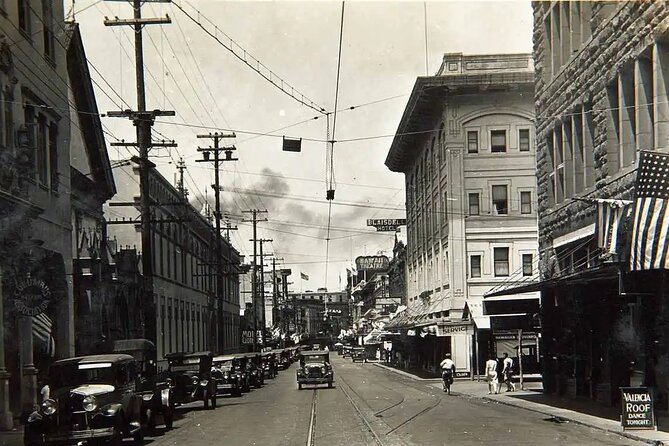
Honolulu’s old red light district was not a footnote to island history. From the 1930s through 1944, it was part of daily life in Chinatown, with working girls checking in with the Chief of Police at the Blaisdell Hotel. This one-hour walk brings that rarely discussed past into view through six former brothel buildings.
I like two things right away: the subject is unusually specific, and the group is capped at eight people, which should make it easier to hear the guide and ask questions. Jackie and Jim lead the tour, and their approach, based on the material shared by past customers, combines education with a light touch.
The main drawback is the short running time. Six former brothels and a complicated period of social history get only about an hour, so you should expect a brisk introduction rather than a full Chinatown history course.
Key points to know before you book
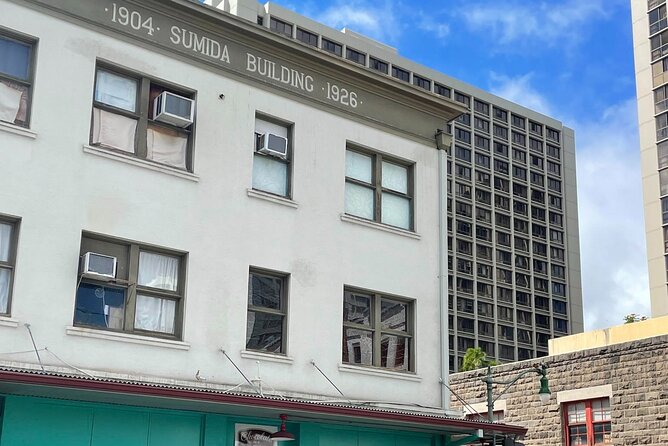
- Six former brothels: The route connects six buildings tied to Honolulu’s former red light district.
- Blaisdell Hotel starting point: The tour begins at 1154 Fort Street Mall, a site linked to police check-ins by working girls.
- 1930s to 1944 focus: The walk centers on Chinatown during the years leading through World War II.
- Small group format: A maximum of eight people keeps this personal and manageable.
- Wheelchair-friendly route: The route is wheelchair friendly, though wheelchair users should choose an earlier departure because the historic elevator stops operating at 4:30 PM.
- One-hour commitment: At $60 per person, you are paying for a focused, guide-led look at a little-known chapter of Honolulu history.
Starting at the Old Blaisdell Hotel on Fort Street Mall
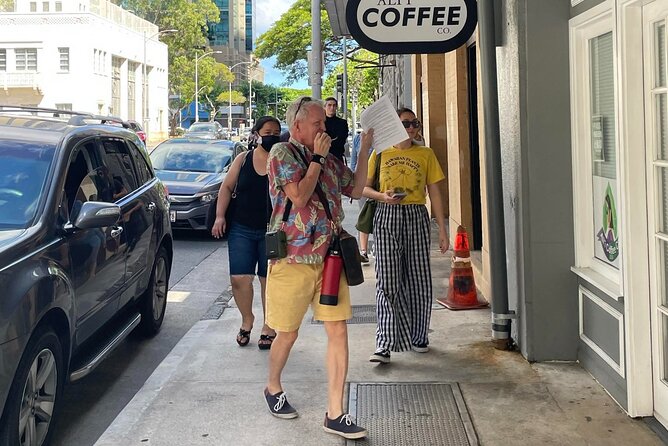
You meet the guide at the Old Blaisdell Hotel, 1154 Fort Street Mall, in downtown Honolulu. This is more than a convenient meeting spot. It is part of the story, since the hotel is identified as the place where the working girls checked in with the Chief of Police.
That detail gives the tour an immediate sense of place. You are not beginning with a general talk about Honolulu and then walking toward the subject. You start at a building tied directly to the system that governed the district.
I like this kind of opening because it puts the city’s past at street level. The hotel is not just a backdrop for photographs. It helps explain how prostitution was monitored and organized, and how public officials were connected to the district.
The meeting point is also practical. It is near public transportation, and the tour ends back where it begins. You do not need to arrange a second pickup point or figure out how to return to your starting location after the walk.
More History Tours in Honolulu
- Pearl Harbor [Early Access], USS Arizona & Historic Honolulu Tour
★ 4.5 · 87 reviews - Historical Honolulu Bike Tour
★ 5.0 · 76 reviews - History & Culture Tour in Honolulu via Segway
★ 5.0 · 16 reviews
Following Honolulu’s former red light district
From the Blaisdell Hotel, the route continues through the historic red light district in Chinatown. You visit six former brothels, with each stop tied to stories about the building and the people who used it.
The material available for this tour does not provide the individual names or present-day functions of those six buildings. That is worth knowing. You should book this for the guided interpretation and the connection among the sites, not because you expect a detailed architectural tour of every structure.
The value comes from seeing how separate buildings fit into one larger system. A former brothel can look ordinary from the street, especially after decades of change. The guide’s job is to connect that ordinary-looking place to the working arrangements, police oversight, social rules, and unequal power that shaped the district.
This is also where the tour’s subject becomes more complicated than a collection of colorful stories. The period involved women, men, police, customers, property owners, and people with money and influence. One of the strongest themes in the comments associated with the tour is that those with money often controlled the rules. That idea gives the walk a useful social edge instead of treating prostitution as simple entertainment.
What makes the 1930s to 1944 period important
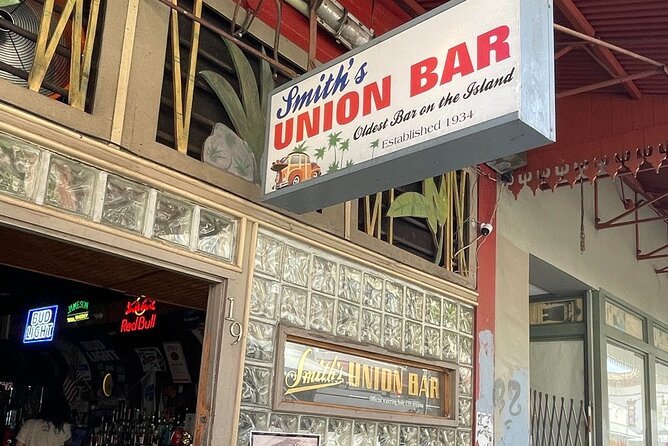
The tour focuses on Honolulu’s Chinatown during the 1930s through 1944. That date range gives you a clear frame, but it also covers years of major change, including the World War II era.
The subject is valuable because official city stories often leave out the people who lived and worked outside respectable public life. This walk brings attention to women and men who operated within a system shaped by demand, law enforcement, economics, and social judgment.
I would not expect a polished or softened version of the past. The tour’s appeal is its willingness to discuss what was actually happening, including the uncomfortable parts. That can make the hour more memorable, but it also means the topic may not suit someone looking for a light sightseeing stop.
Jackie and Jim are the guides named in the available tour information. Their style is described as both fun and informative, with an emphasis on questions and discussion. That combination matters here. A tour about prostitution can easily become either dry or overly sensational. A guide who can explain the facts while keeping the mood human is a better fit for this material.
Six stops, one connected story
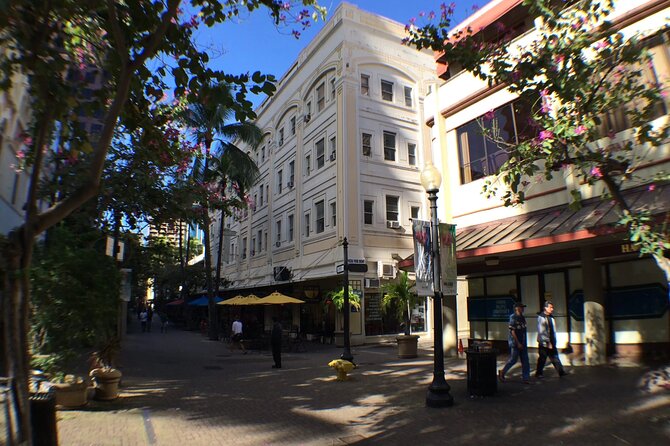
The itinerary is simple: begin at the Blaisdell Hotel, walk through the district, stop at six former brothels, then return to the meeting point. The simplicity is useful, but the short format shapes what you will receive.
At the Blaisdell Hotel, you get the key institutional detail: working girls checked in with the Chief of Police. That point suggests a district that was not merely ignored. It was known, monitored, and connected to civic authority.
At the six former brothel sites, you hear the story of each building. The supplied details do not list the names of the businesses or describe the interiors, so you should not assume that you will enter every site. The experience is presented as a walking tour through the district, with the buildings serving as places for explanation.
The route’s strength is the connection between place and story. You are not asked to remember a lecture in a hotel room. You move through downtown and Chinatown while the guide explains how the sites functioned during the district’s active years.
The limitation is depth. Six locations in roughly 60 minutes leaves only a few minutes per stop once introductions, walking, and questions are included. I would treat this as a sharp introduction that may encourage you to learn more later, not as the final word on Honolulu’s red light district.
More Honolulu city tours:
- Pearl Harbor, USS Arizona Memorial & Honolulu City Tour
★ 5.0 · 4,866 reviews - Pearl Harbor City Tour
★ 5.0 · 4,254 reviews - Pearl Harbor, National Memorial Cemetery and Honolulu City Tour
★ 4.5 · 1,777 reviews - Oahu: Pearl Harbor, USS Arizona, and City Tour
★ 4.3 · 1,572 reviews
A small group changes the feel
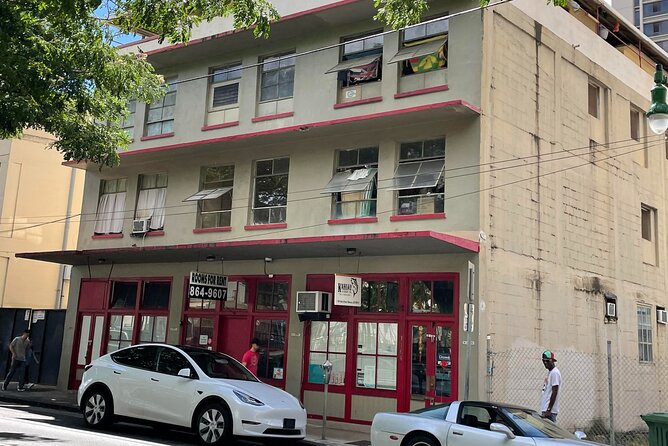
The maximum group size is eight people. For a one-hour walking tour, that is a meaningful advantage.
A small group makes it easier to stay close to the guide on city streets. It also gives you a better chance to ask about details that catch your attention, especially when the subject raises questions about policing, gender, money, and daily life.
Jackie and Jim are praised for being entertaining and educational. That matters because the tour has a lot to cover quickly. A dry presentation would make the six-stop route feel rushed, while a lively guide can help the information stick.
You should still keep your expectations practical. A small group does not turn the tour into a private investigation, and the time limit remains. The benefit is a more direct exchange, not a longer itinerary.
Is $60 a fair price for one hour?
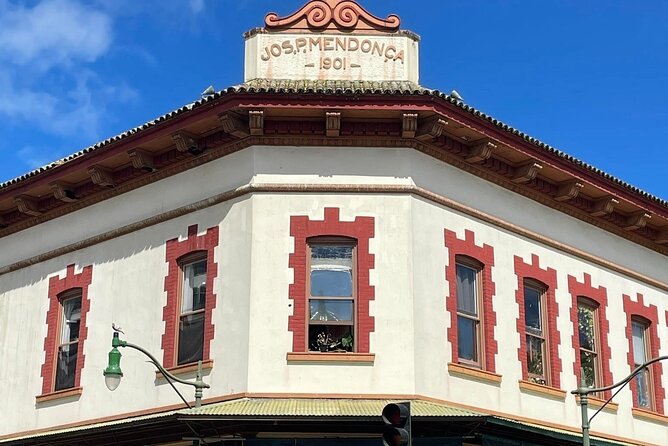
The cost is $60 per person, with admission included. That is a fairly serious price for an activity lasting about an hour, so the value depends on how much you want this particular subject.
If you are mainly looking for a general Honolulu walking tour, I would consider the price high. You could spend the same hour seeing a broader mix of downtown sights, depending on your plans.
If you are interested in overlooked local history, the calculation looks better. You are paying for a focused topic, two named guides, a small group, six connected sites, and a story that is not usually part of a standard sightseeing route. The experience is specific rather than broad.
I especially like that the tour does not appear to pad the schedule with unrelated stops. The route stays centered on the former red light district. At $60, that focus is either the main reason to book or the main reason to skip it.
Because the tour is often reserved well in advance, with an average booking lead time of 71 days, I would not assume you can always find a last-minute opening. If this subject is important to your Honolulu plans, booking ahead is sensible.
Accessibility and the practical walk
The entire route is wheelchair friendly. The tour can accommodate wheelchair users on earlier departures because the historic elevator stops running at 4:30 PM.
That timing detail is important. If you use a wheelchair, do not simply choose any available departure without checking the time. An earlier tour gives you the best chance of using the historic elevator while it is operating.
The route is designed with all physical abilities in mind, and the activity is a short walk. The supplied information does not give an exact distance, surface description, or number of stairs, so you may want to confirm those points if you have specific mobility needs.
Service animals are allowed. The tour is offered in English, and mobile tickets are available, which keeps the arrival process simple.
Most people can participate, but the subject itself deserves consideration. This is a historical discussion of prostitution, policing, and power. It is not described as an adult entertainment activity, and the information provided does not promise alcohol or visits to active nightlife businesses.
Who will enjoy this tour most?
I would choose this walk if you have already seen some of Honolulu’s better-known sights and want a more unusual subject. It suits people who enjoy city history when the story includes social rules, ordinary working lives, and uncomfortable facts.
It is also a good match for you if you prefer a short activity with a clear beginning and end. The route lasts about an hour, starts and finishes at the same place, and stays within one historical theme.
The tour may appeal to couples, friends, and adults traveling together who want something different from beaches and resort attractions. You must be 21 to consume alcohol, though the supplied information does not say that alcohol is part of the tour.
I would think twice if you want a long architectural walk, extensive time inside historic buildings, or a broad tour of all downtown Honolulu. I would also skip it if the topic of prostitution is likely to make you uncomfortable. The tour’s value depends on your interest in candid social history.
Booking, cancellation, and timing tips
The experience is offered in English, uses a mobile ticket, and has a maximum of eight people. It is near public transportation, so you may find it easier to reach than a tour that begins outside the central city.
Free cancellation is available if you cancel at least 24 hours before the scheduled start time. Within 24 hours, the amount paid is not refunded, and changes are not accepted. The cut-off follows local Honolulu time.
I would arrive ready for a short city walk and keep the rest of your schedule flexible enough to reach the meeting point at 1154 Fort Street Mall. Since the tour returns to that same address, it can fit neatly before or after other downtown plans.
My call: book it for the subject, not the sightseeing checklist
I would book this tour if you want an honest, compact look at a side of Honolulu that standard tours often pass by. The Blaisdell Hotel connection, six former brothel sites, and the 1930s to 1944 focus give the hour a clear purpose.
I would not book it simply because you need any walking tour in downtown Honolulu. At $60 for about an hour, the price makes sense only if this particular history interests you.
For the right audience, Jackie and Jim’s reported mix of humor, questions, and education should help a difficult subject feel approachable without turning it into a watered-down story. For everyone else, the short route and narrow theme may not justify the cost.
FAQ
How much does the Historical Tour of Downtown Honolulu in Red Light District cost?
The price is $60 per person, and admission is included.
How long does the tour last?
The walking tour lasts approximately one hour.
Where does the tour begin and end?
The tour begins at the Old Blaisdell Hotel, 1154 Fort Street Mall, Honolulu, Hawaii 96813. It ends back at the same meeting point.
What historical period does the tour cover?
The tour focuses on Honolulu’s Chinatown red light district during its heyday from the 1930s through 1944.
How many former brothels are included?
The route stops at six former brothels, where the guide discusses the history and stories connected with each building.
Is the tour wheelchair accessible?
The entire route is wheelchair friendly. Earlier tours are recommended for wheelchair users because the historic elevator stops operating at 4:30 PM.
Is cancellation free?
You can cancel for a full refund at least 24 hours before the experience begins. Cancellations or changes made less than 24 hours before the start time are not accepted, and the payment is not refunded.
More history tours in Oahu
- Oahu: Mauka Warriors Luau Honoring Polynesia’s Forgotten History
★ 5.0 · 3,013 reviews - Pearl Harbor History Remembered Tour from Ko Olina
★ 5.0 · 1,009 reviews - Pearl Harbor with USS Arizona and Hawaiian Kingdom History Tour
★ 4.5 · 184 reviews - Through A Glass Darkly The Strange and Tragic History Of Honolulu
★ 5.0 · 12 reviews
More Honolulu tours
- Waikiki Trolley Hop-On Hop-Off Tour of Honolulu
★ 4.5 · 4,783 reviews - First-Time Scuba Diving in Honolulu + Free Videos
★ 5.0 · 3,123 reviews - Honolulu: Glass Bottom Boat Tour along Oahu’s South Shore
★ 4.6 · 1,575 reviews - Arrival Transfer: Airport Shuttle Honolulu and Waikiki or Cruise Terminal
★ 4.0 · 1,242 reviews
Newest Oahu write-ups
- Oahu: Waikiki Eco-Friendly Morning Whale Watching Cruise★ 4.4 · 119 reviews
- West Oahu: Eco-Friendly Whale Watching Cruise★ 4.5 · 40 reviews
- Oahu: Circle Island Tour with Lunch & Waimea Waterfall★ 4.4 · 134 reviews
- West O’ahu: Dolphin Watching and Snorkeling Catamaran Cruise★ 4.5 · 31 reviews
- West O’ahu: Swim with Dolphins Catamaran Cruise★ 4.9 · 70 reviews
- Oahu: Waimea Falls & valley & North Shore day★ 5.0 · 4 reviews
- Honolulu, Oahu: Waikiki Turtle Snorkel Tour w/Shuttle Option★ 3.6 · 81 reviews
- Waikiki: Surf Lessons Easy 60 min classes no crowds!★ 4.9 · 21 reviews
Honolulu City Tours, compared.
Pearl Harbor, National Memorial Cemetery and Honolulu City Tour
Read our review →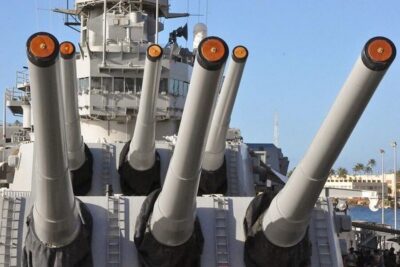
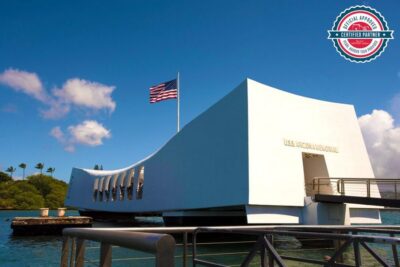
Pearl Harbor, Arizona Memorial & Honolulu City Tour
Read our review →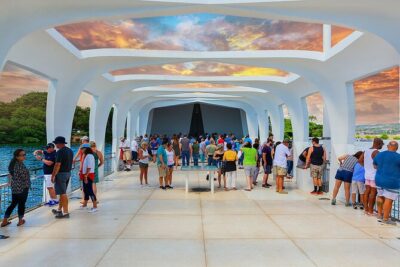
Tribute to Pearl Harbor Arizona Memorial and Honolulu City Tour
Read our review →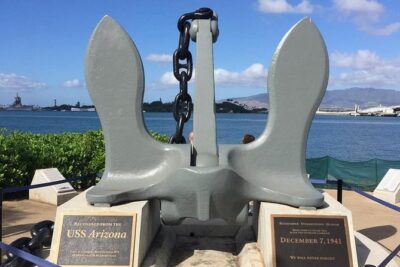
Deluxe Pearl Harbor USS Arizona Memorial and Honolulu City Tour
Read our review →
Pearl Harbor, USS Arizona, and City Highlights Tour
Read our review →Browse the lists this tour appears in