
Reviewed · HISTORICAL TOURS
Through A Glass Darkly The Strange and Tragic History Of Honolulu
Honolulu’s grandest stories are not on the beach. They unfold around courthouses, churches, royal homes, and government buildings. This 90-minute walk follows the fall of the Hawaiian monarchy, from King Kamehameha’s conquest of Oahu to Queen Liliuokalani’s overthrow and the scandals that followed. Terry, a retired history professor, leads the walk with a serious eye and a touch of spooky folklore.
I like two things right away: the compact route covers ten important sites, and the storytelling looks past the polished version of Hawaiian history. You’ll hear about missionaries, royal family troubles, political power, and the Massie Affair, not just dates and building names. The main drawback is that much of the tour involves standing outdoors, and the ghost stories may be more prominent than some history-minded visitors expect.
Key points to know before you go
- The walk begins at the King Kamehameha I Statue at 10:45 am and ends at the same place.
- Terry gives the tour a personal, story-led feel, with room to explain complicated events and answer questions.
- Iolani Palace is viewed from the outside, and its admission fee is not included.
- The route is short but information-packed, covering ten stops in about 90 minutes.
- Expect history mixed with ghost stories, especially around the palace, churches, and former royal sites.
- Shade, comfortable shoes, and water matter, since there is considerable standing in Honolulu’s sun.
Why this Honolulu walk is different
Many Honolulu tours focus on beaches, food, or scenic lookouts. This one keeps you in the civic heart of the city, where Hawaii’s political and religious history is easier to read in the buildings around you.
The route is not long. In fact, most stops receive only about five minutes, with ten minutes at Iolani Palace, Kawaiaha‘o Church, and the Hawaiian Mission Houses. The value comes from the links between those places. A statue introduces conquest. A palace explains monarchy. Churches and mission buildings show the force of religious change. Government buildings reveal what happened after the monarchy ended.
Terry’s approach is especially useful if you want more than the tidy version of Hawaiian history. He connects the arrival of missionaries with changes in land, religion, government, and social life. He also tells stories passed down through local tradition, including ghost sightings. You get a history lesson, but not one delivered like a classroom lecture.
The current price is $39 per person, which is fair if you enjoy guided history and plan to spend time in downtown Honolulu anyway. It is less compelling if you only want interior access to Iolani Palace, since that admission is separate and this experience does not replace a palace tour. Think of the fee as payment for the guide’s interpretation and the route, not as a bundle of museum tickets.
More History Tours in Honolulu
- Pearl Harbor [Early Access], USS Arizona & Historic Honolulu Tour
★ 4.5 · 87 reviews - Historical Honolulu Bike Tour
★ 5.0 · 76 reviews - History & Culture Tour in Honolulu via Segway
★ 5.0 · 16 reviews
King Kamehameha’s conquest begins the story
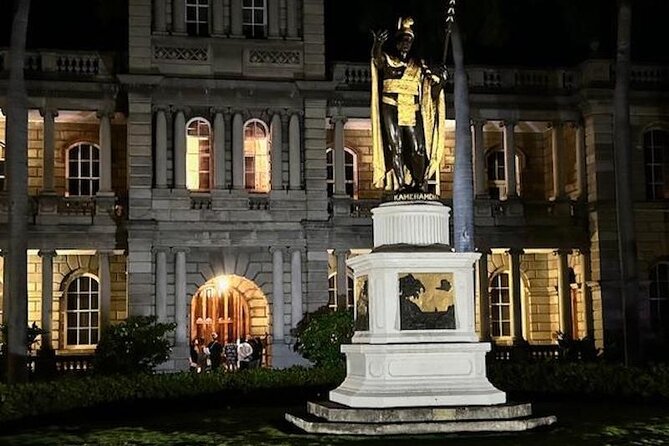
Meet at the King Kamehameha I Statue, at 447 South King Street. This is a fitting starting point because the tour begins with the conquest of Oahu, including the disturbing and dramatic details behind Kamehameha’s rise.
The statue itself is free to view, but the important part is the context Terry gives you. Kamehameha is often presented as the great unifier of the Hawaiian Islands. That achievement matters, but unification was not peaceful. The opening story sets the tone for the rest of the walk: Honolulu’s past includes achievement and suffering, ceremony and coercion.
You spend about five minutes here, so do not expect a long lecture at the statue. Instead, use it as the first chapter in a larger story about power. The short introduction also gets you moving quickly toward the royal center of Honolulu.
Iolani Palace and the end of the monarchy
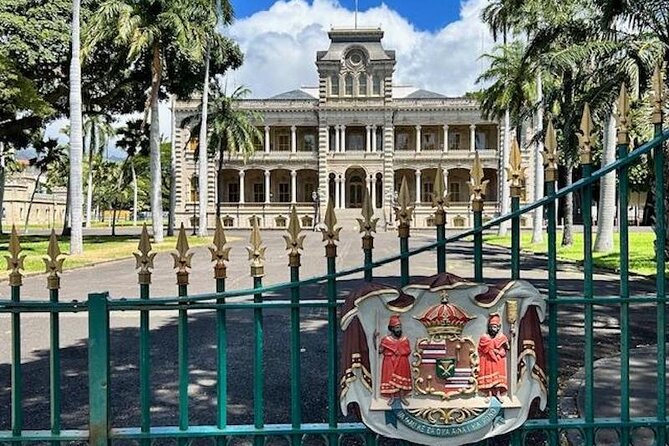
Iolani Palace is the emotional center of the walk. It is hard to pass a genuine royal palace in the United States without stopping to consider how unusual that fact is. This was the home of Hawaiian kings and queens, complete with royal ceremony, thrones, and a court culture that did not last.
The tour allows about ten minutes here, longer than at most other stops. Terry explains how the palace came to represent the Hawaiian monarchy and how that monarchy ended in a tragic overthrow. You will hear about the political forces that pushed the kingdom aside, rather than seeing the palace only as an elegant historic building.
Admission to the palace is not included. That is worth planning around. This walking experience gives you an exterior introduction and historical interpretation, but it does not provide the fuller interior visit offered by palace admission programs. If the palace is a major reason you are in Honolulu, you may want to arrange a separate visit.
For me, this is where the tour earns much of its cost. A guide can point out the building’s role in the overthrow and explain why it still matters to Hawaiian identity. You get more than a photograph of a handsome facade.
Kawaiaha‘o Church and the force of missionary change
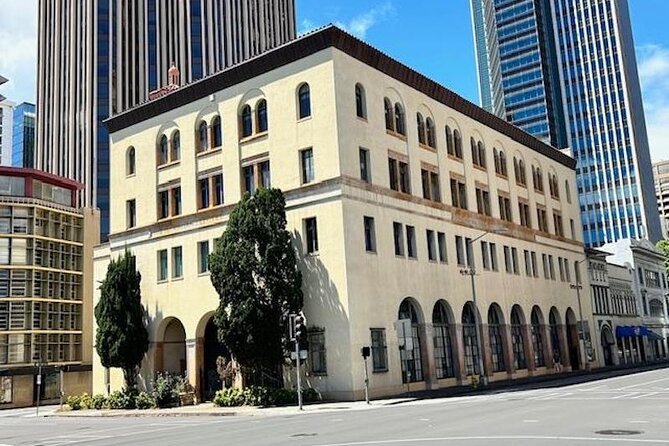
The next major stop is Kawaiaha‘o Church, often described as the stone church by Hawaiians. Its construction is tied to the missionary Hiram Bingham, whose influence reached far beyond the church walls.
The key point is that this is not simply an old church. It represents the arrival of a new religious order and the reshaping of Hawaiian life that followed. The building’s stone construction gives you a physical way to think about that change. Terry uses the site to explain the missionary presence without reducing it to a simple story of people who came only to help.
You have about ten minutes here. That gives the guide time to explain the church’s role and tell the less comfortable parts of the story. If you prefer history that includes motives, consequences, and contradictions, this stop should be one of the strongest parts of the walk.
More Honolulu tours:
- Pearl Harbor, USS Arizona Memorial & Honolulu City Tour
★ 5.0 · 4,866 reviews - Waikiki Trolley Hop-On Hop-Off Tour of Honolulu
★ 4.5 · 4,783 reviews - First-Time Scuba Diving in Honolulu + Free Videos
★ 5.0 · 3,123 reviews - Pearl Harbor, National Memorial Cemetery and Honolulu City Tour
★ 4.5 · 1,777 reviews
Mission Houses and the price of doing good
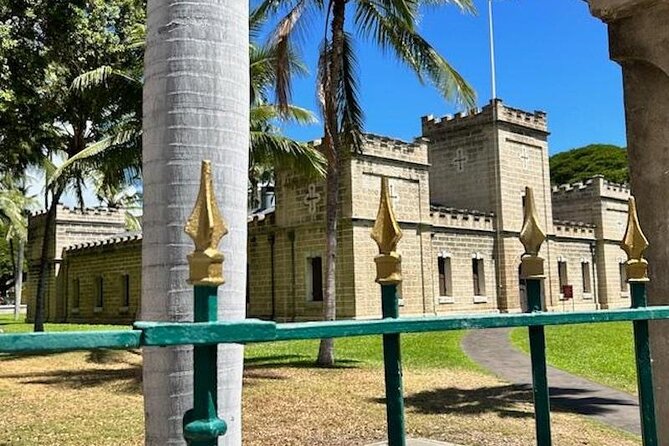
The Hawaiian Mission Houses Historic Site and Archives adds another layer to the story. The tour examines the familiar claim that missionaries came to do good, then asks what happened when their work brought influence, property, cultural pressure, and political power.
You spend about five minutes here. That is enough for a sharp overview, though not enough for a full museum visit. The stop works best as part of the larger route because it follows Kawaiaha‘o Church and keeps the discussion focused on how religion and government became connected.
This is also a useful reminder that the tour does not present Hawaiian history as a series of isolated buildings. Each site helps explain the next one. By this point, the walk has moved from conquest to monarchy to missionary influence, all within a few blocks of downtown.
Honolulu Hale and the respectable face of power
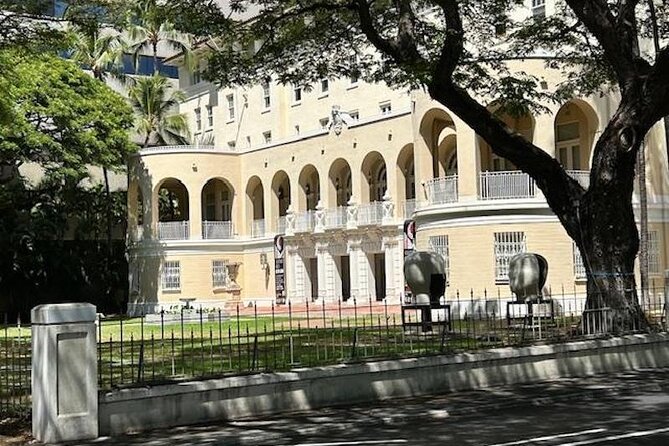
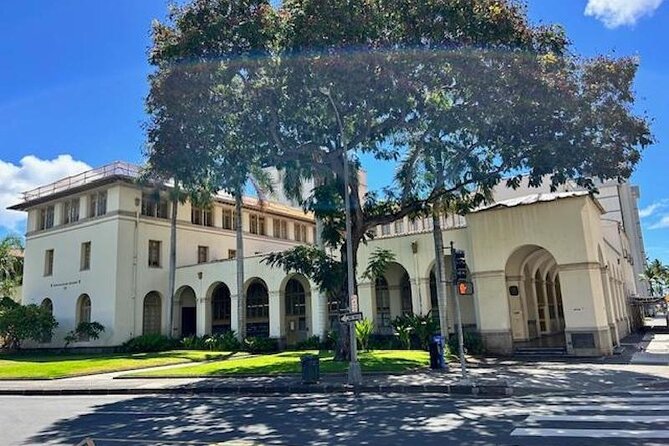
Honolulu Hale, the city hall, is an attractive Italianate Spanish Colonial Revival building. Its appearance is more welcoming than its past, which is precisely why it fits the tone of this experience.
Terry uses the building to show how a handsome civic setting can conceal difficult political history. You will not spend long here, about five minutes, but the stop reinforces one of the tour’s main ideas: Honolulu’s official buildings often carry two stories. One is the public story told by architecture and ceremony. The other concerns decisions, conflicts, and people who lost power.
The brief stop also gives your legs a small break before the next part of the route. Still, this is not a sit-down tour. You are generally on your feet, and the guide tries to keep the group in shade when possible.
The State Capitol and Queen Liliuokalani’s aloha spirit
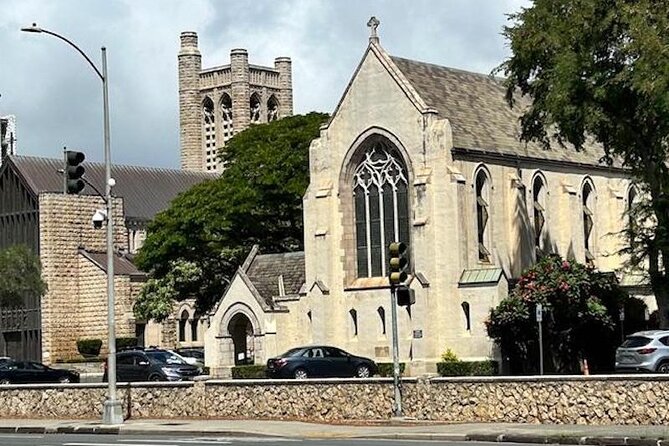
The Hawaii State Capitol provides a change in mood. Its design is described as an expression of the aloha spirit, and the statue of Queen Liliuokalani nearby gives the building a strong personal connection to Hawaii’s last reigning monarch.
Terry explains why the queen remains such an important figure. Her story is not only about political defeat. It is also about the manner in which she carried herself through the overthrow and the lasting meaning of her leadership.
You spend about five minutes at the Capitol. There is no need to expect an extended architectural tour. The value lies in the connection between the building, the statue, and the queen’s place in modern Hawaiian memory.
Washington Place and the queen’s private life
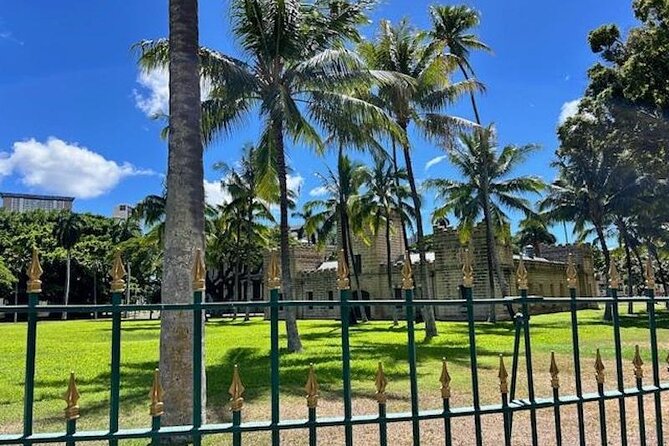
Washington Place was Queen Liliuokalani’s home. Here the story becomes more personal. The tour addresses her unhappy marriage and the fact that she returned to this house after the monarchy was overthrown.
That detail changes how you view the political events discussed at Iolani Palace. The overthrow was not an abstract constitutional dispute. It affected where the queen lived, how she was treated, and how she spent the rest of her life.
Again, the stop lasts about five minutes. You will not get a long private-house visit through this experience, but you do get the setting for a story that connects public power with private sorrow. I find that kind of connection more memorable than a list of dates.
St. Andrew’s Cathedral and a royal family tragedy
The Cathedral of St. Andrew brings the walk back to religious architecture, but on a much grander scale. Its sandstone blocks were cut in England and shipped to Hawaii, an impressive undertaking before modern transport made such movement routine.
The cathedral’s stained-glass nave is another reason to pay attention. Even with only about five minutes at the stop, the building offers a striking visual pause in the route.
Terry also tells a tragic story involving a king and his young son. This is one of the places where the tour’s emotional range becomes clear. You move from architecture to family loss, then back to the larger question of how royal life in Hawaii was shaped by politics, religion, and personal grief.
The experience does not include a separate cathedral admission. The itinerary identifies the stop as free, but the tour is still primarily an outdoor walk, so your viewing time may be limited.
Capitol Modern and the original Royal Hawaiian Hotel
Capitol Modern, also known as the Hawai‘i State Art Museum, occupies a building with an unexpected past. It was the original Royal Hawaiian Hotel, built in 1872.
Many people know the Royal Hawaiian on Waikiki Beach, the famous Pink Palace. This stop explains that the earlier hotel came first and was successful enough to inspire a second Royal Hawaiian farther toward the beach.
That story adds a useful piece of Honolulu’s development. The city’s old royal and civic center was not separate from tourism. Hotels, government, monarchy, and the changing shape of Honolulu were connected.
Admission to Capitol Modern is not included. You can appreciate the exterior and hear the building’s story on the walk, but plan a separate visit if you want to see the art museum itself.
Ali‘iōlani Hale and the Massie Affair
The final stop is Ali‘iōlani Hale, now the Judiciary Building and home of the Hawaii State Supreme Court. The building’s present function gives the stop a natural focus: law, justice, and the way power gets tested in court.
This is where Terry discusses the Massie Affair, described as a major event in Hawaiian jurisprudence. You do not need to know the case in advance. The point is that the story raises hard questions about race, privilege, public pressure, and the operation of justice in territorial Hawaii.
At about five minutes, this is an introduction rather than a full legal seminar. Still, it gives the tour a strong ending because it carries the story beyond the monarchy. Hawaii’s political transformation did not end with the overthrow. The legal system that followed also had its own conflicts and moral failures.
The walk then returns to the King Kamehameha statue. Ending where you began gives the route a neat structure, moving from conquest through monarchy, missionary influence, civic power, and the courts.
What the pace and group size feel like
The advertised duration is about one hour and thirty minutes. That is long enough for a serious overview but short enough to fit into a morning of sightseeing. The 10:45 am start is useful if you want breakfast first and still hope to plan another downtown activity afterward.
The group can include up to 20 people, though the experience can feel much more intimate when attendance is smaller. One particularly useful feature of Terry’s teaching style is that he can expand on a subject when the group is small. He has also guided one-on-one walks, where there was more time for questions and detail.
The route itself is not described as strenuous. Most people can participate, and help is available for stairs or inclines. Service animals are allowed, and the meeting point is near public transportation. Even so, bring sensible walking shoes and water. The route involves a lot of standing, not just walking, and Honolulu’s heat can make five minutes in the sun feel longer than it sounds.
If rain is in the forecast, you may still get through the walk, but weather can affect comfort. Terry tries to keep people in shade when possible. A light rain layer is a practical idea, since the tour takes place outdoors and the experience does not promise indoor shelter at each stop.
The ghost stories: bonus or distraction?
The title promises a darker look at Honolulu, and the tour includes stories of ghostly sightings around the palace, government buildings, and churches. Terry tells them with humor, which keeps the subject from becoming too heavy.
I see the ghost material as an optional extra rather than the main reason to book. If you enjoy local legends, it adds atmosphere and gives familiar buildings another layer. If you want only documented political history, the supernatural stories may feel like a detour.
The balance depends on what you expect. This is not a conventional architecture tour, and it is not a purely academic lecture. It mixes documented events, personal tragedy, local memory, and spooky tales. Go in expecting that blend and you will be less likely to feel surprised by the tone.
Who will get the most from the $39 price
I would choose this walk if you have a real interest in Hawaiian history, the monarchy, or the political forces that shaped modern Honolulu. It also suits anyone who has already visited a museum such as Bishop Museum and wants to connect broader history with actual places downtown.
Families can use it as a shared history lesson, though younger children may not follow every political detail. The guide has successfully held the attention of three generations at once, helped by humor and stories rather than a nonstop stream of dates.
The price is harder to justify if you want only sightseeing photos or if you dislike standing. You should also account for separate admission if you want to enter Iolani Palace or Capitol Modern. The tour’s value is in Terry’s interpretation, the route’s organization, and the stories you would be unlikely to pick up by walking past these buildings on your own.
The experience has a 4.8 rating from 12 ratings, with 92 percent recommending it. That is a small sample, so I would treat it as a useful signal rather than a guarantee. The strongest pattern is clear: people value Terry’s storytelling, his grasp of local history, and the way he presents parts of Hawaii’s past that often receive less attention.
Should you book Through A Glass Darkly?
Book it if you want Honolulu beyond beaches and shopping, and especially if the words monarchy, missionaries, political overthrow, or local ghost stories catch your attention. Terry’s walk gives you a clear route through difficult subjects without requiring a full day.
Skip it if you need a seated experience, want extensive interior access, or prefer a narrowly factual tour with no supernatural material. For everyone else, $39 is a reasonable price for a focused downtown history walk, provided you arrive ready to stand, listen, and think about the city in a more complicated way.
Free cancellation is available up to 24 hours before the 10:45 am start time. Within 24 hours, the amount paid is not refunded, so keep that deadline in mind when your plans are still changing.
FAQ
Where does the tour begin?
It begins at the King Kamehameha I Statue, 447 S King Street, Honolulu, Hawaii 96813.
What time does the tour start?
The tour starts at 10:45 am.
Where does the tour end?
It ends back at the King Kamehameha I Statue, the starting point.
How long does the experience last?
The walking tour lasts approximately one hour and thirty minutes.
What language is the tour offered in?
The tour is offered in English.
Is admission to Iolani Palace included?
No. Admission to Iolani Palace is not included in the tour price.
Is admission to Capitol Modern included?
No. Admission to Capitol Modern, also known as the Hawai‘i State Art Museum, is not included.
How many people can join the tour?
The maximum group size is 20 people.
Can I cancel for a full refund?
Yes. You can cancel at least 24 hours before the experience start time for a full refund. Cancellations or changes made less than 24 hours before the start time are not refunded.
More history tours in Oahu
- Oahu: Mauka Warriors Luau Honoring Polynesia’s Forgotten History
★ 5.0 · 3,013 reviews - Pearl Harbor History Remembered Tour from Ko Olina
★ 5.0 · 1,009 reviews - Pearl Harbor with USS Arizona and Hawaiian Kingdom History Tour
★ 4.5 · 184 reviews - Semi Private Honolulu Historical Tour
★ 5.0 · 11 reviews
Newest Oahu write-ups
- Private Surf Lessons in Honolulu★ 5.0 · 76 reviews
- Private Round-Trip Transfer: Honolulu International Airport to Hotel or Cruise Terminal★ 4.0 · 34 reviews
- Private Pearl Harbor USS Arizona Memorial★ 4.5 · 3 reviews
- Private Pearl Harbor and Mini Circle Island Tour from Waikiki★ 5.0 · 8 reviews
- Passport to Pearl Harbor “Private”★ 5.0 · 4 reviews
- Pearl Harbor USS Arizona and USS Missouri “Private”★ 5.0 · 10 reviews
- Private Tour Oahu – up to 6 passengers – Customizable★ 5.0 · 3 reviews
- Private One-way Airport Transfer Honolulu Airport To Honolulu★ 4.0 · 24 reviews
Historical Tours, compared.
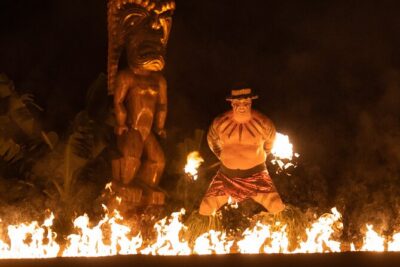
Mauka Warriors Luau Honoring Polynesia’s Forgotten History
Read our review →
Pearl Harbor History Remembered Tour from Ko Olina
Read our review →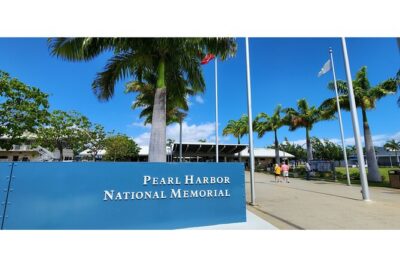
Pearl Harbor with USS Arizona and Hawaiian Kingdom History Tour
Read our review →![Pearl Harbor [Early Access], USS Arizona & Historic Honolulu Tour](https://d.lovingoahu.com/wp-content/uploads/pearl-harbor-early-access-uss-arizona-historic-honolulu-tour-400x267.jpg)
Pearl Harbor [Early Access], USS Arizona & Historic Honolulu Tour
Read our review →

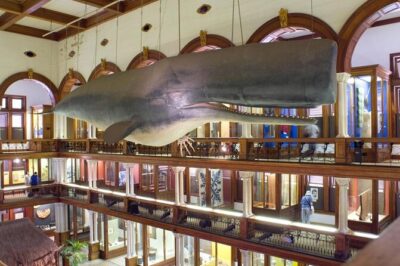

Best Of Pearl Harbor: USS Arizona Memorial & Historic Honolulu
Read our review →Browse the lists this tour appears in